





TREATMENTS
A Beautiful Smile with Teeth Whitening (Bleaching): Dr. Çağrı Altuntaş
For patients who are satisfied with the shape of their teeth but are concerned about their dark color, teeth whitening (bleaching) is the fastest and most effective aesthetic solution. Professional whitening procedures performed according to Dr. Çağrı Altuntaş’s clinical protocols lighten tooth color by up to 3–4 shades without damaging the enamel, delivering a pearly-white smile in a single session.
What Is Teeth Whitening, and Does It Harm Your Teeth?
One of the biggest concerns many of our patients have is whether teeth whitening damages their teeth. Professional teeth whitening performed in a clinical setting under a dentist’s supervision does not cause any permanent damage to the tooth structure or enamel. On the contrary, it is a safe and healthy cosmetic procedure that removes stubborn stains caused by tea, coffee, smoking, or medication use.
Professional Teeth Whitening Methods
Teeth whitening treatment is performed using two main methods, depending on the patient’s needs and lifestyle:
1. In-Office Whitening (Power Bleaching)
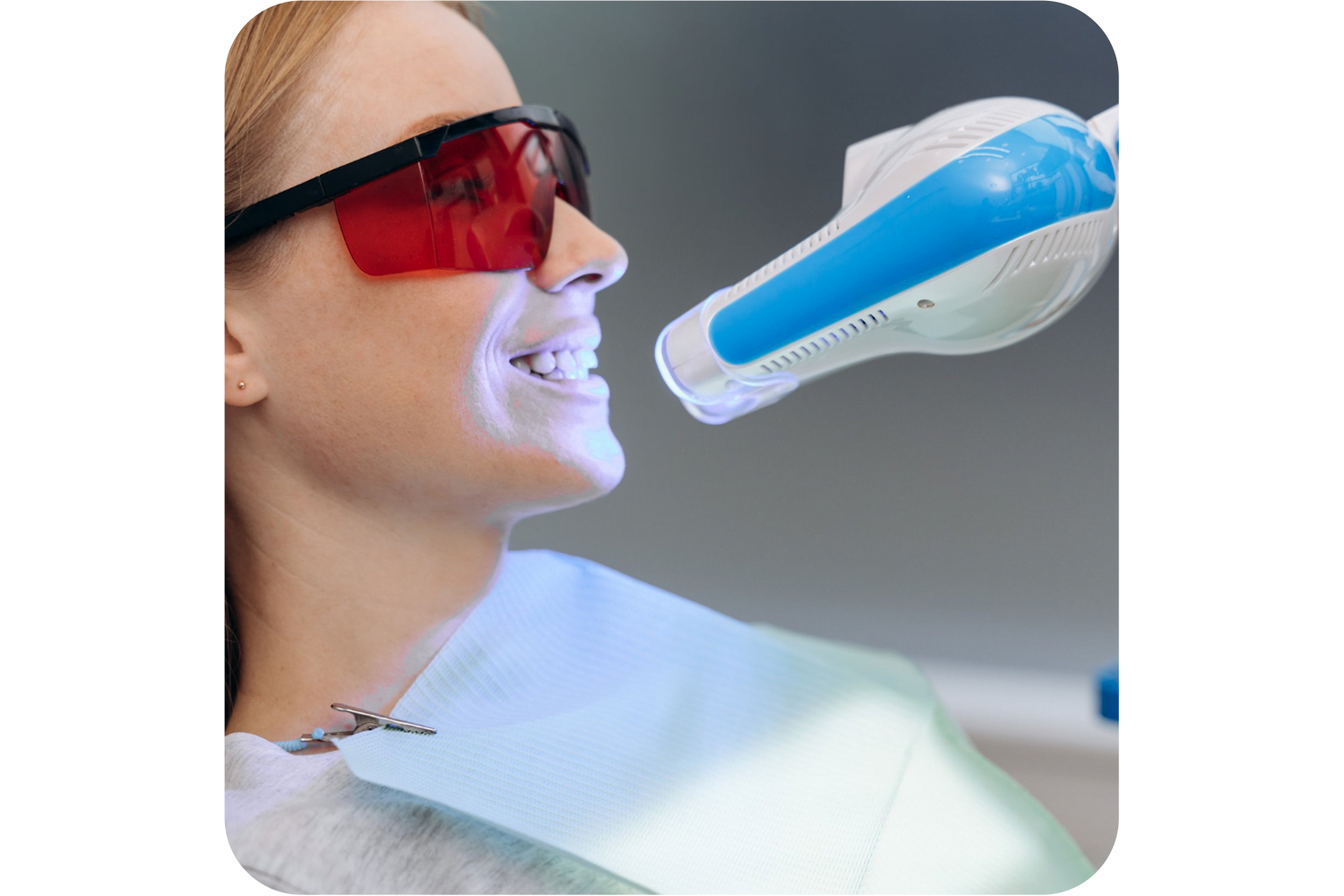
Performed in a clinical setting, this method is ideal for patients with limited time. A single session of approximately 1 hour results in teeth being lightened by 3–4 shades. During the procedure, special whitening gels applied to the tooth surface are activated using lasers or specialized light sources to ensure maximum effectiveness.
2. At-Home Whitening (Home Bleaching)
With this method, which uses custom-made transparent trays, our patients can continue their treatment in the comfort of their own homes. The special gels provided by your dentist are applied to the teeth using the trays for 4–8 hours a day.
For Maximum Longevity: Combined Whitening Treatment
To extend the lifespan of the achieved whiteness and maximize the longevity of the results, we recommend a combined treatment approach. First, in-office whitening performed in a clinical setting delivers rapid results; then, home whitening is used to reinforce the results, ensuring the achieved brightness is maintained for many years.
What Should You Be Aware Of After Teeth Whitening? (White Diet)
The first 48 hours after teeth whitening are the most critical period for the success of the treatment. During this time, tooth enamel is more sensitive to staining agents.
- Avoid Staining Foods: Foods with intense colors, such as tomato-based dishes, cherry juice, and red wine, should not be consumed.
- Follow a White Diet: Light-colored foods such as milk, yogurt, rice, and chicken should be preferred.
- Smoking and Tea/Coffee Consumption: Smoking should be avoided for at least 2 days; tea and coffee consumption should be limited.
Who Can Undergo Teeth Whitening?
The whitening procedure can generally be performed on any healthy individual; however, certain specific conditions require an examination:
- Gum Issues: For patients with active gum disease or receding gums, these issues must be treated first.
- Chipped and Cracked Teeth: Precautions must be taken for teeth with deep cracks on the enamel surface due to the risk of sensitivity.
- Restored Teeth: Existing fillings, veneers, or crowns do not change color with the whitening gel. It is possible to achieve a harmonious result by planning this with Dr. Çağrı Altuntaş.
What You Need to Know About Tooth Sensitivity After Whitening
Sensitivity is a natural but temporary part of the treatment. With the “Gentle Start” protocol we use at our clinic:
- Fluoride treatments are administered before and after the procedure.
- Special desensitizing gels are applied with trays to enhance the patient’s comfort.
- This sensitivity, which typically disappears completely within 24 hours, is not a permanent toothache.
Why Should In-Office Whitening Be Preferred Over At-Home Kits?
Unregulated whitening kits sold on the market can cause burns to the gums and permanent enamel damage. The advantages of professional whitening under the supervision of Dr. Çağrı Altuntaş:
- Speed: Up to 4 shades lighter in just 1 hour.
- Safety: Use of a special barrier to protect the gums.
- Longevity: Longer-lasting results thanks to gel concentrations customized for each individual.
Frequently Asked Questions About Teeth Whitening
Teeth whitening procedures performed in a clinical setting under a dentist’s supervision do not damage tooth enamel. Dr. Çağrı Altuntaş aims to achieve maximum whiteness while preserving the natural structure of the teeth by selecting the gels and light intensity best suited to the patient’s enamel composition. Unlike at-home baking soda treatments or products used without proper guidance, professional whitening does not erode the enamel.
The longevity of teeth whitening typically ranges from 6 months to 2 years, depending on the patient’s dietary habits following the procedure. Smoking and excessive consumption of tea and coffee can shorten this duration. To ensure the results last longer, our clinic recommends personalized maintenance protocols to complement in-office whitening.
The in-office whitening procedure at our clinic is a high-concentration treatment that delivers results in approximately one hour. At-home whitening, on the other hand, is a method applied at home using custom trays prepared by your dentist, and it takes longer to complete. Dr. Çağrı Altuntaş typically recommends a combination of these two methods (Combined Whitening) for the most long-lasting and brilliant results.
It is normal to experience mild sensitivity to hot and cold temperatures during the first 24–48 hours following the procedure, and this is temporary. At our clinic, we use special post-procedure fluoride treatments and desensitizing gels to minimize sensitivity.
No, teeth whitening gels are effective only on natural tooth structure; they do not change the color of porcelain veneers, zirconia restorations, or fillings. If you have such restorations, a preliminary consultation with Dr. Çağrı Altuntaş can help determine whether these restorations should be replaced or if a different aesthetic treatment plan should be developed to ensure aesthetic harmony.
How is Smile Design Planned?

We start with a detailed examination to understand your smile needs.

We create a plan that includes customized treatment options and help you achieve your smile goals.

