Professional teeth bleaching can be worthwhile when natural teeth have external or age-related colour changes and oral health is stable. It cannot lighten crowns, veneers or fillings, and the most appropriate protocol depends on stain type, sensitivity risk, existing restorations and the desired shade—not simply the strongest gel or light source.
If you’re weighing teeth bleaching cosmetic dentist services against another round of drugstore strips, here’s what you should know: the gap between what OTC products can do and what a trained cosmetic dentist can actually deliver is significant. Many people try over-the-counter whitening and walk away underwhelmed, not because their expectations were unreasonable, but because the products genuinely can’t address real staining beneath the enamel surface. Understanding that difference before you spend another dollar on a strip that can’t solve your actual problem is worth five minutes of your time.
Professional dental bleaching operates in a completely different category from anything sold over the counter. The gel concentrations are higher, the application is controlled, your gums are protected, and the whole process starts with an evaluation that determines whether bleaching is even the right approach for your teeth. Cosmetic dentists offering this service range from US-based practices to internationally trained specialists like Dr. Çağrı Altuntaş, whose boutique clinic in Nişantaşı, Istanbul, treats American patients regularly and delivers the same standard of care at a fraction of domestic pricing.
This guide covers exactly what you need to know: how professional methods differ from OTC options, what results are realistic, what it costs, who should and shouldn’t bleach, and how to pick the right provider. No hype. Just what the evidence and clinical practice actually show.
What a cosmetic dentist does differently for teeth bleaching
Professional bleaching is not just a stronger whitening strip. The distinction matters because in-office treatment involves multiple controlled variables that no OTC product can replicate. The process manages gel concentration, application environment, gum isolation, sensitivity monitoring, and pre-treatment evaluation as a complete system. Strips handle exactly none of these.
Why gel concentration is the first thing that matters
Professional-grade hydrogen peroxide gels used in-office typically range from 25% to 40% concentration. Over-the-counter products are legally limited to much lower levels, which directly limits how deeply the bleaching agent can penetrate the enamel and how fast visible change occurs. This isn’t just about strength in a marketing sense, it’s about whether the chemistry can actually reach the chromogens embedded in the dentin beneath the enamel surface, which is where most meaningful staining lives.
The pre-treatment evaluation most people skip
Before any gel touches your teeth, a competent cosmetic dentist checks for active decay, gum disease, cracked enamel, and existing restorations. This step is protective, not procedural. Bleaching over an untreated cavity can cause significant pain, and bleaching over existing crowns or composite fillings creates visible color mismatches because restorations don’t respond to peroxide. A pre-treatment evaluation catches all of this before it becomes a problem, something strips can’t do because they have no way of knowing what’s already in your mouth.
Gum protection and controlled bleaching conditions
In-office bleaching involves carefully isolating and protecting the gingival tissue before any peroxide gel is applied. This single step significantly reduces soft-tissue irritation, which is one of the more common side effects of bleaching done without proper isolation. It also allows the dentist to use higher-concentration gels safely, because the surrounding tissue is protected throughout the procedure. Most OTC strips and generic trays do not provide this level of professional isolation, and many stock pharmacy trays may not fit precisely enough to keep gel away from the gums consistently.
The three professional whitening methods worth knowing
Professional dental bleaching isn’t one thing. Cosmetic dentists typically offer three distinct approaches, and the differences between them affect speed, cost, convenience, and how dramatic the final result looks. Understanding each option helps you walk into any consultation knowing exactly what to ask for.
Chairside bleaching: the fastest route to whiter teeth
The dentist applies a high-concentration peroxide gel directly to isolated teeth in the office. Results are visible within a single appointment, typically involving 20 to 60 minutes of active bleaching time depending on the protocol used. This is the right approach for anyone who needs fast results before an event or wants maximum change in minimum visits. Because the dentist controls every aspect of the process and monitors how your teeth and gums are responding in real time, adjustments can happen immediately when needed.
Light- and laser-activated whitening (including Zoom)
Systems like Philips Zoom pair the bleaching gel with an LED or plasma arc light designed to activate the peroxide and potentially shorten chair time. The light doesn’t always improve the final whitening outcome compared to gel alone, but it can make the in-office appointment faster. Zoom is one of the most widely recognized names in this category and is offered at premium cosmetic practices globally, including clinics in Istanbul that serve international patients regularly.
Custom take-home trays from your dentist
The dentist takes impressions of your teeth, fabricates trays that fit precisely, and provides a lower-concentration bleaching gel for use at home over days to weeks. Results build gradually rather than arriving in one session. The advantage is flexibility and often a lower upfront cost; the tradeoff is that results develop over days to weeks rather than a single appointment. Because the gel concentration is lower, sensitivity tends to be more manageable for people with reactive teeth, making this a practical choice for patients who’ve had sensitivity issues with other bleaching methods.
How many shades whiter, and how long results realistically last
Shade counts are the most marketed claims in the whitening industry, and they’re also the most misunderstood. Setting honest expectations before you book anything saves you from being disappointed by results that are actually quite good but don’t match an inflated pre-treatment promise.
What Zoom and professional systems actually achieve
In-office Zoom whitening is commonly cited at up to 8 shades lighter in a single session, based on Vita shade guide measurements. Full courses of professional take-home bleaching can achieve 6 to 9 shades depending on the starting color and how consistently the trays are worn. Darker, more yellowed teeth tend to see the largest absolute shift because there’s more room for visible change. Teeth that are already relatively light may show a smaller perceptible difference even if the shade guide confirms improvement.
How long professional bleaching results hold
Most professional whitening results last between 1 and 3 years. That range is wide because it depends almost entirely on lifestyle factors: coffee, red wine, tea, and tobacco are the primary drivers of color relapse. Annual or biannual touch-ups using dentist-provided take-home trays are the most cost-effective way to sustain results without rebooking a full in-office session. Patients who keep up with periodic maintenance tend to stay noticeably whiter than their pre-treatment baseline over the long term.
Color rebound: what almost nobody explains upfront
In the 48 to 72 hours after in-office bleaching, teeth can experience some color rebound as hydration levels normalize and surface stains begin resettling. The result you see immediately after treatment is often the peak whiteness. Knowing this prevents unnecessary concern when teeth look slightly less dramatic two days later. The settled result is still significantly whiter than your baseline, the immediate post-treatment peak is partly an artifact of temporary dehydration during the procedure, not the final answer.
In-office whitening vs. take-home trays: which one makes sense for you
This comparison comes down to your timeline, budget, and how your teeth respond to bleaching. Neither option is universally superior. They serve different needs, and knowing which one fits your situation saves both money and frustration before you book anything.
When in-office bleaching is the right call
If you have a deadline, a wedding, an important event, a job change, in-office whitening delivers the fastest visible change. It’s also the better choice if you’ve struggled with sensitivity before, because the dentist monitors the process and can stop or adjust in real time. That supervision matters more than most patients realize. You’re not just paying for a stronger gel; you’re paying for someone experienced to manage the entire process with your specific oral health in mind.
When take-home trays deliver better value
Custom take-home trays work well when you’re not in a rush, want a gradual change that looks natural, or want a cost-effective way to maintain results between in-office appointments. Because the gel concentration is lower, sensitivity is typically more manageable for reactive teeth. The precise fit of dentist-made trays also means the gel stays where it’s supposed to, something generic pharmacy trays consistently fail to achieve. That fit alone makes them a meaningfully different product from anything off a shelf.
Combining both methods for maximum outcome
Many cosmetic dentists recommend a combined protocol: start with an in-office session for an immediate baseline improvement, then use custom trays at home for two to three weeks to deepen and stabilize the result. This approach tends to produce the most consistent, long-lasting outcome because the initial in-office session creates dramatic early change while the tray phase reinforces and extends it. It’s a widely used strategy among cosmetic dentists who focus on comprehensive smile transformations.
Side effects, sensitivity, and who should hold off on bleaching
Tooth sensitivity is the most common side effect of professional dental bleaching, and it’s more widespread than most people expect going in. Understanding the full safety picture, including who shouldn’t bleach at all, is essential before committing to any treatment plan.
Tooth sensitivity: how common and how significant
Research on bleaching sensitivity reports a wide range of incidence, from roughly 15% to 78% of patients, with variation driven largely by differences in peroxide concentration and protocol design. In-office high-concentration bleaching tends to carry higher sensitivity rates than lower-concentration take-home systems. For most people, sensitivity is temporary and resolves within 24 to 72 hours after treatment ends. Pre-treating with a desensitizing toothpaste in the two weeks before bleaching can reduce the impact noticeably, and many dentists recommend potassium nitrate-based products for this purpose. Sensitivity is normal and short-lived; severe or lasting pain is not.
Contraindications a responsible dentist will catch
Bleaching is not appropriate for everyone. Active decay, exposed root surfaces, cracked enamel, gum disease, and extensive restorations all require evaluation before any bleaching begins. Existing crowns, veneers, and composite fillings don’t respond to peroxide, which means bleaching adjacent natural teeth without a plan creates visible color mismatches that weren’t there before treatment. This is one of the most common preventable problems in cosmetic dentistry, and it’s entirely avoidable with a proper pre-treatment assessment.
What a careful cosmetic dentist does before starting treatment
Before treatment begins, a thorough provider will run a full oral health evaluation, review your medical and dental history, ask specifically about sensitivity history, and explain realistic expectations based on your actual shade baseline. That evaluation is what separates professional bleaching from an at-home kit, it’s the clinical foundation that determines whether treatment will be safe, effective, and worth doing in the first place. A dentist who skips it is giving you a clear signal about how they approach everything else too.
What professional teeth bleaching costs, and a smarter option abroad
US prices for professional in-office bleaching are real, and for many patients, they’re a genuine barrier. Understanding the full cost picture, including what’s driving those numbers and where alternatives exist, gives you better leverage when deciding where and how to get treatment.
Current US pricing for in-office and take-home bleaching
In-office professional whitening in the United States currently ranges from $300 to $1,000 per session, with the average sitting closer to $450 to $650 in most markets. Laser-activated systems like Zoom average around $583, while laser whitening specifically runs closer to $792 on average. Dentist-supplied take-home trays run $150 to $600 depending on the practice. None of this is typically covered by dental insurance, which classifies whitening as cosmetic across the board. If you’re paying out of pocket, which most whitening patients are, these numbers are exactly what you’ll face.
Why Istanbul changes the cost math for teeth bleaching cosmetic dentist treatment
Clinics like Dr. Altuntaş’s practice in Nişantaşı, Istanbul offer the same professional-grade in-office bleaching, high-concentration peroxide, custom trays, full gum protection, and pre-treatment evaluation, at substantially lower prices than comparable US treatment. In Istanbul, professional in-office whitening typically runs $200 to $450 depending on the system and clinic, representing savings of 50% to 75% compared to equivalent US treatment. Dr. Altuntaş’s clinic holds Health Turkey certification, uses modern intraoral scanning technology, and regularly treats American patients traveling for cosmetic work. For someone already considering a dental trip for veneers or implants, adding professional whitening costs almost nothing extra, and the total bill still lands well below what the same combination would cost at a US cosmetic practice.
Is the trip worth it for bleaching alone?
For a single whitening treatment, the math is tighter but often works out, especially if you combine it with a broader smile consultation, a tourism itinerary in Istanbul, or additional cosmetic work you’ve been delaying due to US pricing. Istanbul is one of the most visited cities in the world, so the trip itself has appeal beyond dentistry. The real case for traveling is when whitening is one piece of a larger picture where US costs have made the whole thing feel financially out of reach. Many patients who contact Dr. Altuntaş’s clinic about a single procedure end up addressing two or three things they’d been postponing, all within a single trip that still costs less than one procedure at home.
How to find and vet a cosmetic dentist for bleaching
Cosmetic dentistry has no single governing certification in the US, which means the burden of vetting falls entirely on you. Knowing what credentials actually carry weight, what questions to ask, and what behavior should end the conversation keeps you from making a costly mistake with your teeth.
Credentials that actually carry weight
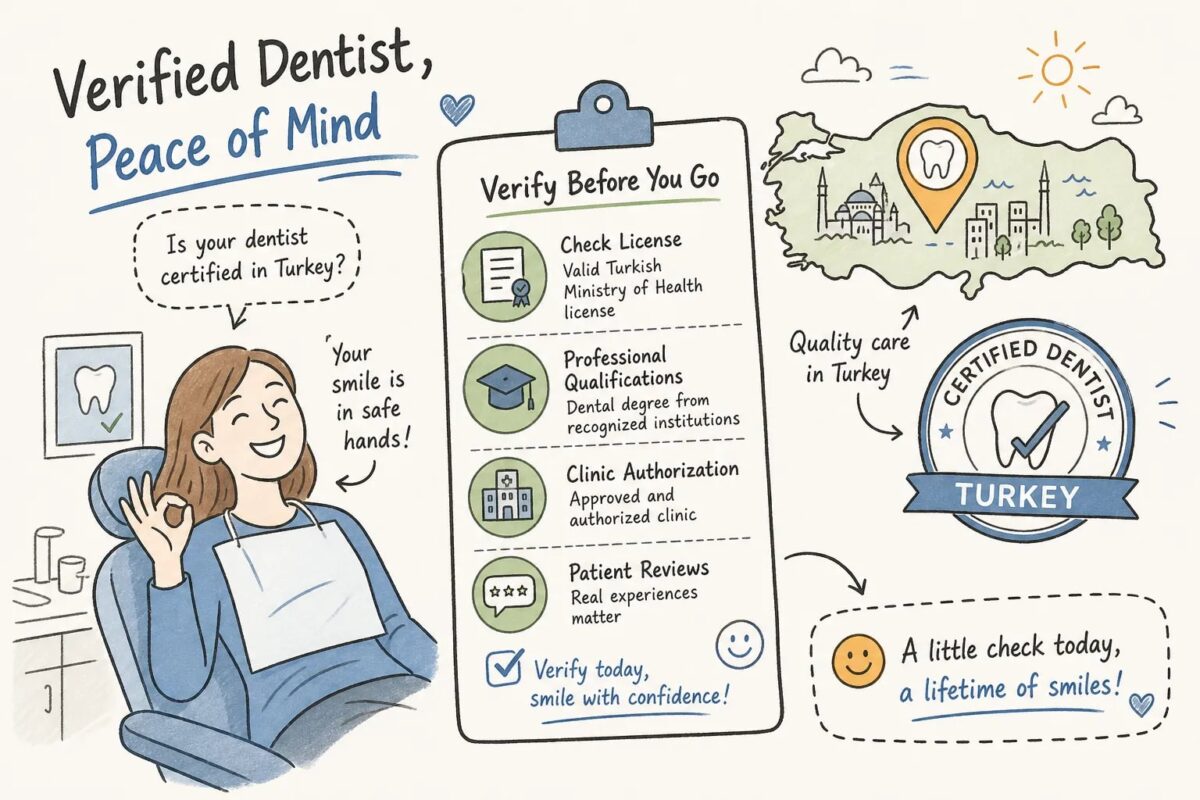
Look for a DDS or DMD with an active state license and verifiable continuing education in cosmetic dentistry. AACD membership indicates interest in the field; AACD Accreditation is the significantly higher bar, involving written exams, documented clinical case review, and an oral examination. Membership without accreditation tells you the dentist joined an organization. Accreditation tells you they passed a rigorous evaluation of their actual clinical work. For international providers, Health Turkey certification and postgraduate specialty training serve as meaningful trust markers. Dr. Altuntaş holds a master’s degree in Oral Surgery and Implantology from Saint Camillus University in Italy, an institution-based credential with a verifiable academic record behind it.
The questions to ask before you book
Ask to see before-and-after photos of their actual bleaching patients, not stock images. Ask which whitening system they use and why it fits your case specifically rather than why they prefer it generally. Ask how they handle sensitivity during and after treatment, including what they recommend for pre-treatment desensitization. Ask for a full breakdown of total costs, including any follow-up visits. A dentist who gives clear, specific answers to all of these is operating transparently. Vague or deflective responses to straightforward questions are informative in their own way.
Red flags that should end the conversation
Pressure to book or sign financing on the spot is the clearest signal to leave. So is an unwillingness to show their own patient portfolio, guarantees of specific shade outcomes, or recommending bleaching without first evaluating your overall oral health. Very low prices with no explanation are worth questioning, not celebrating. Quality professional bleaching has real costs, and providers who offer dramatically lower pricing without explanation are cutting corners somewhere, in evaluation, materials, or the actual bleaching protocol. You want the process done correctly far more than you want it done cheaply.
The bottom line on professional teeth bleaching
Teeth bleaching by a cosmetic dentist delivers results that OTC products genuinely can’t match. Stronger gel, supervised treatment, gum protection, and a pre-treatment evaluation that prevents problems before they start are the core differences, and none of them are optional extras. They’re what makes the procedure worth doing in the first place. The tradeoffs are cost and access, and in the US, that cost is real and significant.
For patients open to thinking differently about where they receive treatment, Dr. Altuntaş’s clinic in Istanbul offers the same professional standard at prices that change the entire calculation. The clinic’s Health Turkey certification, Dr. Altuntaş’s postgraduate training in Italy, and a 15-year track record treating international cosmetic patients are all verifiable, not marketing copy. You can request a free smile analysis directly from the clinic’s website and start the conversation without committing to anything.
Whether you book locally or abroad, the selection process is the same. Verify credentials, ask specific questions, sidestep high-pressure situations, and insist on an honest evaluation of your teeth before any treatment begins. That evaluation is where the difference between a disappointing strip and a genuine result actually starts.
Frequently Asked Questions
Is in-office bleaching more effective than take-home trays?
In-office treatment is faster, while supervised take-home trays offer gradual control. A combined protocol may be used in selected cases.
Does laser or LED light guarantee a better result?
Light activation is only one part of the protocol. Gel chemistry, diagnosis, exposure time and sensitivity management are more important than marketing terminology.
Will bleaching change crowns or veneers?
No. Existing restorations retain their colour and may need separate planning if they no longer match.
Is tooth sensitivity normal after bleaching?
Temporary sensitivity can occur. Concentration, exposure and desensitising measures can be adjusted to the patient.
How long will the result last?
Duration varies with coffee, tea, tobacco, hygiene and maintenance. Individual shade stability cannot be guaranteed.