You’re looking at a photo of yourself and something feels off. Maybe it’s the staining you’ve learned to work around, or the chipped incisor you’ve stopped noticing in the mirror but can’t ignore in a picture. The frustration isn’t just cosmetic; it’s not knowing whether what bothers you is even fixable, or what a real cosmetic dentistry transformation actually involves beyond a vague promise of a “new smile.” That gap between problem and solution is where most people get stuck.
This guide closes that gap. It covers which procedures solve which problems, what honest before-and-after results look like at each stage, what things cost across Canada, and how to find a dentist who can deliver a result that looks like you, not a catalog photo. The best outcomes in cosmetic dentistry aren’t built from templates. They’re built from the understanding that every smile is a signature, and treating it as anything less produces results that look exactly like that.
Why some smile makeovers look natural and others don’t
One of the biggest variables in any cosmetic dental outcome isn’t the material used. It’s how much the treatment was designed around the individual patient’s face, lip shape, skin tone, bite, and aesthetic preferences. A veneer shade that looks stunning on one person looks jarring on another. Uniform, bright-white results are the most common tell that a treatment was applied rather than designed.
Over-standardized results follow a recognizable pattern: teeth that are too white for the patient’s complexion, shapes that are subtly too uniform, or a gum line that was reshaped without accounting for the full smile arc. The outcome looks assembled rather than natural. The fix for this starts before a single tooth is touched.
How digital smile design changes the cosmetic dentistry transformation process
Digital smile design (DSD) is a planning method that uses intraoral scans, photographs, and specialized software to analyze facial and dental proportions before any treatment begins. The dentist designs a proposed smile digitally, adjusting tooth shape, size, and position relative to the patient’s face. The patient reviews and approves the design, and that approved plan becomes the guide for every procedure that follows. Learn more about digital smile design.
This technology is what separates boutique cosmetic practices from high-volume clinics where efficiency is prioritized over personalization. Dr. Çağrı Altuntaş Dental Clinic’s Smile Design in Istanbul’s Nişantaşı district uses digital smile mapping as the starting point for every case, not as a premium add-on, but as the foundation of how treatment is planned. For patients traveling from Canada, this means seeing the projected outcome before committing to any procedure.
What a real consultation should include
A well-structured cosmetic dental consultation goes beyond a quick look in the chair. It includes a facial analysis, smile line assessment, shade matching against your skin tone, and a real conversation about what you want changed and what you want to preserve. The planning stage is where a transformation either gets set up for success or for disappointment. A dentist who skips this step is one to avoid.
The procedures behind the most dramatic before-and-after results
Veneers and bonding: surface changes with serious impact
Porcelain veneers are thin shells bonded to the front surface of teeth, designed to correct chips, cracks, gaps, discoloration, and mild misalignment in a single treatment. They’re the procedure behind most full-smile transformations you see in before-and-after galleries, typically covering several front teeth, often the upper anterior group, depending on the scope of the case. When the shade and shape are matched to the patient’s features, the result doesn’t read as dental work. It reads as a better version of the person’s natural smile. For an overview of common dental procedures and how they compare, see this guide to common dental procedures.
Dental bonding applies tooth-colored resin directly to the tooth to address smaller issues: a single chip, a slight gap, minor discoloration. It’s a same-day procedure at a fraction of the veneer cost. Bonding is the right tool for targeted repairs; veneers are the tool for smile-wide transformations. Using bonding where veneers are needed, or veneers where bonding would do, is one of the more common planning missteps.
Teeth whitening: what it delivers and where it stops
Professional in-office whitening is effective for surface staining from food, drink, aging, and tobacco. Clinically significant shade improvements are achievable with professional treatments, and in-office sessions are typically faster and more consistent than take-home kits. The important limitation: whitening does not change the color of existing veneers, crowns, or bonding already in place.
Because of this, whitening is almost always sequenced first in a full smile makeover. The natural teeth are whitened to the target shade, and any new veneers or bonding work is then matched to that whitened baseline. Reversing the sequence creates a mismatch that can’t be corrected without redoing the restorative work.
Gum contouring: the procedure most people overlook
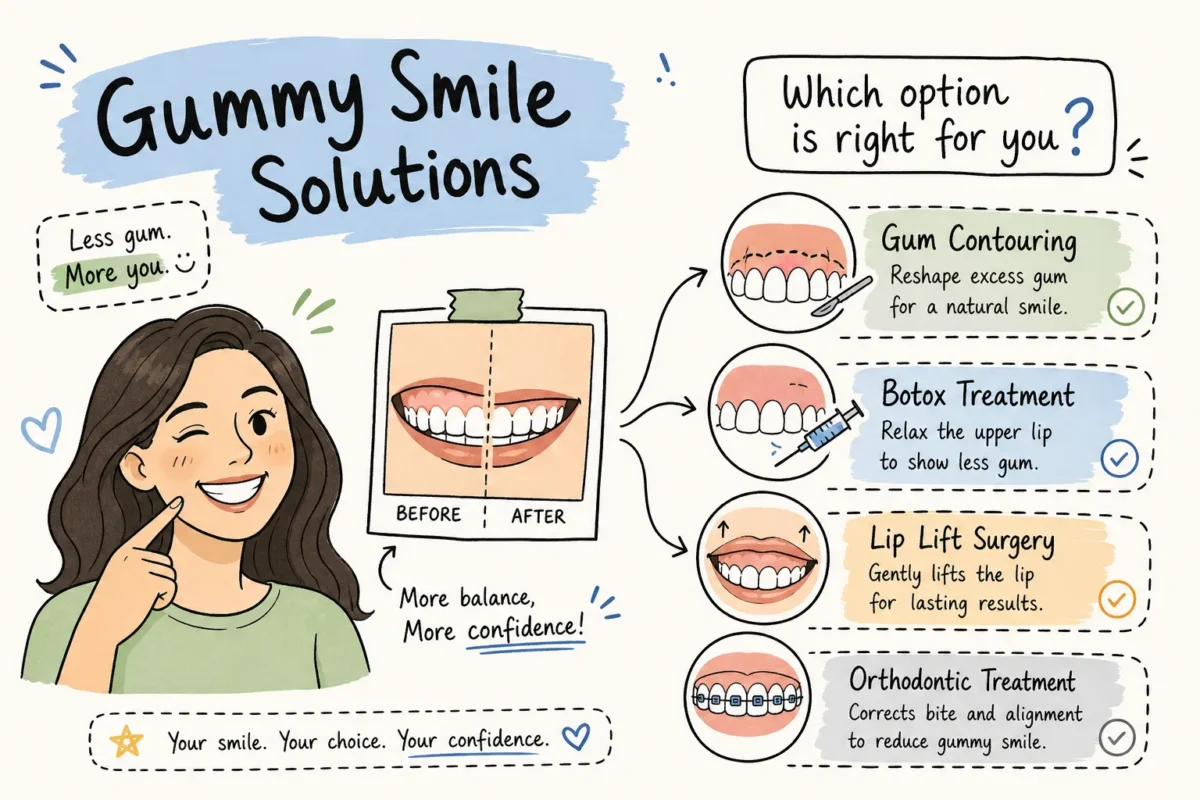
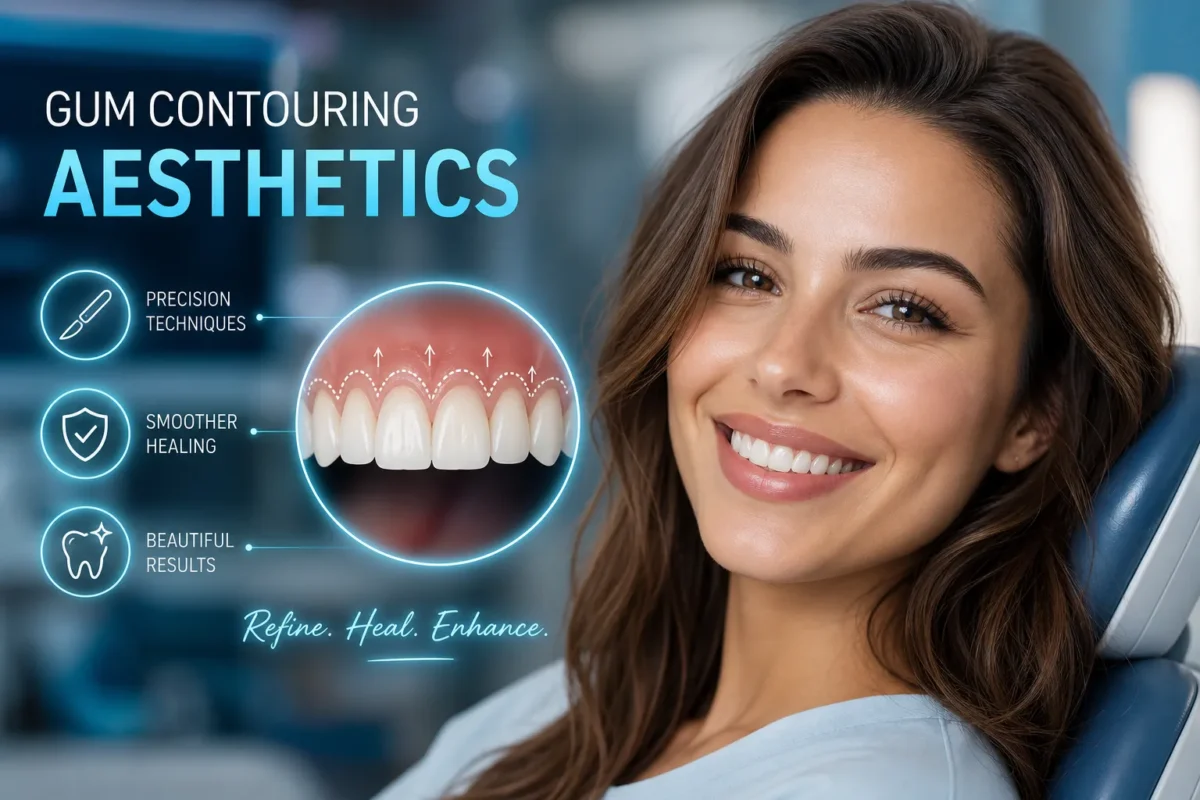
Gummy smile correction removes excess gum tissue to expose more of the tooth surface, improving the proportion between teeth and gums. Before treatment, a patient with this concern often has teeth that look short or square even though they’re structurally healthy; the issue is the frame, not the teeth themselves. After gum contouring, the same teeth appear longer, the smile line follows the upper lip naturally, and the overall facial balance improves noticeably.
Gum contouring is frequently the missing piece in a smile transformation. Technically perfect veneers can still look off if the gum line is uneven or positioned too low. Addressing the gum line before final veneer placement ensures the whole result works as a system. For clinics offering targeted gum reshaping, see their gum aesthetics information.
Realistic before-and-after expectations by smile problem
Surface stains from coffee, tea, wine, and aging respond well to professional whitening. Intrinsic staining, caused by medications, trauma, or development, doesn’t respond to whitening and typically requires veneers or bonding to fully correct. Knowing the difference before starting treatment prevents a situation where a patient goes through whitening and ends up with uneven or incomplete results because the staining was structural.
For chips, gaps, and mild crowding, veneers produce a visual correction that looks immediate and lasting. They don’t change the bite or jaw position, and they’re not a substitute for orthodontic work when alignment is the primary concern. A central gap with two chipped lateral incisors is a clear veneer or bonding case; a patient with significant crowding affecting their bite needs a different starting point.
For patients with a gummy smile, the before-and-after contrast from gum contouring alone is often the most dramatic change visible in photos. The teeth weren’t the problem. Removing the excess gum tissue shifts the perceived proportion of the entire smile, and the face looks more balanced from the front. This is why a complete smile analysis matters before assuming which procedures are actually needed.
Timelines, visits, and what recovery actually involves
Bonding is a single-visit procedure with minimal downtime. Whitening is either one in-office session or a two-week take-home tray course; temporary sensitivity is the most common side effect and typically resolves within a few days. Gum contouring is usually completed in one visit for limited reshaping, with mild soreness managed over several days and full gum healing taking up to two to four weeks depending on how much tissue was treated.
Veneers require two to three visits across one to four weeks: an initial planning and preparation appointment, a visit for temporary veneer placement while the final restorations are fabricated in a dental lab, and a final bonding appointment. Temporary veneers are worn during the interim period and serve as a practical preview of the shape and proportion of the final result.
For a full smile makeover that combines procedures, the sequence matters as much as the individual steps: whitening first, gum contouring before veneers, restorative work in a logical order. Rushing this process to compress visits is one of the more reliable paths to a disappointing outcome. Recovery across all cosmetic dental procedures is mild compared to surgical work, but the adjustment period is real, expect bite sensitivity after veneers, gum tenderness after contouring, and temporary food restrictions during healing.
What cosmetic dentistry costs in Canada, and why some patients look abroad
Canadian cosmetic dental costs vary by province and clinic, but the general ranges across major procedures look like this:
- Professional teeth whitening: $250, $1,000
- Dental bonding: $145, $700 per tooth
- Porcelain veneers: $583, $1,001 per tooth on provincial averages, with premium urban practices reaching $900, $2,500
- Gum contouring: $500, $3,000
- Full smile makeover combining procedures: $3,500, $15,000+
Provincial variation is real. According to Canadian Dental Hub fee data, Ontario averages around $705 per veneer; British Columbia, $1,001; Alberta, $949; Quebec, $583. These are averages, not ceilings. A 10-veneer smile makeover in a major Canadian city can run $15,000 to $25,000 out of pocket, with virtually no insurance coverage for cosmetic procedures. If you need a quick reference for typical dental treatment costs, that can help frame expectations. That cost reality leads many Canadians to explore dental tourism as a practical alternative.
Clinics in Turkey and other countries are attracting North American patients with competitive pricing and internationally recognized accreditations. About Dt. Çağrı Altuntaş, who holds a Master’s degree in Oral Surgery and Implantology from Saint Camillus University in Italy and brings over 15 years of cosmetic dentistry experience to every case, the clinic operates under Health Turkey certification in Istanbul’s Nişantaşı district. Digital smile design and individualized planning are standard for every cosmetic dentistry transformation, not optional extras. For Canadians weighing a full smile makeover, verifying credentials, certifications, and patient outcome records is the key factor that separates trustworthy practices from high-volume operations.
How to choose a cosmetic dentist who can deliver your result
The consultation is the most revealing moment in the selection process. A trustworthy cosmetic dentist wants to understand your goals in detail, shows before-and-after photos from their own cases rather than stock images, and offers a digital or physical mock-up before any treatment plan is approved. If a dentist skips the mock-up step, you have no way to evaluate whether your expectations and theirs are aligned. Keep in mind that before-and-after photos are typically taken at different postoperative stages, and outcomes vary by patient, it’s worth asking when the “after” photos were taken and whether cases shown are comparable to yours.
Three questions worth asking directly: How many cases similar to mine have you completed? Can I see before-and-after photos of those specific cases? Will I see a digital preview before treatment begins? The answers reveal more than a credentials list, they show you how the dentist actually thinks about individual cases.
Trust signals worth looking for include verifiable credentials, real patient reviews with detailed case descriptions, digital planning technology, and a willingness to discuss realistic limitations alongside expected outcomes. Red flags include pressure to begin treatment immediately, no preview or mock-up offered, vague answers about materials and lab quality, and before-and-after photos where every result looks identical. A well-planned cosmetic dentistry transformation is built around your specific face, your specific goals, and a timeline that works for your situation, not a preset package applied to every patient regardless of need.
The next step is clarity, not commitment
You started with a photo and a frustration you couldn’t quite name. Now you have a working map: which procedures address which problems, what honest before-and-after outcomes look like, what it costs in Canada, and what separates a result you’ll love from one you’ll regret. That’s a meaningful shift from where most people begin.
A great smile transformation comes from individualized planning, the right procedure sequence, and a dentist who treats each case on its own terms. Those aren’t abstract standards; they’re the practical difference between natural-looking results and results that look like work.
The logical next step is a smile analysis, not a signed treatment plan. Whether you’re exploring options locally or looking into dental tourism as a realistic path, a proper consultation gives you a clear picture of what’s possible for your specific situation. That’s where every worthwhile cosmetic dentistry transformation actually begins.