
Missing teeth are not merely an aesthetic concern; they also lead to serious oral health issues such as impaired chewing function, speech disorders, and the shifting of adjacent teeth. Implant treatment resolves these issues at their root by placing titanium screws—which mimic tooth roots—into the jawbone to replace missing teeth. At his clinic in Nişantaşı, Istanbul, Dr. Çağrı Altuntaş offers patients implant solutions that provide the comfort of natural teeth and can be used for a lifetime, utilizing advanced surgical techniques and digital planning.
What Is a Dental Implant?
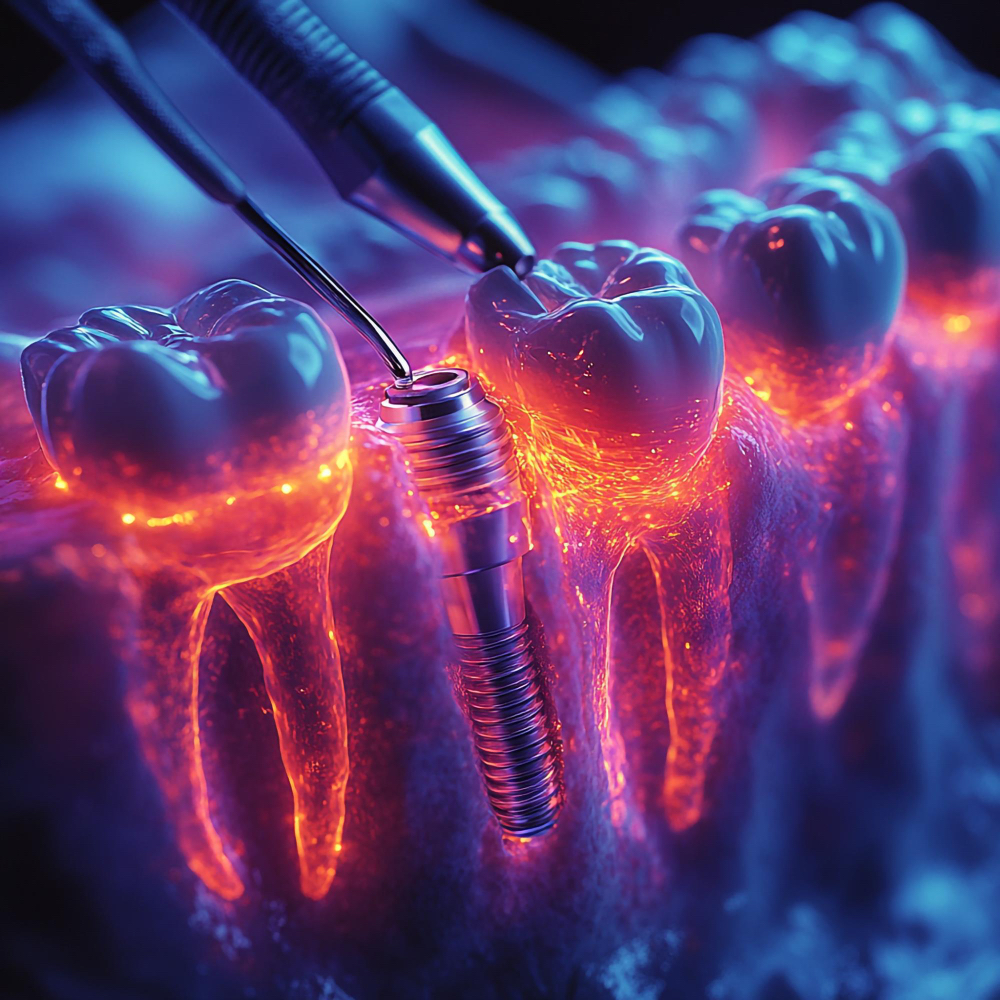
Dental implants are artificial tooth roots made of titanium, a material that is fully biocompatible with the body. These screws, which are placed into the jawbone, fuse with the bone tissue (osseointegration) to form a solid foundation for the porcelain or zirconia crowns that will be placed on top.
The greatest advantage of implant treatment is that it requires no intervention on adjacent teeth and helps preserve facial contours by halting jawbone resorption.
The Benefits of Implant Treatment
- Natural Feel: Provides a level of comfort that makes it indistinguishable from your own teeth while chewing and speaking.
- Protects Adjacent Teeth: Unlike with bridge treatment, there is no need to reduce the healthy adjacent teeth.
- Long-Lasting: With proper care and regular maintenance, it can last a lifetime.
- Preserves Facial Aesthetics: Prevents lip sagging and an aged appearance caused by missing teeth by supporting the bone structure.
- Safe and Secure: Unlike removable dentures, they do not shift in the mouth, allowing patients to smile and eat freely.
How Is Implant Treatment Performed?
At our Nişantaşı clinic, the implant procedure consists of the following steps, performed using the latest technologies and digital surgical guides:
Detailed Examination and Radiographic Analysis: The volume and quality of the jawbone are analyzed using panoramic X-rays and, when necessary, 3D computed tomography (CBCT).
Procedure (Implant Placement): Under local anesthesia, the implant is placed in the targeted area. This procedure typically takes 15–30 minutes, and the patient feels no pain.
Healing Process (Osteointegration): Depending on the specific case, a waiting period of 2 to 4 months is required for the implant to fuse with the bone. During this period, temporary prosthetics may be provided to the patient to maintain oral function.
Superstructure (Restoration) Phase: The treatment is aesthetically completed by placing zirconia or porcelain crowns on the implant.
All-on-4 and Same-Day Implants (Fast & Fixed)
For patients who have no teeth or are at risk of losing their existing teeth, we use the All-on-4 or All-on-6 techniques at our Nişantaşı clinic. With these methods, a full set of fixed teeth is placed on just 4 or 6 implants, allowing our patients to regain functional teeth on the same day.
Implant Prices 2026
Implant prices vary depending on the chosen implant brand (Swiss, German, domestic, etc.), the condition of the jawbone (need for bone grafting), and the material of the prosthesis to be placed. The most accurate information regarding current implant costs for 2026 will be determined following radiological examinations and a personalized treatment plan developed by our specialist.
Frequently Asked Questions About Dental Implants
Is implant treatment painful?
Since the procedure is performed under local anesthesia, you won’t feel any pain. Any mild discomfort that may occur after the procedure can be easily managed with standard pain relievers prescribed by your doctor.
Is there a risk that the body will reject the implant?
Titanium implants are biocompatible materials and do not cause allergic reactions. The success rate is over 98%. Failure is usually due to sterilization errors during surgery or the patient’s poor oral hygiene.
Can implants be placed in patients with diabetes?
Yes, implant treatment can be safely performed on patients with diabetes whose blood sugar levels are under control (with appropriate HbA1c levels).
If there isn't enough bone, can an implant still be placed?
In patients with insufficient bone volume, advanced surgical procedures such as “bone grafting” or “sinus lifting” can be used to increase bone volume and prepare a suitable foundation for the implant.
How long do dental implants last?
Dental implants are designed to last a lifetime, provided you brush your teeth regularly and keep up with your routine checkups.
How long after the procedure will my teeth be fitted?
It usually takes 2 to 4 months for the implant to fuse with the bone. However, in suitable cases, temporary teeth can be placed on the same day using the “immediate loading” technique.
What should I be careful about after getting an implant?
For the first 24 hours, you should avoid very hot foods and refrain from smoking. Maintaining good oral hygiene and taking your medications as prescribed will speed up your recovery.
Does smoking affect the success of dental implants?
Yes, heavy smoking can impair blood flow to the gums, making it harder for the implant to fuse with the bone. It is important to cut back on smoking or quit altogether during the healing process.
Is an implant needed for every missing tooth?
No, in cases where there are adjacent missing teeth, implant-supported bridges can be used to restore all the teeth with fewer implants.
Which brand of implant should I choose?
Our clinic uses globally recognized brands with a proven track record of success. The brand that is best suited for you will be determined in consultation with our dentist, taking into account your budget and bone structure.