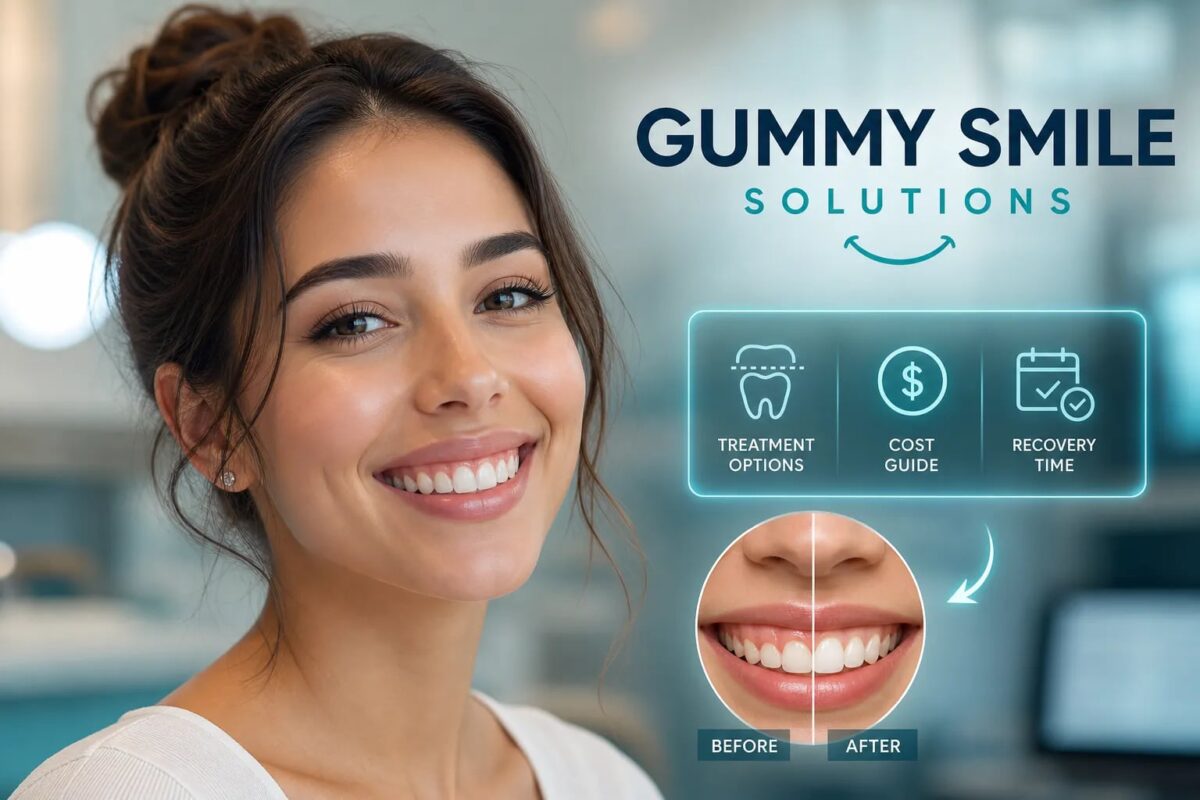
About 10% of adults between 20 and 30 have excessive gingival display. In women, that number climbs to 14%. Many patients report first noticing it in photos, long before they ever hear the clinical term. And many seek online solutions before getting a professional diagnosis, searching for a fix before anyone has told them what’s actually wrong.
That’s the problem. A gummy smile isn’t a single condition. It’s a symptom, and it has at least six distinct causes. The treatment that works for one cause can be completely useless, or even counterproductive, for another. People who jump straight to the most popular option, whether that’s Botox or gum contouring, without a proper diagnosis often find themselves spending hundreds or thousands of dollars with no improvement. Sometimes the result is worse than where they started.
If you’re wondering what the best treatment options for a gummy smile actually are, start here: the right answer depends entirely on the cause. This guide covers all seven major gummy smile treatment options available in 2026, how each one works, who it’s appropriate for, what recovery looks like, and what it costs. But before any of that, it starts where every good treatment plan starts: with the cause.
1. What’s actually causing your gummy smile matters more than the treatment
Six distinct causes drive excessive gingival display, and they don’t all respond to the same treatments. A hypermobile upper lip means the muscles that elevate the lip pull it too high on smiling, exposing more gum than normal even when the teeth and jaw are perfectly proportioned. A short upper lip is anatomically different: the lip itself is too short to cover the gum line at full smile. Altered passive eruption, commonly abbreviated as APE, happens when gums haven’t receded properly after teeth finish erupting, making the teeth look short and square. Vertical maxillary excess is a skeletal problem: the upper jaw is overdeveloped vertically. Dentoalveolar extrusion describes upper front teeth that have over-erupted downward. And gingival overgrowth or hypertrophy is exactly what it sounds like, enlarged gum tissue covering more of the crown than it should, sometimes triggered by certain medications.
Most gummy smiles involve more than one of these factors. Clinicians sort through them using a combination of extraoral exam, which assesses lip length, lip mobility, and smile line at rest and at full animation; intraoral exam, which measures clinical crown height, gingival contour, and the position of the cementoenamel junction; and radiographs or cephalometrics when skeletal or eruption-related causes are suspected. Medication history matters too, since some drugs cause gingival overgrowth as a side effect.
The diagnosis drives every decision that follows. Skipping a proper clinical assessment and going straight to a cosmetic fix is the most common and expensive mistake patients make. The six causes look similar in a mirror and completely different under clinical examination.
2. Gum contouring and laser reshaping: the most straightforward fix
When the cause is altered passive eruption or gingival overgrowth, gum contouring is often the cleanest gummy smile correction available. The procedure removes excess gum tissue to expose more of the natural tooth crown, reshaping the gum line for a more proportional result. Traditional gingivectomy uses a scalpel; laser contouring uses a diode or Er:YAG laser for more precision, less bleeding, and generally faster healing. Both are performed under local anesthesia, usually by a periodontist or a cosmetic dentist with periodontal training.
The results are permanent in the right cases. When excess gum tissue is the primary driver, gum reduction corrects the appearance at the source. Teeth look longer, the smile looks more balanced, and there’s no ongoing maintenance required once healing is complete. Laser techniques are increasingly used for routine contouring cases because they tend to produce less postoperative discomfort and faster soft-tissue recovery compared to traditional scalpel methods.
Most patients resume normal activity within days. Mild soreness and sensitivity are common for the first week or two, and soft-tissue healing is typically complete within one to two weeks. The risks to know about: an uneven gum line if tissue is removed too aggressively, tooth sensitivity from exposed root surfaces, and infection, though all three are uncommon with a skilled provider and standard aftercare.
What gum contouring won’t fix: a hypermobile lip or a skeletal jaw excess. Removing gum tissue when the problem is a lip that rises too high on smiling doesn’t change how high the lip rises. A third consideration worth stating plainly: without confirming the underlying cause first, even a technically clean procedure can deliver the wrong outcome. Diagnosis first, always.
3. Crown lengthening: when the problem goes deeper than gum tissue
Crown lengthening and gum contouring are often confused because both involve the gum line. They’re different procedures with different indications. Gum contouring trims soft tissue. Crown lengthening reshapes the underlying bone that supports the tooth, which is necessary when the bone crest sits too close to the natural tooth margin. Without addressing the bone, soft-tissue removal alone often relapses, the gum migrates back toward its original position within months.
The procedure is performed by a periodontist, typically under local anesthesia. Duration varies by case complexity, a single tooth in a straightforward case is meaningfully faster than a multi-tooth case involving osseous reshaping across a full quadrant. Crown lengthening is the right call when clinical crown height is insufficient and probing confirms the bone position is the structural issue. It’s also used preparatory to crowns or veneers when there isn’t enough tooth structure above the gum line to work with restoratively.
Recovery is longer than soft-tissue-only procedures. Soft tissue heals in one to two weeks, but full gum maturation and final contour can take several months. Swelling, sensitivity, and mild gum recession are common temporary effects. Long-term stability is generally good when case selection is accurate, because the underlying structural cause, specifically the bone position, has been corrected rather than worked around. The main risk to monitor: exposed roots and increased sensitivity if the procedure is overly aggressive.
U.S. costs in 2026 run roughly $1,500 to $4,000 depending on the number of teeth treated, whether bone reshaping is required, and the market. A single tooth in a straightforward case can come in around $1,000 to $1,500; multi-tooth cases with osseous work sit at the higher end of that range.
4. Botox for gummy smile: the non-surgical option with a catch
Botox for gummy smile works by weakening the levator labii superioris alaeque nasi, the muscle group responsible for elevating the upper lip during smiling. A small number of units, typically two to four, are injected directly into those muscles, limiting how high the lip can rise. The procedure takes minutes, requires no anesthesia, and doesn’t involve any tissue removal or surgery. Effects appear within three to four days and peak around ten to fourteen days.
It’s the right tool for one specific cause: a hyperactive upper lip where excessive muscle contraction is the primary driver. For that subset of patients, results are real and immediate. Botox does not address structural causes. Vertical maxillary excess, altered passive eruption, and true short upper lip don’t respond meaningfully to a muscle relaxant. The excess gum show stays because the structure causing it hasn’t changed.
The practical limitation is maintenance. The effect lasts three to six months before muscle function returns and gum show recurs. U.S. costs in 2026 vary considerably depending on how the fee is structured, some practices bill by unit, others by session, with per-session ranges typically falling between $100 and $600 depending on provider, location, and units used. That’s a recurring expense: two sessions per year at the midpoint of that range adds up to $700 to $1,200 annually, indefinitely. Compared to recurring Botox sessions, the break-even math on a one-time surgical correction is worth running, but only with the relapse risk factored in honestly. Botox is a reasonable starting point for mild cases or patients who want to trial the aesthetic before committing to surgery. It is not a permanent fix for anyone.
5. Lip repositioning surgery: the permanent muscle-based fix
For patients whose gummy smile is driven by a hyperactive upper lip and who want a more durable solution than Botox, lip repositioning surgery is the next step. The procedure removes a strip of mucosa from inside the upper lip and sutures the lip to a lower resting position, physically restricting how high it can rise during smiling. It’s performed under local anesthesia on an outpatient basis, usually by a periodontist with surgical training or an oral and maxillofacial surgeon.
Published meta-analyses on lip repositioning report average gingival display reductions of roughly two to three millimeters, with high short-term patient satisfaction. Recovery involves swelling and tightness in the first one to two weeks, with the final result settling over several weeks as tissue heals. The complication profile includes numbness, scarring, asymmetry, wound reopening, and infection, though serious complications are uncommon in experienced hands.
The main limitation is relapse. Approximately 25% of patients see recurrence of gum show by 12 months as the lip reattaches in a less restricted position. Modified techniques that incorporate myotomy or frenulum preservation report better stability at one to three years, but long-term data across large samples remain limited. U.S. costs typically run $2,000 to $5,000 for the procedure, and insurance rarely covers it since it’s considered cosmetic. The break-even comparison against recurring Botox sessions is worth doing, just run the numbers with the relapse risk included, not ignored.
6. Orthodontic correction and orthognathic surgery for structural causes
When the cause is dental rather than soft-tissue-based, specifically dentoalveolar extrusion where the upper front teeth have over-erupted downward, orthodontics can reduce gum show by using intrusion mechanics to move those teeth upward. Braces or clear aligners can accomplish this incrementally over the course of treatment. The correction is stable long term if retention is properly maintained. Orthodontics does not correct a skeletal jaw excess on its own, so it’s the appropriate tool for dental causes, not skeletal ones.
Vertical maxillary excess, the most severe skeletal cause of a gummy smile, requires orthognathic surgery. A Le Fort I osteotomy repositions the entire upper jaw upward, directly correcting the skeletal problem that no other treatment option can reach. The result is comprehensive: gum show reduction, improved facial proportions, and better long-term stability than any soft-tissue approach, because the bone position has been corrected at the source. For true skeletal cases, it delivers the largest and most complete improvement available.
It is also the most involved treatment on this list. Recovery spans two to six weeks initially, with full bone and bite stabilization taking several months. Risks include nerve injury, malocclusion, bleeding, anesthesia complications, and relapse. Orthognathic surgery is performed by an oral and maxillofacial surgeon and typically requires pre-surgical orthodontics as part of a multidisciplinary treatment plan. U.S. costs often range from $20,000 to $40,000 or more, and it’s the one procedure on this list with a realistic insurance coverage pathway when the case can be demonstrated as medically necessary.
7. Seeing your result before you commit: why the consultation matters
A proper gummy smile assessment is not a quick look in the mouth. It includes a clinical smile analysis at rest and at full smile, measurement of upper lip mobility, clinical crown height assessment, and in many cases digital imaging and cephalometric records. That’s how a clinician distinguishes a hyperactive lip case from an altered passive eruption case from a skeletal excess case. Each of those drives a completely different treatment recommendation.
Getting that diagnosis right upfront is what separates a treatment that actually works from one that looks reasonable on paper but doesn’t address the real problem. Dt. Çağrı Altuntaş Dental Clinic in Nişantaşı, Istanbul, builds digital smile design and intraoral scanning into its assessment workflow, so patients can see a simulation of their corrected smile on screen before any treatment begins. The digital workflow maps actual facial proportions, gum line measurements, and tooth dimensions to model the post-treatment outcome with specificity, removing guesswork from a decision that carries real cost and recovery.
For international patients planning a trip for cosmetic dental work, that kind of upfront visualization changes the decision-making dynamic entirely. You’re not committing to a procedure based on a verbal description or someone else’s before-and-after photos. You’re seeing your own face, your own teeth, and a realistic model of where your smile could go. A pre-treatment planning session that includes digital smile design is something worth asking about before booking anywhere, it’s a straightforward indicator of whether a clinic is doing individualized planning or running patients through a standardized protocol.
8. Costs, specialists, and the questions to bring to your first consultation
Which specialist handles which treatment
The right specialist depends on the treatment, not the other way around. Botox for gummy smile can be administered by a cosmetic dentist, a periodontist, or a licensed injector with appropriate training. Gum contouring and gingivectomy fall under the scope of a periodontist or a cosmetic dentist with periodontal training. Crown lengthening is a periodontist procedure. Lip repositioning surgery requires a periodontist with surgical experience or an oral and maxillofacial surgeon. Orthodontic correction is the domain of an orthodontist. Orthognathic surgery is performed by an oral and maxillofacial surgeon, typically with pre-surgical orthodontics coordinated by an orthodontist. Complex cases combining skeletal, dental, and soft-tissue components benefit from multidisciplinary planning across these specialists rather than a single provider making all the calls.
What are the best treatment options for a gummy smile? U.S. cost summary for 2026
- Botox: $100 to $600 per session (pricing varies by unit count and billing method), recurring every three to six months
- Gum contouring / gingivectomy: $1,000 to $4,000+ depending on the number of teeth involved and the method used
- Crown lengthening: $1,500 to $4,000, or roughly $1,000 to $2,500 per tooth depending on complexity and bone involvement
- Lip repositioning surgery: $2,000 to $5,000; rarely covered by insurance
- Orthognathic surgery: $20,000 to $40,000 or more; the one procedure with realistic insurance coverage when medically indicated
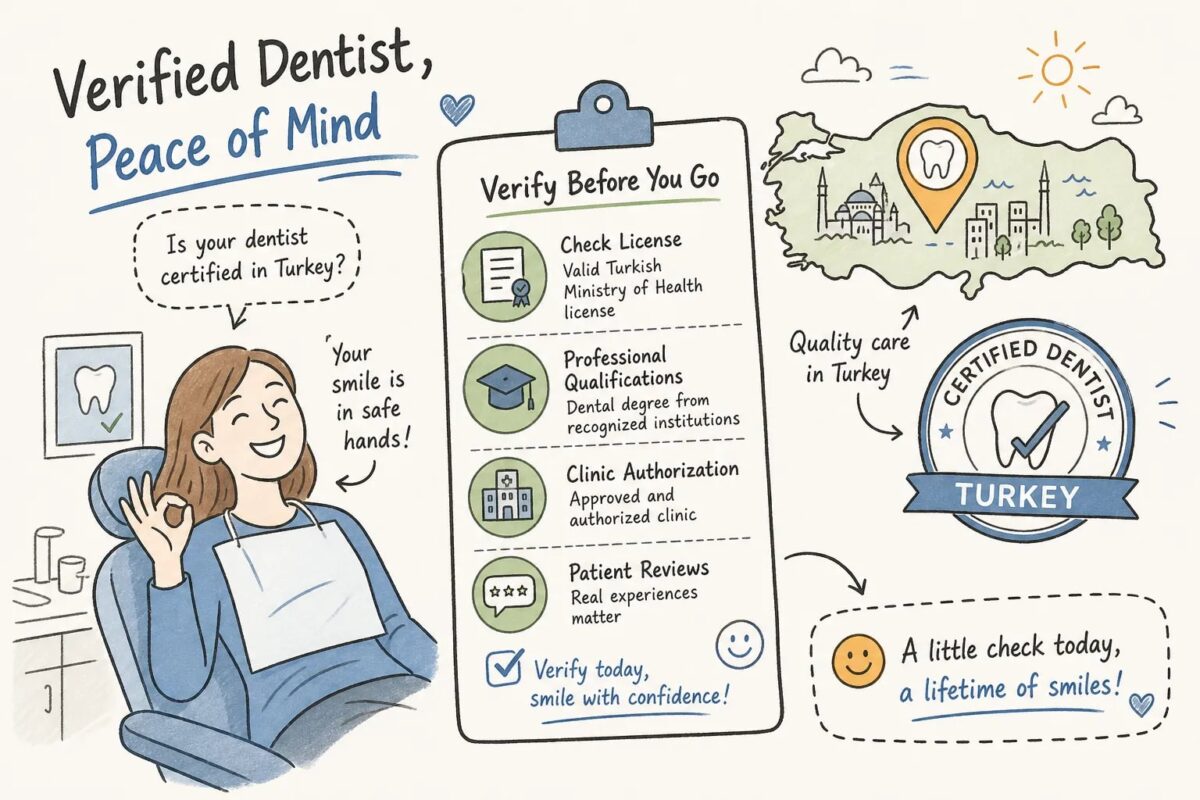
For patients exploring dental tourism in Istanbul, the same procedures at internationally accredited clinics can cost significantly less than U.S. pricing. The savings on a multi-procedure plan can more than offset travel costs, which is why a growing number of American patients are having these conversations with clinics abroad before committing domestically. Verify credentials and accreditation directly; the cost advantage is real, but it applies to well-vetted practices, not every clinic advertising online.
Five questions to ask before committing to treatment
- What specific cause of my gummy smile have you identified, and how did you confirm it?
- Will this treatment address the root cause, or is it managing a symptom?
- What is the realistic relapse risk, and what happens if results regress over time?
- Can I see a digital preview of my expected outcome before we proceed?
- Which specialist will perform this, and how many of these procedures have they completed in the past 12 months?
These aren’t difficult questions, and any clinician worth working with will answer them without hesitation. If the answers are vague or the provider moves quickly past the diagnosis to the treatment recommendation, that’s useful information too.
The bottom line on gummy smile treatment options
There’s no single best treatment option for a gummy smile. That phrase only makes sense once you know what’s causing yours. A hyperactive upper lip responds to Botox or lip repositioning. Altered passive eruption responds to gum contouring or crown lengthening. Vertical maxillary excess, in its most significant form, requires orthognathic surgery. Treating the wrong cause doesn’t just fail to help, it costs real money and real recovery time for a result that was never going to arrive.
The gummy smile correction options covered here range from a ten-minute in-office injection to major jaw surgery with months of recovery. Cost, permanence, recovery burden, and relapse risk vary dramatically across them. That’s not a reason to feel overwhelmed. It’s a reason to go into your first consultation with the right questions rather than a treatment preference you’ve already committed to based on a social media post.
Get a real diagnosis. Find a clinician who can show you what your result will look like before you agree to anything. And if cost is part of your calculation, know that premium cosmetic dental care at internationally accredited clinics abroad, including practices like Dt. Çağrı Altuntaş Dental Clinic in Istanbul, can deliver the same diagnostic technology and clinical rigor at a fraction of U.S. prices. Your job is to find the clinician who tells you honestly which treatment option actually applies to your situation.
Frequently Asked Questions
Can every gummy smile be treated with gum contouring?
No. Contouring addresses excess soft tissue, while lip movement, bone position, tooth eruption or jaw anatomy may require different treatment.
Is Botox a permanent gummy-smile treatment?
No. Its effect is temporary and is mainly considered when excessive upper-lip movement contributes to gum display.
What is the difference between contouring and crown lengthening?
Contouring reshapes gum tissue; crown lengthening may also adjust bone to create stable tooth exposure.
How long does recovery take?
Recovery depends on whether treatment involves laser or scalpel contouring, bone adjustment, lip surgery or jaw surgery. Your clinician should provide a case-specific timeline.
Can digital smile design help choose treatment?
Photographs, video and digital measurements can show how the teeth, gums and lips interact and support realistic planning.