A good smile-makeover candidate has stable oral health, realistic expectations and concerns that may benefit from a coordinated plan rather than a single isolated procedure. Tooth colour, shape, alignment, gum balance, missing teeth and bite can all be addressed, but active decay, gum disease and uncontrolled grinding should be managed before elective cosmetic treatment.
If you’ve been asking yourself how do I know if I am a good candidate for a smile makeover, you’re not alone. Most people spend months wondering whether they qualify before they ever pick up the phone to book a consultation. They scroll through before-and-after photos, read forum threads, and still walk away unsure whether their situation is “bad enough” or “good enough” to warrant the conversation. That uncertainty is frustrating, and it’s also unnecessary.
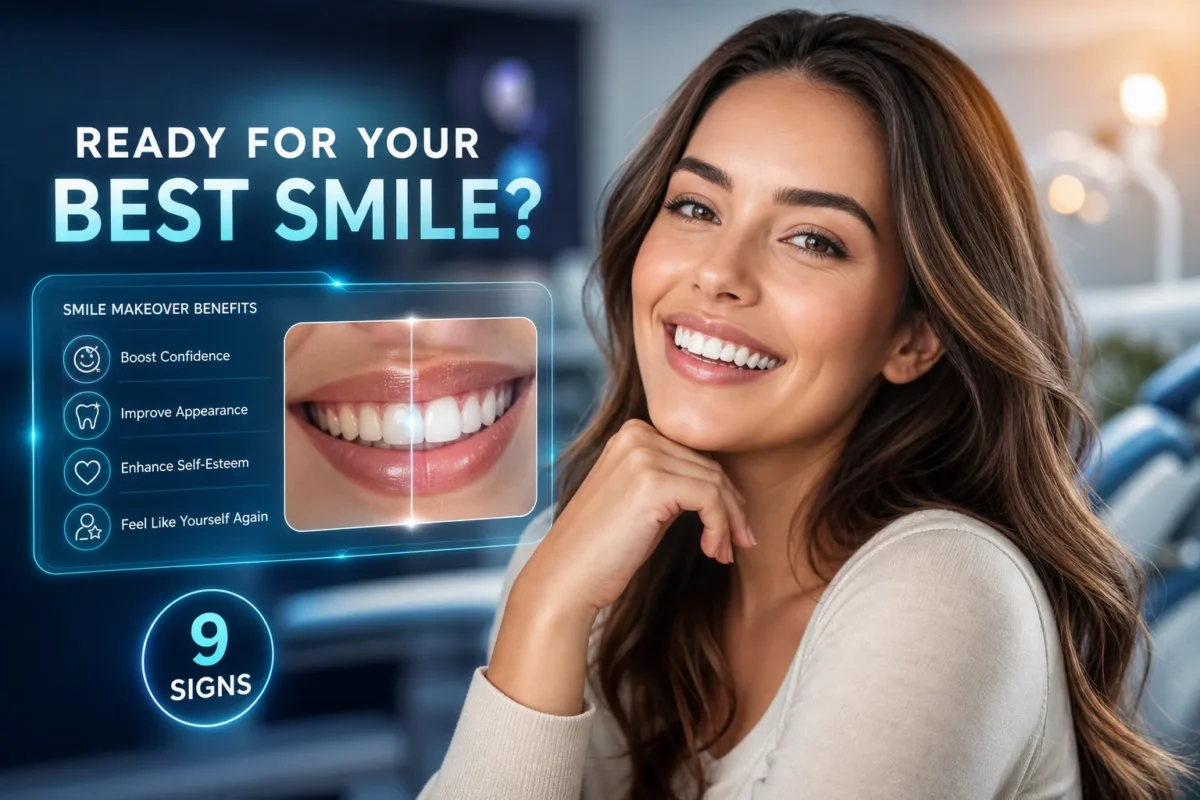
This guide replaces that uncertainty with a clear picture. It walks you through nine signs that point toward strong candidacy, the health factors that matter most, the lifestyle considerations dentists actually look at, and the questions worth bringing to your first appointment. While nothing replaces a proper clinical assessment, this article gives you the clearest possible starting point for understanding your dental makeover suitability. By the end, you’ll know which cosmetic concerns routinely qualify, what to address first, and exactly what to do next.
How do I know if I am a good candidate for a smile makeover, what a makeover involves
A smile makeover is not a single procedure with a fixed price tag. It’s a coordinated treatment plan built entirely around your specific concerns, combining whichever treatments are needed to achieve the colour, symmetry, proportion, and alignment you’re aiming for. That’s precisely what makes the cosmetic dentistry eligibility question tricky to answer without context: there is no standard makeover, only your makeover.
The core treatments most commonly combined
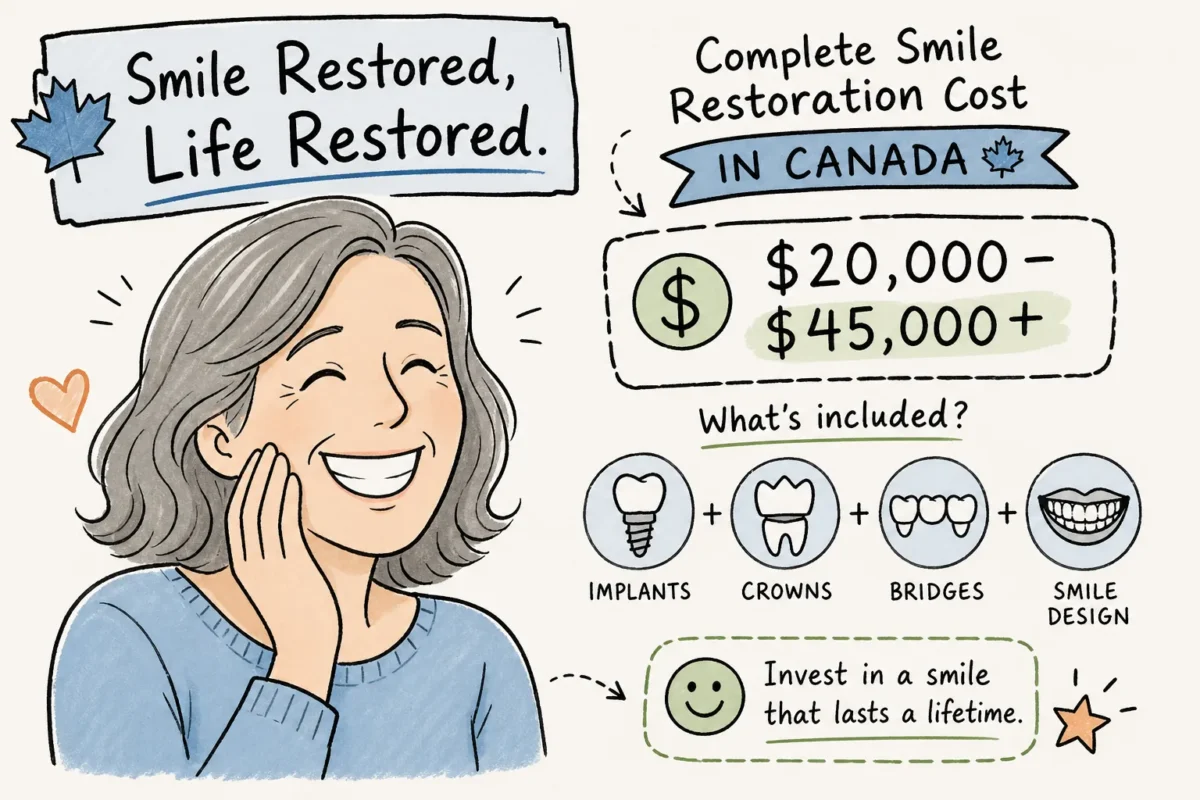
The building blocks of most smile makeovers are professional teeth whitening, porcelain veneers, composite bonding, dental implants, gum contouring, and in some cases clear aligner treatment. Most patients end up with two or three of these combined, not all six. The mix is driven entirely by what your smile currently needs, which is why two people presenting with similar concerns can end up with quite different treatment plans.
Why every plan is personalised, not prescribed
The goal determines the treatment, not the other way around. A cosmetic dentist designing your makeover starts with what you want the end result to look like, then works backwards to decide which procedures will get you there. This is where digital smile design becomes central. With intraoral scanning and 3D simulation software, the dentist maps out your projected results before a single tooth is touched, giving you a visual agreement on the outcome before treatment begins. Planning this precisely is what separates a well-executed makeover from one that doesn’t quite land.
Appearance concerns that signal you may be ready (signs 1, 5)
1, 2. Discolouration and staining that whitening alone won’t fix
If your teeth are deeply stained from years of coffee, red wine, or smoking, or if you’ve dealt with tetracycline-related discolouration since childhood, you’ve likely already tried whitening products and found them underwhelming. That’s actually one of the clearest signals that you need a more comprehensive plan. Veneers and bonding are specifically designed to cover intrinsic staining that bleaching cannot reach. Chips and cracks that have altered the shape of a tooth belong here too, these don’t resolve on their own and respond well to veneer or bonding treatment within a makeover plan.
3, 4. Gaps and crooked teeth you’ve learned to hide
If you’ve developed habits like covering your mouth when you laugh or angling your face away from cameras, that’s a meaningful signal worth paying attention to. Diastemas (gaps between teeth) and mild to moderate misalignment are both routinely addressed within a smile makeover. Minor gaps close well with bonding or veneers; more significant spacing responds to clear aligner treatment. The important distinction is degree: severe crowding or complex bite misalignment typically needs orthodontic input before cosmetic work begins, but mild to moderate cases sit well within the scope of a makeover plan. When considering veneers, crowns, and implants candidacy, the severity of misalignment is one of the first things a dentist will assess.
5. Teeth that look uneven, short, or out of proportion
Worn-down teeth, size discrepancies between adjacent teeth, and visible asymmetry are some of the most satisfying issues to resolve within a makeover. Patients often describe this as their teeth looking “off” without being able to pinpoint exactly why. Veneers and bonding restore proportion and symmetry consistently, and this category of concern is one of the strongest indicators of candidacy because the results are predictable and durable.
Functional and emotional signs that count just as much (signs 6, 9)
6. A gummy smile that affects your confidence when you laugh
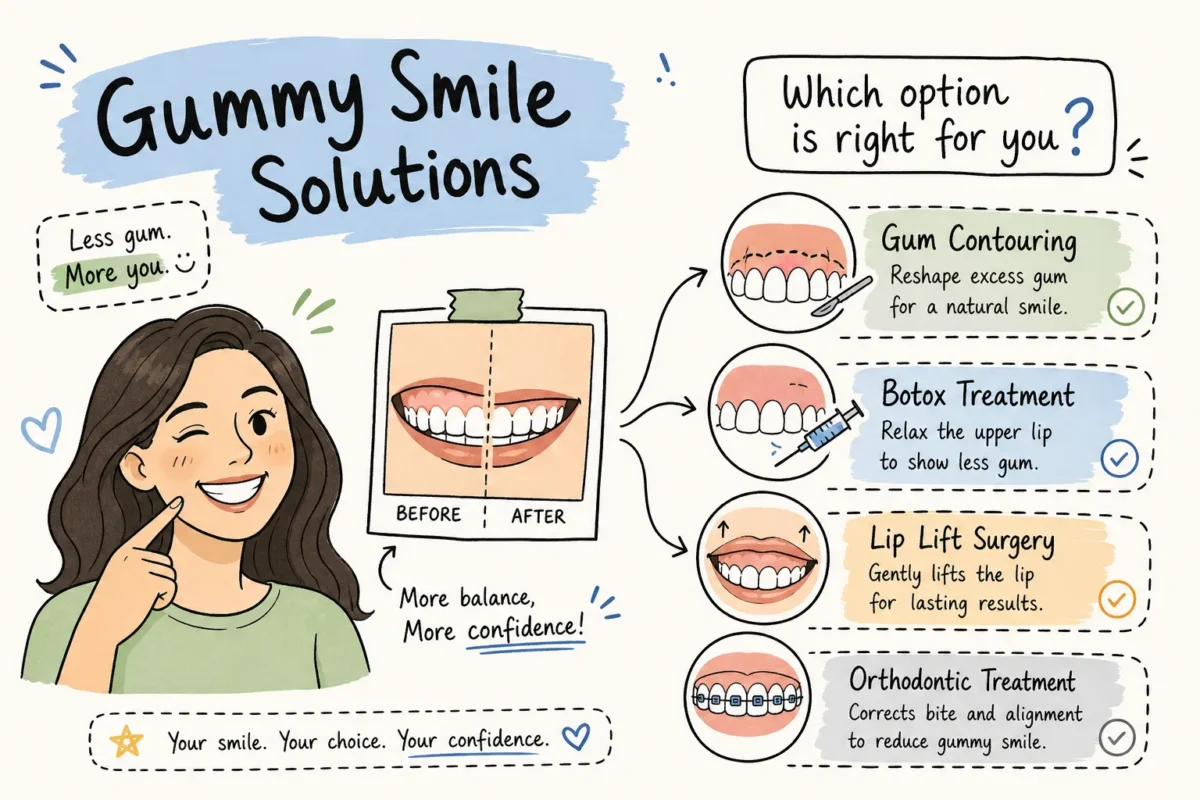
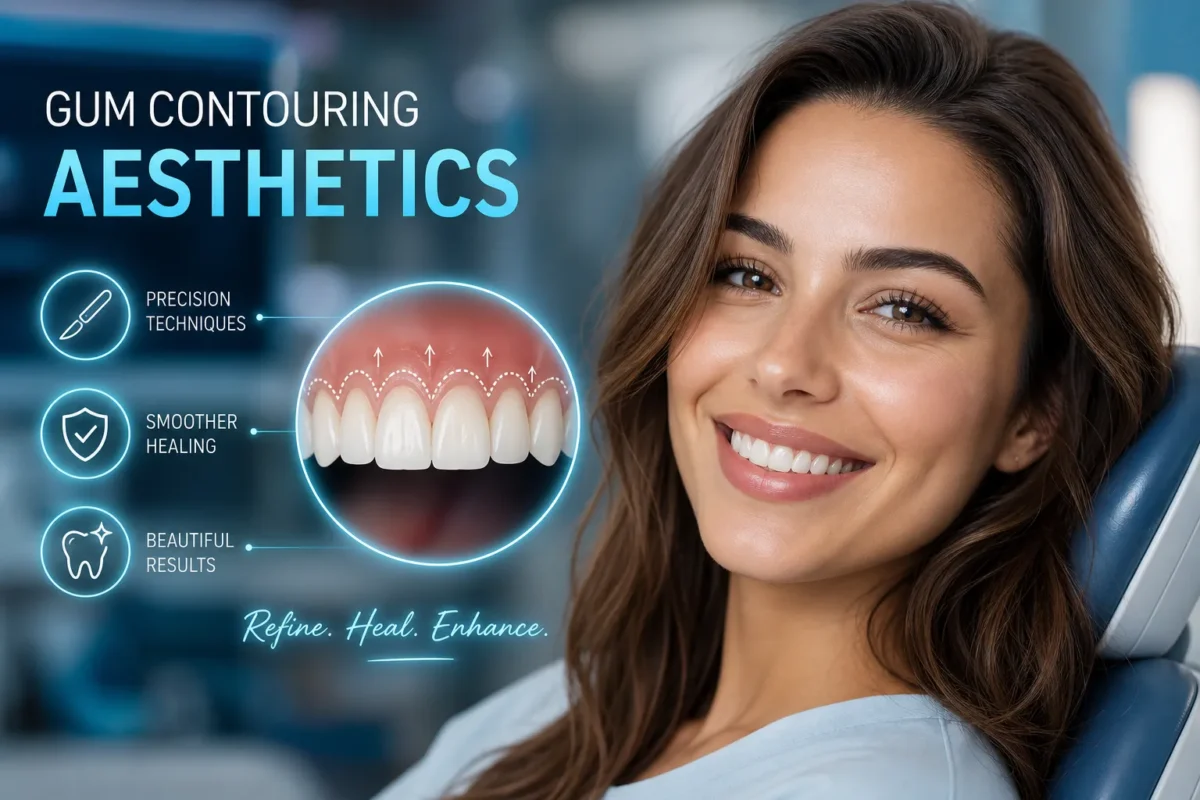
A gummy smile occurs when excess gum tissue is visible above the teeth during a natural smile, which can make the teeth appear short and the smile disproportionate. Gum aesthetics (often performed as gum contouring or pink aesthetics) removes this excess tissue to reveal more of the tooth surface and creates a more balanced smile line. It’s a standard component of many full makeovers, not a complex specialist-only procedure, and healing time is typically around a week. If excess gum display has been making you self-conscious about smiling fully, that’s a clear sign you’d benefit from a comprehensive assessment.
7. One or more missing teeth affecting your bite and appearance
Missing teeth are not a separate undertaking from a smile makeover: they integrate into the same plan. Zirconia dental implants work particularly well within a comprehensive makeover because they mimic natural tooth structure closely and support the surrounding teeth. If you have one or more missing teeth, that doesn’t disqualify you from a smile makeover; it shapes what the plan includes. Treating the gap as part of the overall aesthetic design, rather than as a prior procedure, tends to produce far better results.
8, 9. Self-consciousness and the oral health baseline
Sign eight is worth naming honestly: if you avoid photographs, cover your mouth in conversation, or find yourself declining social situations because of how your smile looks, those behaviours are a valid reason to pursue a makeover. The emotional dimension of candidacy is real, and it deserves to be taken as seriously as the clinical picture. Sign nine is the most important qualifier of all: good underlying oral health, or a genuine willingness to address any issues before cosmetic work begins, is the single most critical eligibility factor. You don’t need perfect teeth to be a candidate; you need a stable, treatable mouth and a dentist who knows how to sequence the plan correctly.
Health conditions that need treating before cosmetic work begins
The conditions that prevent cosmetic work from starting immediately are not reasons you can’t have a makeover. They’re simply things to sort out first, and for most candidates that process is shorter than expected. Reframing this section as preparation rather than disqualification is the most useful way to think about it.
The gum disease and decay barrier
Active periodontitis or untreated cavities create an unstable foundation for any cosmetic restoration. If a veneer is placed over a tooth with undetected decay, the decay continues underneath it. If gum tissue is inflamed when veneers are fitted, it can recede afterwards, leaving visible margins around the restoration that undermine the aesthetic result. Treating gum disease with professional cleaning or periodontal therapy, and filling any cavities, is non-negotiable before cosmetic work begins. For mild to moderate cases, this preparatory phase typically adds weeks rather than months to the overall timeline.
What “getting cleared for cosmetic work” actually means in practice
A pre-treatment assessment covers four areas: gum health, active decay, bone support, and bite alignment. If all four are in reasonable order, cosmetic work can proceed directly. If any need attention, the dentist creates a staged plan that addresses the health foundation first, then moves into the cosmetic phase. For most patients who’ve maintained reasonably regular dental check-ups, this stage is brief. The assessment itself, not your self-diagnosis, determines the timeline, which is another reason that booking a proper consultation sooner rather than later works in your favour.
Lifestyle factors that affect your suitability for treatment
Smoking, grinding, and staining habits
Smoking affects both gum health and the longevity of cosmetic restorations. It increases the risk of gum disease, slows the healing process, and can stain bonding cement over time, even when the porcelain itself resists discolouration. Bruxism (teeth grinding) is a separate concern: patients who grind heavily are at a significantly higher risk of chipping or cracking porcelain veneers due to the excessive force placed on the restorations. Neither habit is a hard disqualifier, but both need to be managed as part of a durable treatment plan if the outcome is going to last.
What you can do to strengthen your candidacy
The practical steps are straightforward. If you smoke, reducing or stopping before treatment improves gum health and healing outcomes meaningfully. If you grind your teeth, a custom night guard protocol is typically introduced before veneers are placed, not as a barrier to treatment, but as the thing that makes the result last long term. Improving your brushing and flossing routine in the weeks before your consultation also helps: it establishes the hygiene baseline your dentist needs to see and demonstrates the commitment that supports a successful outcome. These aren’t hoops to jump through; they’re what makes the investment worthwhile.
How do I know if I am a good candidate for a smile makeover? A self-assessment checklist
Your smile transformation checklist: what to note before you go
Before your consultation, run through the following and note which items apply to you:
- Visible discolouration or staining that hasn’t responded to whitening products
- Chips, cracks, or worn edges that have changed the shape of one or more teeth
- Gaps between teeth or mild to moderate misalignment
- One or more missing teeth
- Excess gum display when you smile naturally
- Teeth that appear short, uneven, or disproportionate
- Self-consciousness or avoidance behaviours linked to your smile
- Reasonably stable oral health, or a willingness to address gum or decay issues first
If several of those items apply to you, you have more than enough to work with, though the checklist is an informal guide rather than a clinical rule, and a professional assessment will give you the accurate determination. Think of it as a prompt to help you articulate your concerns clearly before you sit down with a dentist.
Questions to bring to your cosmetic dental consultation
Arriving with the right questions makes your consultation far more productive. Ask which treatments apply directly to your specific concerns, whether anything needs addressing before cosmetic work can begin, what your result will look like before treatment starts (ask specifically about digital preview options), and what the realistic total timeline and investment looks like from start to finish. These questions give your dentist the opening to map out a full plan, not just rattle off a list of procedures, and they signal that you’re the kind of patient who wants to understand the process properly.
What realistic results and timelines look like
From two weeks to twelve months: what drives the difference
Timeline is one of the most commonly misunderstood parts of a smile makeover. Simple enhancements combining whitening and bonding typically complete within two to four weeks. Veneers and crowns involve two to three appointments, with laboratory fabrication typically taking around two weeks; the overall process can range from a few weeks to longer depending on case complexity and the number of restorations involved. Implants take longer because of the osseointegration phase: typically three to six months for the implant to integrate with the bone before the crown is placed. Orthodontic treatment as part of a makeover adds three to eighteen months depending on complexity. Most patients without implant or orthodontic requirements complete their makeover within a few months, which tends to surprise people who assumed it would take much longer.
Managing expectations before you commit to treatment
A digital preview before any clinical work begins is standard practice in quality cosmetic dentistry, not an optional extra. Seeing a simulation of your expected result, based on your actual facial proportions and precise tooth measurements, lets you agree on the outcome before a single tooth is prepared. This reduces the likelihood of surprises and gives you a clear benchmark for what success looks like. A clinic asking you to commit to treatment without a projected result is skipping a step that matters significantly for both the clinical outcome and your own peace of mind.
How to confirm your candidacy with a digital smile analysis
Self-assessment gives you a strong starting point. A proper clinical assessment gives you the definitive answer, alongside a personalised plan, a realistic timeline, and a visual preview of your results. The two work together: the thinking you do before the consultation makes the consultation itself far more useful.
What happens during a digital smile analysis consultation
At Dt. Çağrı Altuntaş Dental Clinic in Nişantaşı, Istanbul, the initial consultation is designed to give you a comprehensive picture in one appointment. It typically includes:
- Intraoral scanning to capture precise 3D measurements of your teeth and gums
- Digital before-and-after simulation so you can see your projected results before making any commitment
- A full oral health assessment covering gum condition, decay, and bite alignment
- A personalised treatment plan outlining the specific procedures, sequencing, and timeline for your individual case
For patients travelling from the UK, the clinic provides multilingual support and full guidance on coordinating treatment alongside a stay in Istanbul. Contact the clinic directly to confirm current booking availability, consultation fees, and what is included for your specific case.
Why Dr. Çağrı Altuntaş takes a custom-plan approach to every candidacy
Dr. Altuntaş has extensive Istanbul-based cosmetic dentistry experience and holds a postgraduate Master’s degree in Oral Surgery and Implantology from Saint Camillus University in Italy. The clinic works to internationally recognised standards, providing the kind of verifiable credentialing that patients travelling from the UK want to see before committing to treatment abroad. Every treatment plan is developed around the individual patient’s clinical picture and aesthetic goals, rather than a standardised template. For UK patients exploring dental tourism options, Istanbul is widely recognised as offering competitive pricing for premium cosmetic dentistry, though total costs vary by case, so it’s worth requesting a detailed breakdown before making any decisions.
Ready to find your answer?
If you’ve been wondering how do I know if I am a good candidate for a smile makeover, the signs and checklist in this article offer a solid starting point, but they’re not a diagnosis, and they’re not a substitute for a proper clinical assessment with a dentist who can examine your mouth directly. If you recognised yourself in one or more of the nine signs covered here, and your oral health is in reasonable shape or you’re willing to address any issues first, the honest answer to the candidacy question is likely yes.
The clearest next step is to book a personalised smile analysis at Dt. Çağrı Altuntaş Dental Clinic. You’ll leave knowing exactly where you stand, what your result could look like, and what the path from here to there actually involves.
You’ve done the wondering. Now comes the easy part: booking a single appointment to get the definitive answer.
Frequently Asked Questions
Do I need veneers to have a smile makeover?
No. A plan may use whitening, bonding, aligners, gum treatment, crowns or implants depending on your needs.
Can I have cosmetic treatment with gum disease?
Active gum disease should be stabilised first because inflammation can compromise measurements, healing and restoration longevity.
Am I too old for a smile makeover?
Age alone is not the deciding factor. Oral health, medical history, bite and treatment goals are more important.
How long does a smile makeover take?
It can range from a few visits to many months when orthodontics, implants or tissue healing are involved.
Can I preview the proposed result?
Digital smile planning and a suitable mock-up can help assess proportions and communicate preferences before definitive treatment.
What should I bring to a smile consultation?
Bring relevant dental records, medication information and examples of what you like or dislike, while remaining open to options suited to your face and oral health.