Most people searching for the difference between dental bonding and veneers already know what they want: a better smile. They just want to know which route is actually right for them, without being sold something they do not need. This guide answers the veneer vs bonding question directly, what each treatment involves, what it costs in the UK, how long it lasts, and which option suits which dental problem.
We also include five questions worth taking to any consultation, so you walk in prepared rather than dependent on whatever the dentist recommends first.
At Dt. Çağrı Altuntaş Dental Clinic in Istanbul, this conversation happens every day. Patients arrive having read a dozen articles and still feel uncertain. The answer is almost always specific to their teeth, their habits, and their long-term goals. This article gives you the framework to reach that answer for yourself.
What these two treatments actually are
Both composite bonding and porcelain veneers address the same problem: the visible surface of a tooth looks wrong. Both sit on the front face of the tooth. Beyond that, they differ fundamentally in how they are made, how they are applied, and what they can achieve. Neither should be confused with a crown, which encases the entire tooth rather than just the front surface.
What composite resin bonding involves
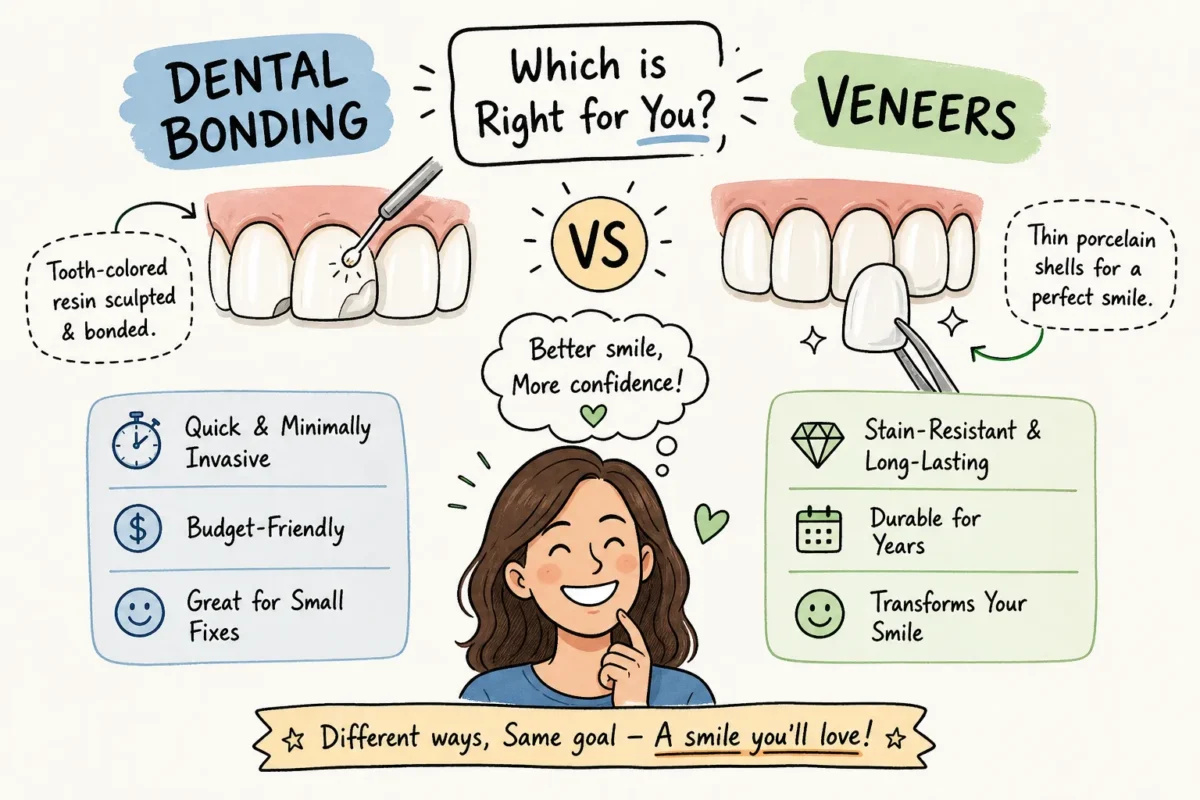
Composite bonding uses a tooth-coloured resin material applied directly to the tooth surface by the dentist, shaped by hand, hardened with a curing light, and polished, all in a single appointment. There is no laboratory involved. The dentist sculpts the result chairside, which means the whole process can be completed the same day. Direct bonding works well for minor chips, small gaps, localised staining, and subtle shape corrections. Because it requires no significant alteration to the underlying tooth, it is considered the conservative option in cosmetic dentistry.
What porcelain (laminate) veneers involve
Porcelain veneers are custom-made ceramic shells fabricated in a dental laboratory after the dentist takes impressions or digital scans of the prepared teeth. The shells, typically made from porcelain or lithium disilicate, are ultra-thin and bonded permanently to the front surface of each tooth. The process spans at least two appointments and produces a level of precision, translucency, and stain resistance that composite resin cannot match. They are the standard treatment for comprehensive smile transformations, particularly when several teeth need uniform changes in colour, length, or shape.
What actually happens to your teeth during each procedure
This is the part most patient guides skim over, and it is the most consequential difference between the two treatments. What the procedure does to your actual teeth determines not just your experience at the time, but your options for the rest of your life.
Composite bonding: same-day, minimal intervention
The bonding procedure starts with shade selection, then the dentist lightly conditions the tooth surface to help the resin adhere. The resin is applied in layers, sculpted to the desired shape, and cured with a blue light to harden it. Finally, it is polished to a natural finish. The whole process takes between one and three hours depending on how many teeth are involved. No enamel removal is typically needed, which means the procedure is largely reversible. If you change your mind, or if the result needs adjustment, it can be modified or removed without permanent consequence. For hesitant patients, that reversibility is a genuine advantage.
Porcelain veneers: a multi-stage, irreversible commitment
The veneer process begins with preparation: the dentist removes 0.3 to 0.7 mm of enamel from the front surface of each tooth. This reduction is necessary so the veneer sits flush and does not appear bulky. Digital scans or impressions are then sent to a dental laboratory, and temporary veneers are placed while the permanent ones are fabricated over one to four weeks. At the second appointment, the temporaries come off and the final porcelain shells are bonded permanently. The enamel removal is irreversible. Once it is done, the teeth will always need some form of coverage. This is not a reason to avoid veneers; it is simply a fact that deserves honest acknowledgement before committing.
Veneer vs Bonding: What you’ll realistically pay in the UK
The price gap between these two treatments is significant, and UK patients deserve straight numbers rather than vague ranges that soften the reality.
Per-tooth costs and what drives regional variation
In 2026, UK private costs for composite bonding run from £250 to £450 per tooth on average, with London clinics typically charging £350 to £600. Porcelain veneers cost between £700 and £1,200 per tooth nationally, rising to £895 to £1,500 or above in London. Premium materials such as lithium disilicate (E-max) push costs toward £1,500 per tooth at higher-end practices. London and South East prices run roughly 20 to 40 per cent higher than the national average.
Neither treatment is available on the NHS for purely cosmetic purposes. The NHS covers them only where there is a documented clinical need such as trauma or a severe developmental defect, in line with NHS treatment band eligibility criteria.
Full smile makeover costs and the dental tourism calculation
A six-to-ten tooth smile makeover using composite bonding costs between £1,500 and £4,500 in the UK. The same scope in porcelain veneers rises to £4,200 to £9,000 or more.
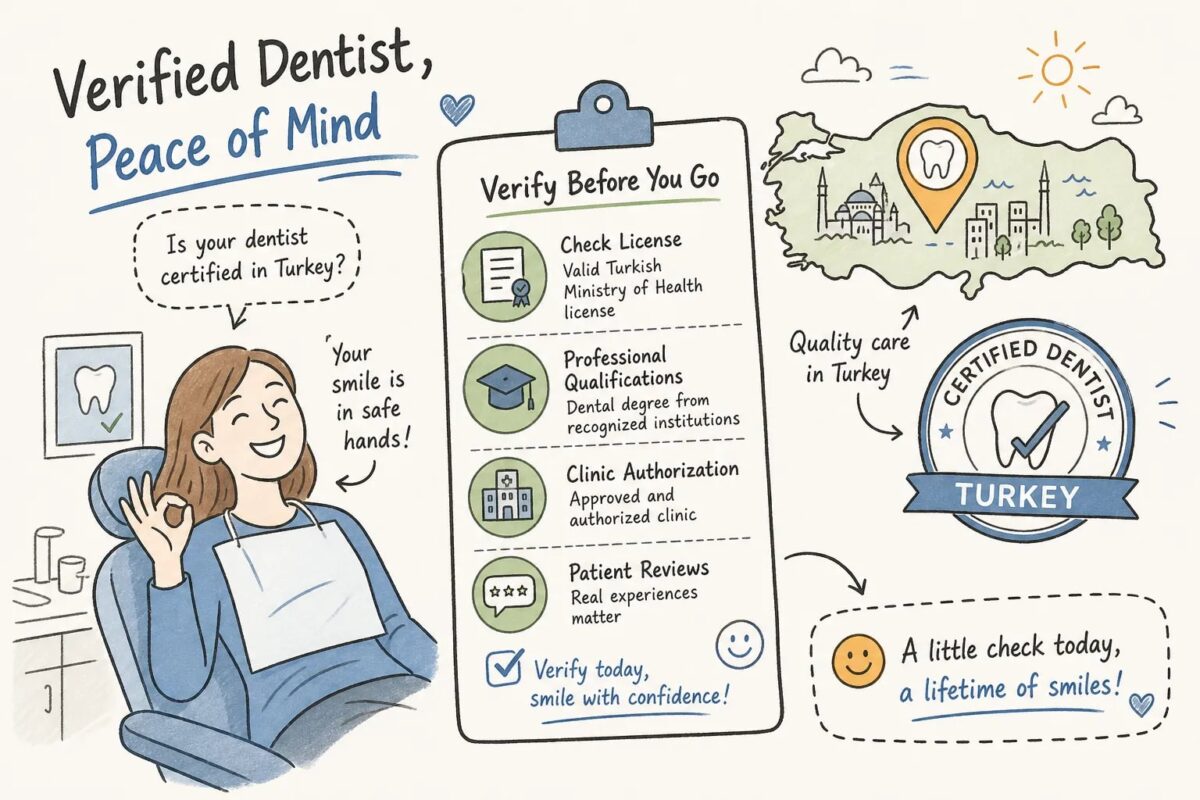
At that level of expenditure, many UK patients begin a different calculation: what would the same treatment cost in Istanbul? At a Health Turkey-certified clinic using the same Ivoclar E-max materials, porcelain veneers can cost considerably less per tooth than UK private prices, in some cases, a substantial saving that merits serious consideration. Dt. Çağrı Altuntaş Dental Clinic combines internationally certified materials with digital smile design technology and a patient-centred approach. For patients already open to travelling and weighing quality against cost, the numbers are worth reviewing properly.
How long each treatment lasts in real-world conditions
Lifespan data is only useful if it is contextualised honestly. The averages assume reasonable conditions; the reality varies considerably depending on the patient.
Veneer vs Bonding, Longevity and Maintenance
Composite bonding on front teeth lasts five to seven years under typical conditions. With regular professional polishing every six to twelve months and no bruxism, that figure extends reliably to eight to ten years. Porcelain veneers average ten to fifteen years and consistently reach fifteen to twenty with proper care and maintenance. The more useful frame is cost per year. Composite bonding at £350 per tooth, replaced every seven years, costs roughly £50 per year. Porcelain veneers at £1,000 per tooth lasting fifteen years work out to around £67 per year. The gap is considerably smaller than the headline prices suggest, and shifts further when you account for the superior aesthetics porcelain maintains across that lifespan.
What cuts lifespan short for both treatments
Teeth grinding (bruxism) is the single greatest risk for composite resin. Without a night guard, bonding can deteriorate within two to three years in a patient who grinds. Biting hard objects, whether ice, pen lids, or crusty bread, chips both materials, though in different ways. An acidic diet erodes the margins of both treatments over time, and poor oral hygiene leads to decay at bonding margins, compromising retention regardless of material. Tooth location matters too: composite resin on back teeth, which bear far greater chewing forces, wears significantly faster than composite on front teeth. These are not reasons to avoid either treatment; they are the variables that determine how accurately you can plan for replacement costs over time.
Aesthetics in practice: staining, strength, and what happens when something chips
Patients rarely ask this question directly, but they always want to know: which one looks better over time, and what happens if something goes wrong?
Stain resistance and long-term colour stability
Porcelain is non-porous and glaze-sealed at the surface. It does not absorb pigment molecules from coffee, tea, red wine, or tobacco, and it maintains its shade for decades with no special maintenance beyond regular cleaning. Composite resin is microporous. Pigments penetrate the surface over time, and visible discolouration typically appears within twelve to twenty-four months for patients who drink coffee or tea regularly. Surface stains can be polished off professionally. Internal discolouration, however, is permanent and eventually requires replacing the restoration entirely. For heavy coffee or tea drinkers, this difference materially affects the real cost over time, and it is worth factoring into any decision that is primarily budget-driven.
Strength vs repairability: the trade-off nobody explains clearly
Porcelain has a flexural strength of around 400 to 500 MPa, making it highly resistant to everyday wear and considerably harder than composite resin. The downside is brittleness: porcelain can fracture under a sharp impact, and when it does, the entire veneer must be replaced. There is no chairside fix. Composite resin has a flexural strength of approximately 120 to 150 MPa, which is lower, but it flexes slightly under pressure rather than shattering. When composite chips, a dentist can repair it in a single visit by adding new resin and reshaping. For active patients, or anyone with a history of chipping, that repairability is a meaningful advantage worth weighing carefully against porcelain’s superior aesthetics.
Which treatment fits your specific dental problem
This is the section most readers actually need. Common cosmetic concerns map to one treatment more clearly than the other, and hedging that with “it depends” without follow-through is not useful.
When composite bonding is the right call
Composite bonding works well for small chips from accidents or worn corners on front teeth. Minor gaps and spacing issues, including small diastemas and the black triangles that sometimes appear between teeth, respond well to direct bonding. Localised stains or white spots that do not respond to whitening are also good candidates, as are minor shape corrections such as evening up unequal tooth lengths or adjusting slight asymmetry. Patients under eighteen, whose dental alignment may still shift, are generally better served by bonding than by irreversible veneer preparation. For anyone who wants to trial a new tooth shape before committing permanently to porcelain, composite bonding also offers a low-stakes, reversible preview of what is possible.
When porcelain veneers are the better long-term investment
Porcelain veneers become the right choice when the cosmetic problem is too large or widespread for composite resin to address durably. Large chips affecting the structural edge of a front tooth, severe or widespread discolouration resistant to whitening, and moderate misalignment or crowding across multiple teeth all point clearly toward veneers. Worn-down enamel requiring significant reshaping or lengthening needs the strength and thickness that porcelain provides. Patients seeking uniform colour and contour across a full smile makeover will get more consistent, longer-lasting results with porcelain. And for patients with bruxism who are committed to wearing a night guard consistently, veneers are the more sensible long-term investment, because composite resin would wear through far too quickly under those conditions.
Five questions to ask before you commit to either treatment
These apply whether you are visiting a clinic in Manchester, London, or Istanbul. Ask them directly and expect specific answers, not generalities.
Questions that separate a good recommendation from a generic one
First, ask whether any enamel removal is required and whether the procedure is reversible. If the answer involves enamel removal, you are making a permanent decision, and you should understand that clearly before anything else proceeds.
Second, ask for a realistic lifespan estimate specific to your case, taking into account which teeth are involved and your daily habits. A front tooth bonding case in a non-bruxist is a very different conversation from a back tooth case in someone who grinds at night.
Third, ask what happens if something chips in two years, and what repair looks like in terms of time and cost. The answer tells you a great deal about both the material being used and the practice’s approach to long-term patient care.
Fourth, ask how the colour of the treated teeth will match the rest of your smile over time, particularly if only a few teeth are being treated. Porcelain and composite age differently; you want harmony across your whole smile for the long term, not just on the day of treatment.
Fifth, ask whether a trial smile, whether a wax-up, a chairside mock-up, or a digital preview, is available before any irreversible preparation begins. Any practice that takes personalised cosmetic dentistry seriously will have a clear answer to this.
Why a personalised smile design consultation is worth more than any comparison guide
No article, however thorough, can substitute for a clinical examination. The physical reality of your teeth determines which treatment is appropriate, and that cannot be established online.
Why the choice rarely looks the same after a proper exam
What looks like a straightforward composite bonding case from a patient’s perspective often reveals a different picture once a dentist assesses bite, enamel thickness, gum health, and existing restorations. The reverse is equally true: patients convinced they need a full set of veneers sometimes leave a thorough consultation with a composite bonding vs veneers comparison that points clearly toward composite, delivering excellent results at a fraction of the expected cost. Neither outcome is predictable without the examination, which is precisely why no online comparison, including this one, resolves the question completely for any individual.
What the free smile design consultation at Dt. Çağrı Altuntaş Dental Clinic includes
At Dt. Çağrı Altuntaş Dental Clinic, the initial consultation is not a sales appointment. According to the clinic, it includes digital intraoral scanning, personalised treatment planning, and a 3D smile preview that shows you what your teeth could look like before any preparation begins. Dr. Çağrı Altuntaş has over fifteen years of cosmetic dentistry experience in Istanbul and completed postgraduate training in oral surgery and implantology in Italy. The consultation is a frank conversation: which option suits your teeth, your habits, and your goals, without pressure toward the more expensive route. For UK patients who have worked through the cost comparison and are considering Istanbul as a realistic destination, that free smile analysis is the step that makes the decision concrete and informed rather than theoretical.
Making the right choice for your smile
The core difference between these two treatments is clear. Composite bonding is affordable, conservative, and repairable, but shorter-lived and more susceptible to staining. Porcelain veneers are a permanent, stain-resistant investment that lasts significantly longer, at a higher upfront cost and with irreversible tooth preparation. Neither is universally better. The right choice depends on the specific problem, the specific teeth, and the specific person.
The choice between dental bonding vs veneers is answerable, but the answer is personal. Take the five questions from this article to your next consultation, ask them directly, and expect specific responses rather than generalities. If you want to understand your options with proper clinical input before making any commitment, a free smile analysis at Dt. Çağrı Altuntaş Dental Clinic is a straightforward place to start.
Frequently Asked Questions
Which option removes less tooth structure?
Direct bonding often requires little or no preparation for small corrections. Veneer preparation varies with tooth position, colour and the planned ceramic thickness.
Which option resists staining better?
Porcelain generally offers greater long-term colour stability, while composite may need periodic polishing or repair.
Can damaged bonding be repaired?
Yes. Local composite defects can often be repaired directly; ceramic repair depends on the extent and location of damage.
Is bonding always cheaper over the long term?
The initial cost is usually lower, but maintenance and replacement frequency should be included when comparing long-term value.
How does tooth grinding affect the choice?
Grinding increases wear, fracture and debonding risk for both options. Bite management and a protective night guard may be necessary.