Oral and dental health is not just about having white, straight teeth. The gum tissue (gingiva) that surrounds the teeth, protects them, and anchors them to the jawbone is the cornerstone of overall health and aesthetics. One of the most serious periodontal issues that many people face today—yet often neglect in its early stages—is gum recession (gingival recession).
At our clinic in Nişantaşı, Istanbul, led by Dr. Çağrı Altuntaş, we provide treatments for receding gums in accordance with international standards and using the latest digital technologies. In this comprehensive guide, you’ll find all the details you’re curious about—from the causes and symptoms of receding gums to modern treatment methods and pink aesthetics (gingivoplasty) procedures.
What Is Gum Recession (Gingival Recession)?
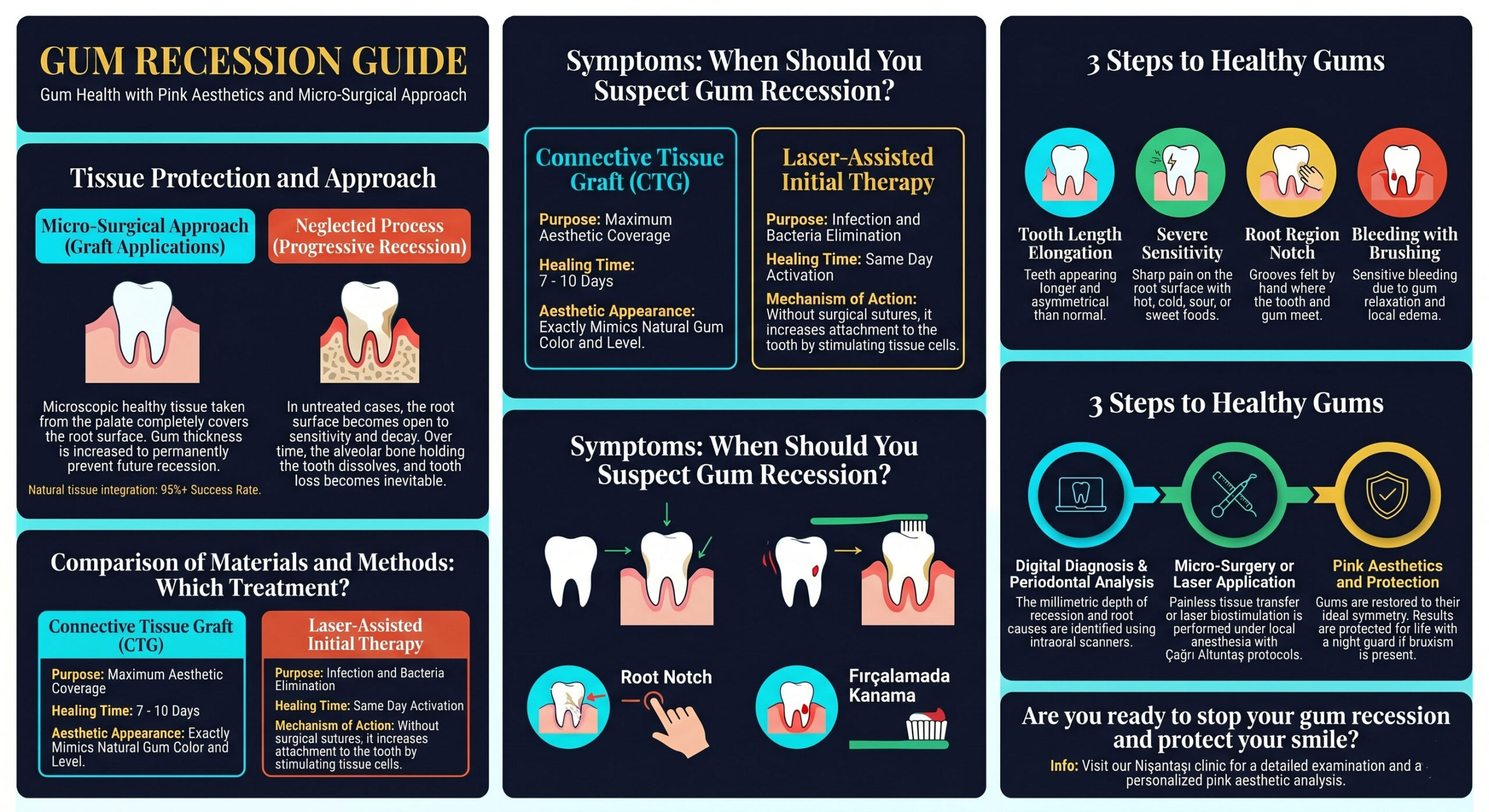
Gum recession is a condition in which the pink gum tissue surrounding the crown (the visible part) of the tooth recedes toward the root surface, resulting in the exposure of the tooth root. When the gums recede, the teeth begin to appear longer than normal, and the root surfaces of the teeth are left unprotected. This condition not only causes aesthetic concerns but also leads to severe sensitivity to hot and cold, an increased risk of cavities, and sets the stage for tooth loss in the future.
What Are the Causes of Gum Recession?
Research and clinical observations indicate that gum recession is not caused by a single factor but is a multifactorial process. When planning treatment at Dr. Çağrı Altuntaş’s clinic, the underlying cause of the recession is first identified. The most common causes are as follows:
- Periodontal Diseases (Gum Inflammation): Bacterial plaque and tartar that accumulate on tooth surfaces due to inadequate oral hygiene lead to infection in the gums. Over time, this infection erodes the gum tissue and the underlying bone, causing recession.
- Improper and Vigorous Brushing: Brushing teeth too hard or using incorrect brushing techniques creates mechanical trauma, leading to gum wear and recession.
- Genetic Factors: Some individuals are born with a thinner or more sensitive gum biotype. This reduces resistance to gum recession.
- Teeth Grinding and Clenching (Bruxism): The problem of bruxism, particularly common in a busy and stressful urban environment like Nişantaşı, places excessive strain on the teeth and surrounding tissues. These microtraumas are among the primary triggers of gum recession.
Improperly Performed Restorations: Overly large fillings or anatomically incompatible porcelain crowns that press against the gums can lead to localized gum recession.
Modern Methods for Treating Gum Recession
At our clinic, treatment for gum recession is planned entirely on a personalized basis, depending on the extent of the patient’s tissue loss and the cause of the recession. Treatment protocols generally include non-surgical (initial) treatments and surgical procedures.
Gum recession and the associated tissue loss constitute a chronic periodontal problem affecting a significant portion of the adult population worldwide. Micro-surgical graft procedures and laser-assisted tissue regeneration methods used in modern dentistry not only address aesthetic concerns but also help preserve the alveolar bone structure supporting the teeth. You can explore the Journal of Periodontology, a platform featuring studies from the American Academy of Periodontology (AAP)—one of the most prestigious and globally recognized scientific sources on the anatomical classification of gum recession, the degree of tissue loss, and the clinical success rates of current treatment protocols— and review the latest research in the medical literature that holds the highest authority on the clinical background and biological mechanisms of the subject.
Non-Surgical Initial Treatments
If gum recession is in its early stages and is caused by an active infection, it can be managed without the need for surgery:
- Scaling and Root Planing: All bacterial plaque and tartar above and below the gum line are removed. By smoothing the root surfaces, the gums are encouraged to reattach firmly to the tooth.
- Laser-Assisted Treatments: Using state-of-the-art dental lasers available in our clinic, bacteria in the gum pockets are completely sterilized, and tissue healing is accelerated.

Surgical Gum Treatments and Pink Aesthetics
In cases of severe gum recession, periodontal surgical procedures (microsurgery) are performed to cover the exposed root surface and restore aesthetics:
- Free Gingival Graft (FGG): A healthy tissue graft, typically taken from the back of the palate, is transplanted to the area affected by recession. This method is preferred to increase the thickness and strength of the gum tissue.
- Connective Tissue Graft (CTG): This is the method that yields the most aesthetically successful results. Connective tissue taken from the palate is placed in the recessed area using microsurgical techniques, completely covering the root surface. At our Nişantaşı clinic, these procedures are performed with meticulous care under loupes to minimize damage to the tissue.
- Flap Transposition: This procedure involves stretching the tissues adjacent to the receding area and suturing them over the affected site. In suitable cases, it offers a comfortable solution without the need to harvest tissue from the palate.
Gum Treatment and Pink Aesthetics (Gingivoplasty) Integration in Nişantaşı
In smile design processes, not only the whiteness and shape of the teeth but also the gum line is of vital importance. Receding gums can result in an aesthetically asymmetrical, aged, or unhealthy appearance.
Dr. Çağrı Altuntaş, who completed his master’s degree in oral implantology at Saint Camillus International University of Health Sciences in Italy and is a member of the EDAD (Aesthetic Dentistry Academy Association), combines gum treatments with the principles of pink aesthetics (gingivoplasty). After treatment, positioning your gums in their ideal location ensures that your smile line is fully harmonious and symmetrical with your lip structure.
Recovery Process and Care Following Gum Recession Treatment
Following the procedures we perform using microsurgical techniques, our patients experience the highest level of comfort. To speed up the healing process and ensure the success of the treatment, the following guidelines should be followed:
- First 24 Hours: Avoid extremely hot or cold foods; consume soft, lukewarm foods.
- Oral Hygiene: Do not brush the surgical site for the first few days; use special antiseptic mouthwashes prescribed by your dentist.
- Smoking: Smoking directly impairs healing by reducing blood flow to the tissues. You should not smoke for at least one week following treatment.
- Night Guard Use: If the cause of the extraction is teeth grinding (bruxism), regular use of custom-made night guards after treatment prevents the condition from recurring.
Why Choose Dr. Çağrı Altuntaş’s Clinic?
Located in the heart of Istanbul’s Nişantaşı district, our clinic holds the International Medical Tourism Authorization Certificate (Health Türkiye) issued by the Turkish Ministry of Health. For your gum recession treatment:
- State-of-the-art intraoral scanners and digital planning units,
- Current treatment protocols from international associations (ITI and EDAD),
- A pain-free, comfortable, and patient-centered boutique service approach.
If you experience bleeding, a sensation of lengthening, or sensitivity in your gums, please schedule an appointment at our Nişantaşı clinic without delay for a detailed examination.
Frequently Asked Questions About Gum Recession
No, receded gum tissue does not return to its original position on its own. To cover the lost tissue and the exposed root surface, gum recession treatment (graft procedures or initial treatments) must be performed by a specialist.
Since the procedure is performed under local anesthesia, you will not feel any pain or discomfort during the procedure. Any mild soreness after the procedure can be easily managed with simple pain relievers prescribed by Dr. Çağrı Altuntaş.
Untreated gum recession can lead to the breakdown of the bone tissue that supports the tooth roots. As the condition progresses, it can result in loose teeth, root decay, severe sensitivity, and ultimately the loss of even perfectly healthy teeth.
In connective tissue or gum graft procedures performed using microsurgical techniques, the initial adaptation of the tissue is completed within 7 to 10 days, at which point the sutures are removed. It takes approximately 3 to 6 weeks for the tissue to fully mature and achieve its final aesthetic pink color.
The next-generation dental lasers used in our clinic are specifically designed to remove infected tissue and ensure sterilization, particularly in cases of mild to moderate gum recession. By eliminating bacteria in deep pockets, the laser beams accelerate the process of gum reattachment to the tooth (biological healing) without the need for surgery.
Yes, clenching or grinding your teeth at night causes excessive and uncontrolled force to be applied to the necks of the teeth. These microtraumas are the primary cause of the resorption of the thin bone tissue supporting the gums and, consequently, gum recession. In such cases, a customized night guard protocol must be included in the treatment plan.