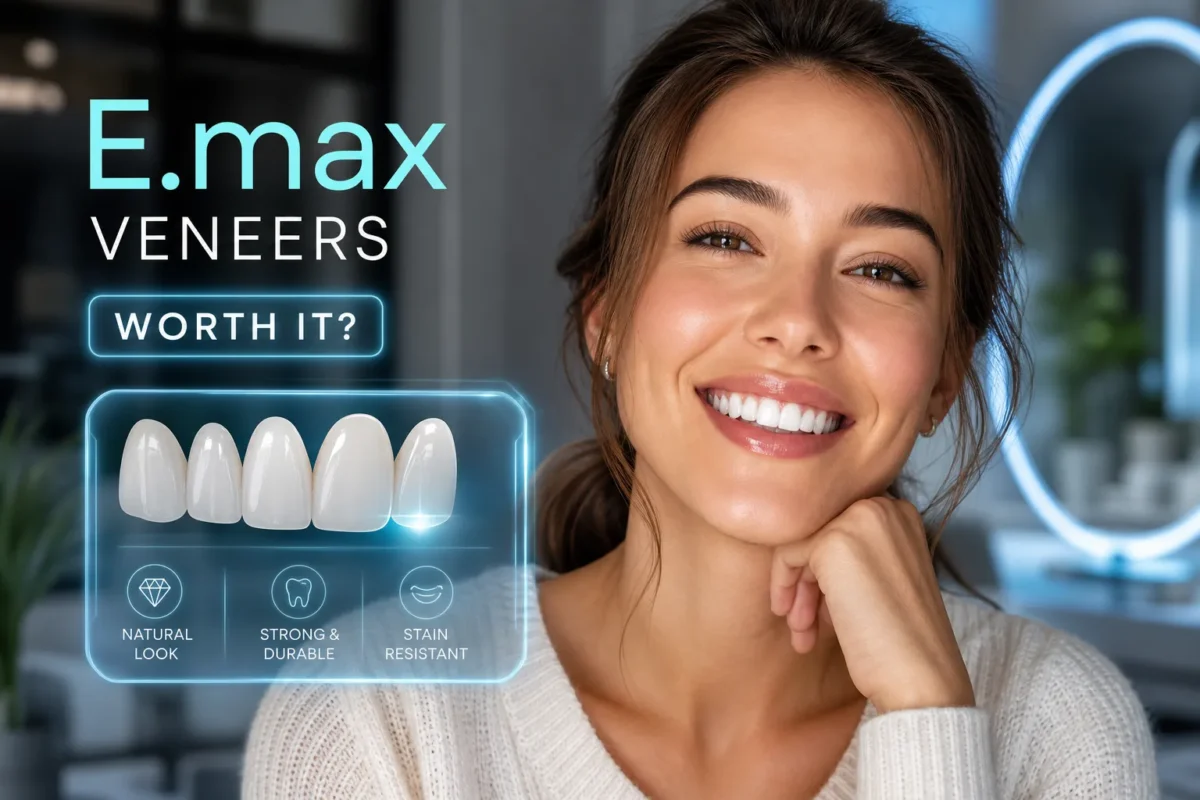
E.max veneers are thin lithium-disilicate ceramic restorations valued for enamel-like translucency and reliable bonding in suitable cases. They can be worthwhile when a patient needs stable colour and significant shape correction, but candidacy depends on enamel availability, bite, tooth position, underlying colour and grinding habits—not the material name alone.
You’ve done the research. You’ve scrolled through clinic websites, compared treatment menus, and noticed the same term appearing on nearly every premium cosmetic dentistry page: E.max. But beyond the name, the explanation is usually thin. Most sites tell you it’s “the best porcelain” and leave it there, which isn’t particularly useful when you’re trying to decide whether to spend a significant sum on your teeth.
This article is a proper material guide to the e max veneer. E.max veneers cost substantially more than composite bonding, and that gap deserves a real answer, not a marketing pitch. By the end, you’ll know exactly what the material is made of, how it performs against alternatives, what the clinical survival data actually says, what the procedure involves, and whether your situation genuinely calls for it. You’ll also find pricing context that UK patients often discover too late, including why a growing number are researching specialist practices in Istanbul, such as Dr. Çağrı Altuntaş’s clinic in Nişantaşı, where the same E.max material is used as part of a fully personalised digital smile design process at a fraction of UK prices.
What an E.max veneer actually is (material science made simple)
“E.max” is a brand name owned by Ivoclar Vivadent, a Swiss dental materials company. The material inside the veneer is lithium disilicate glass-ceramic, and that distinction matters because not all porcelain veneers are made from the same material. When a clinic quotes you for “porcelain veneers,” they may be referring to traditional feldspathic porcelain, leucite-reinforced ceramic, or lithium disilicate, each of which performs differently. Understanding this allows you to ask better questions and make a more informed comparison between quotes.
What lithium disilicate means in plain English
Lithium disilicate is a glass-ceramic reinforced with tiny interlocking crystals that make up roughly 70% of its volume. These crystals give the material two properties that matter clinically: strength and a unique ability to transmit light. The flexural strength of IPS e.max sits between 320 and 530 MPa depending on the grade and manufacturing method. Traditional feldspathic porcelain, by contrast, has a flexural strength of around 154 to 160 MPa, meaning E.max is roughly two to three times stronger than the porcelain used in older-generation veneers. The crystal structure also accounts for E.max’s optical quality, which is covered in detail below.
Why the manufacturing process matters
E.max veneers are produced in one of two ways: pressed ceramic (IPS e.max Press) or milled from ceramic blocks (IPS e.max CAD). Pressed E.max generally delivers superior marginal fit and more precise replication of translucency because the fabrication process compresses the material under controlled heat and pressure. Milled versions are faster to produce and have improved significantly, but many experienced dental technicians still consider the pressed route the gold standard for veneers specifically. When consulting with a clinic, it is worth asking which method their laboratory uses.
How an e max veneer compares to composite bonding and traditional porcelain
Most patients weighing up their options want a straightforward, evidence-based comparison of what each material actually delivers across appearance, durability, and tooth preparation. That is what this section provides.
Appearance and how each material handles light
E.max’s crystalline structure refracts light in a way that closely mimics layered natural enamel, producing depth, translucency, and colour variation that composite resin cannot replicate. Composite bonding tends to look slightly flat or opaque by comparison and loses its polished finish within a few years as the resin surface degrades. Traditional feldspathic porcelain looks natural and has excellent aesthetics, but is generally rated slightly below E.max in terms of luminosity and depth of light interaction. For patients whose primary concern is an undetectable result, this difference is clinically meaningful. Most experienced cosmetic dentists working in aesthetic cases recommend E.max or high-end zirconia when a fully natural appearance is the priority.
Durability: real-world lifespan differences
Composite bonding typically lasts three to eight years before requiring replacement or refinishing. E.max veneers and high-quality traditional porcelain veneers typically last 10 to 20 years. Clinical studies report survival rates of approximately 95% to 99.7% for E.max at 10 years, depending on the study population. The material’s higher flexural strength means it resists chipping and fracture far better than composite resin, which is softer, more porous, and prone to staining over time. The gap in durability between an e max veneer and composite bonding is significant enough to affect the true cost-per-year of each option.
Tooth reduction and what “irreversible” really means
This is where composite bonding has a genuine advantage. Composite bonding often requires zero enamel removal and is frequently reversible. E.max veneers require the removal of 0.3 to 0.5 mm of enamel from the tooth surface, which is permanent. That is a real trade-off, not a minor footnote. Once enamel is removed, the tooth will always need a veneer or some form of restoration. For younger patients who want to trial an aesthetic change before making a permanent commitment, composite bonding is sometimes the more appropriate starting point, and any honest dentist will tell you so.
The translucency factor: why E.max looks so close to natural enamel
Appearance is usually the primary reason patients seek veneers, so this section deserves proper attention rather than a passing mention.
How natural enamel interacts with light
Natural teeth achieve their appearance through a layered optical process. Enamel is semi-translucent, allowing light to pass through to the underlying dentine layer and reflect back outward, creating a sense of depth. This is why natural teeth look subtly different in different lighting conditions and why they have a vitality that purely reflective surfaces lack. Any material that simply bounces light off its surface, rather than allowing it to pass through and scatter, will look flat or artificial by comparison.
Why lithium disilicate replicates this better than alternatives
E.max’s interlocking crystal structure scatters and transmits light in a way that closely parallels natural enamel’s optical behaviour. At standard clinical thickness (around 1.0 mm), high-translucency E.max transmits approximately 27 to 33% of light, with a refractive index of 1.55 that closely matches natural enamel. When shade-matched correctly, a well-placed e max veneer can be virtually indistinguishable from an adjacent natural tooth. Composite resin reflects light more uniformly from its surface without this depth effect, which is why even high-quality composite bonding tends to look identifiably different from natural enamel under close inspection.
How long E.max veneers last and what shortens their lifespan
Longevity is often the deciding factor for patients, and the research here is worth examining directly.
What clinical studies actually show
The most robust 10-year data puts E.max veneer survival rates between 92.7% and 99.7%, depending on the study population and clinical conditions. A 2022 study by Demirekin et al. reported 99.7% survival at 10 years for IPS e.max Press veneers. Longer-term data is less specific: a 2019 systematic review covering both feldspathic and lithium disilicate veneers reported survival rates of 82% to 93% at 15 years, and no clinical study with 20-year follow-up exists specifically for E.max. What the research consistently shows is that early failures are rarely caused by the ceramic itself breaking. The more common culprits are bonding failure, bite-related stress, and marginal decay.
The factors that cut lifespan short
Bruxism is the single biggest threat to veneer longevity. Uncontrolled teeth grinding exerts lateral and compressive forces that can fracture or chip even high-strength ceramics within three to five years without a night guard. Poor bonding technique is the next most significant factor: veneers placed without proper moisture control or with inadequate adhesive preparation can debond within two to three years, regardless of material quality. Bite misalignment, frequent acidic food and drink consumption, heavy smoking, and using teeth as tools all contribute to premature wear. A dentist’s skill and technique account for a substantial portion of long-term outcomes, not just patient behaviour.
What genuinely long-lasting results require
Patients who achieve results beyond 20 years tend to share a consistent set of habits. These include excellent bonding technique from a skilled ceramics-experienced dentist at the outset, a properly fitted night guard for any grinding tendency, and twice-daily brushing with a soft brush and non-abrasive paste. Biannual professional check-ups and a diet that avoids ice, hard sweets, and excessive acidic drinks round out the picture. This level of commitment is achievable for most patients, but it is real commitment rather than a formality.
The e max veneer treatment process: from first consultation to final bonding
The procedure spans two to four weeks across two to three clinical visits, with the timeline varying according to laboratory scheduling, the number of teeth being treated, and whether any preparatory work is needed. Here is what each stage actually involves.
Consultation, digital planning and shade selection
The first appointment typically runs one to two hours and covers more ground than many patients expect. The dentist assesses overall oral health, takes digital scans or X-rays, and reviews bite registration. Many clinics, including Dr. Altuntaş’s practice in Istanbul, use Digital Smile Design (DSD) software to plan veneer dimensions based on facial proportions, lip line movement, and symmetry rather than working from a generic template. Shade selection photographs are taken alongside shade reference tabs, and the parameters are documented for the dental laboratory. This appointment sets everything the laboratory will work to, so its thoroughness directly affects the final result.
Tooth preparation and fitting temporaries
At the preparation visit, local anaesthesia is administered and the enamel reduction (0.3 to 0.5 mm) is carried out on the front surface of each tooth being treated. Digital intraoral scans or traditional impressions are taken of the prepared teeth and sent to the laboratory alongside the DSD parameters. Bisacryl temporary veneers are fitted immediately to protect the prepared teeth and maintain aesthetics during the one to two week fabrication period. Temporaries are functional but will not look as refined as the final restorations, which is a normal part of the process.
Final bonding: the chemistry behind a permanent result
The bonding appointment is where technique matters most. The temporaries are removed and the finished E.max veneers are tried in individually using transparent paste to verify fit, contacts, and shade before any permanent adhesive is applied. The porcelain surfaces are etched with hydrofluoric acid, then treated with a silane coupling agent to promote adhesion between the ceramic surface and the resin cement. The tooth surfaces are etched with phosphoric acid, followed by a bonding agent. Light-cured resin cement is applied and the veneers are seated sequentially before a curing light permanently hardens the bond. Moisture control at this stage is critical: contamination during cementation is a leading cause of early bond failure.
Who is a genuinely good candidate (and who should reconsider)
Not everyone presenting for a veneer consultation is the right candidate for an e max veneer specifically, and a good cosmetic dentist will say so rather than simply booking you in.
Characteristics of an ideal E.max candidate
The typical good candidate has sufficient healthy enamel remaining for adhesive bonding, mild to moderate cosmetic concerns such as discolouration, chips, slight misalignment, or gaps, and good general oral and gum health. They have realistic expectations about what E.max can achieve: it can deliver significant shade changes, but extreme whitening beyond the material’s translucency range looks unnatural. Ideal candidates also understand the permanence of enamel removal and are committed to long-term maintenance. E.max is particularly well-suited to patients who prioritise a natural, undetectable result over simply the whitest possible teeth.
When E.max veneers are the wrong choice
Severe uncontrolled bruxism is a clear contraindication: without resolving the grinding first, veneer placement is premature regardless of material. Insufficient remaining tooth structure, where decay or large existing restorations have compromised the tooth, usually calls for a crown rather than a veneer. Active gum disease and untreated cavities must be resolved before any elective cosmetic work begins. Significant bite dysfunction or malocclusion that has not been assessed or treated is another contraindication. For younger patients who want to explore an aesthetic change without permanent commitment, composite bonding is often the more appropriate first step, providing a reversible way to see what a transformed smile looks like before any enamel is touched.
What E.max veneers cost in the UK and why some patients look abroad
Pricing for E.max veneers in the UK varies considerably by location and clinic, and understanding the range helps you interpret quotes more accurately.
Typical UK prices in 2026 and what drives the variation
Most reputable private clinics in the UK charge £600 to £1,200 per tooth for E.max veneers, with the national range sitting at £450 to £1,500. Central London practices push consistently towards £1,000 to £2,000-plus per tooth, while clinics in northern cities such as Manchester and Liverpool typically run 20 to 30% cheaper. For complete smile zone treatment, the totals become significant: a six-tooth upper case runs approximately £4,800 to £9,000; an eight-tooth case sits at £6,400 to £12,000; a full upper arch of 12 or more teeth can reach £11,700 or more. E.max veneers are not available on the NHS; all treatment is private. Most UK private clinics offer financing, including 0% interest plans for 12 to 24 months for eligible patients, with longer terms of 36 to 60 months available at APR rates typically between 5.9% and 19%. Read the small print carefully: some lower headline prices exclude consultation fees, temporaries, or the try-smile process.
Why some UK patients explore Istanbul for premium materials
A significant and growing segment of UK cosmetic dentistry patients researches Istanbul not as a budget alternative, but as a way to access the same E.max material and digital smile design process at substantially lower cost. In 2026, accredited cosmetic dental clinics in Istanbul charge approximately £200 to £350 per tooth for E.max veneers, using the same Ivoclar material and CAD/CAM technology found in premium UK practices. The saving on a full eight-tooth case can run to £8,000 or more compared to a central London clinic.
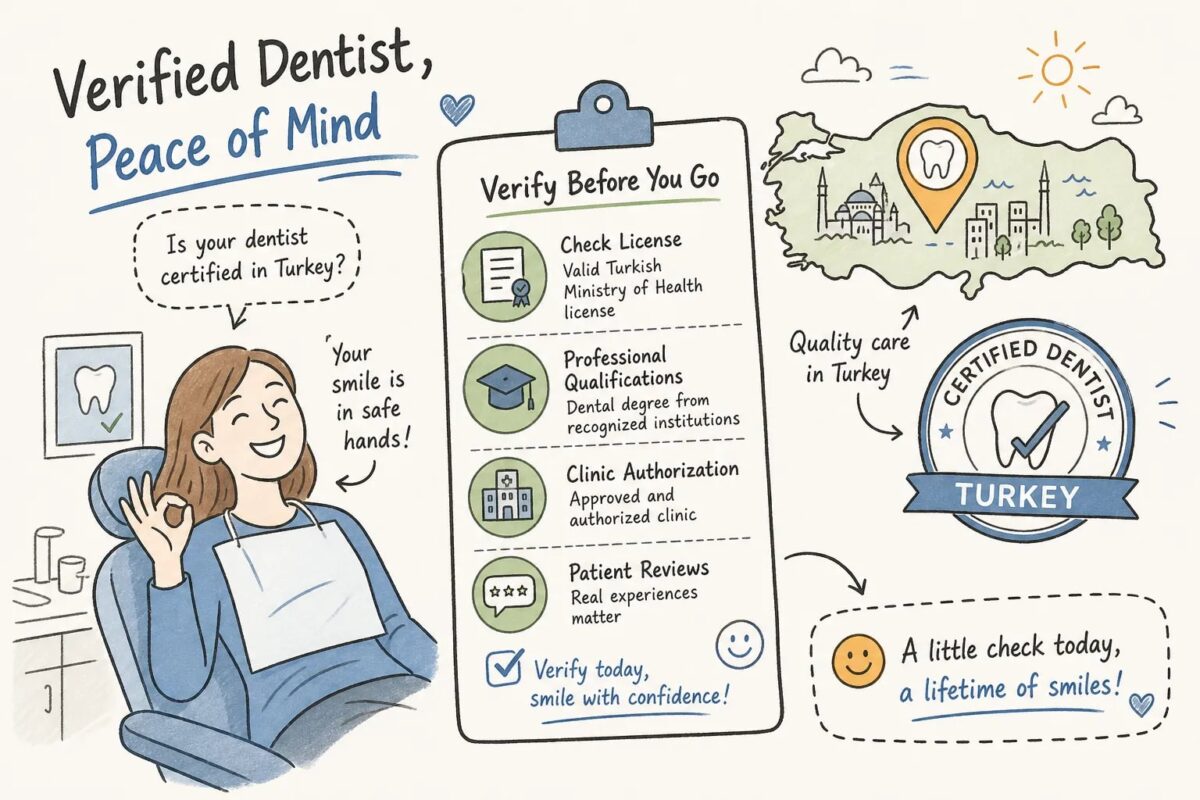
Dr. Çağrı Altuntaş’s clinic in Nişantaşı combines e max veneer placement with full 3D smile planning, intraoral scanning, and personalised digital design under Health Turkey-certified international standards. The practice is built specifically around individualised outcomes and natural-looking aesthetics rather than high patient throughput, a distinction that matters when the result is permanent. For UK patients already comfortable travelling, it represents access to quality materials and experienced clinical expertise at a price point that UK costs put out of reach for many.
Aftercare, risks, and protecting your investment long-term
The aftercare section of most veneer guides is frustratingly vague. The specifics that actually matter are below.
Daily habits that extend veneer life
Brush at least twice daily with a soft toothbrush and non-abrasive toothpaste, abrasive whitening pastes will scratch the cement margins over time. Floss daily to prevent plaque build-up at veneer margins, which is where decay can develop if hygiene is neglected. Avoid hard foods: ice, hard sweets, nuts, and crusty bread edges all apply force that veneers are not designed to absorb repeatedly. Limit acidic drinks and rinse with water after consuming them. A night guard is effectively mandatory for any patient with a history of grinding or clenching; treating it as optional rather than essential is the fastest route to premature failure.
Risks worth knowing before you commit
Post-operative sensitivity affects more than 20% of patients after E.max veneer placement. It is usually transient and resolves within one to two weeks, but it is worth knowing in advance so it does not cause unnecessary concern. Fracture risk is real under excessive force, particularly for bruxism patients without a guard. Because enamel removal is permanent, any failure down the line will require a replacement veneer or a crown rather than a return to the original tooth. Colour mismatch is a subtler long-term consideration: natural adjacent teeth change shade with age and diet, while E.max veneers do not respond to whitening agents, so the balance can shift over years. Gum irritation is possible if margins are poorly placed or if excess bonding cement is left at the gumline. These risks are manageable with good clinical selection, skilled technique, and consistent maintenance, but they belong in every honest pre-treatment conversation.
The verdict: is an e max veneer worth it?
Lithium disilicate veneers are the current benchmark for aesthetic dentistry because they combine genuine long-term durability, outstanding translucency, and a two-decade-plus clinical track record in a minimally invasive form. The 10-year survival data is robust. The optical properties are genuinely superior to alternatives. The permanence is real, the maintenance commitment is real, and the cost premium over composite bonding is real. None of those facts cancel the others out.
For patients with sufficient healthy enamel, good oral health, and a preference for a lasting, natural-looking result over a reversible but shorter-lived option, an e max veneer justifies the investment on clinical merit alone. The candidacy criteria in this article provide a reasonable starting framework for self-assessment. The next concrete step is a consultation with a cosmetic dentist who has specific experience placing lithium disilicate veneers and who offers digital smile design and a proper try-in process before any enamel is removed.
If UK pricing puts the treatment out of reach, or if you want an assessment from an internationally trained specialist, Dr. Çağrı Altuntaş’s clinic in Istanbul offers free smile analysis and personalised digital treatment planning. The same E.max material, the same clinical standards, and a considered approach to aesthetic outcomes rather than volume. No enamel should be touched until you have seen a digital design of the result and fully understand what you are committing to.
Frequently Asked Questions
What is an E.max veneer made from?
E.max is an Ivoclar lithium-disilicate glass ceramic engineered to combine translucency with higher strength than traditional feldspathic porcelain.
Are E.max veneers better than composite bonding?
They generally offer better long-term colour stability and surface polish, while composite is more repairable and often requires less initial cost and preparation.
Who is not a good candidate for E.max veneers?
Patients with active gum disease, untreated decay, insufficient enamel, severe grinding or a bite that overloads the veneers may need another plan first.
Do E.max veneers require tooth shaving?
Preparation is case-specific. Conservative treatment aims to remain in enamel; no-prep treatment is appropriate only when adding volume will not compromise appearance or hygiene.
How long can E.max veneers last?
Longevity depends on case selection, bonding, bite forces, oral hygiene and maintenance. No fixed lifespan can be guaranteed for an individual patient.
Can E.max veneers be whitened later?
Whitening gel does not change ceramic colour. Tooth shade and any whitening should be coordinated before the final veneers are made.