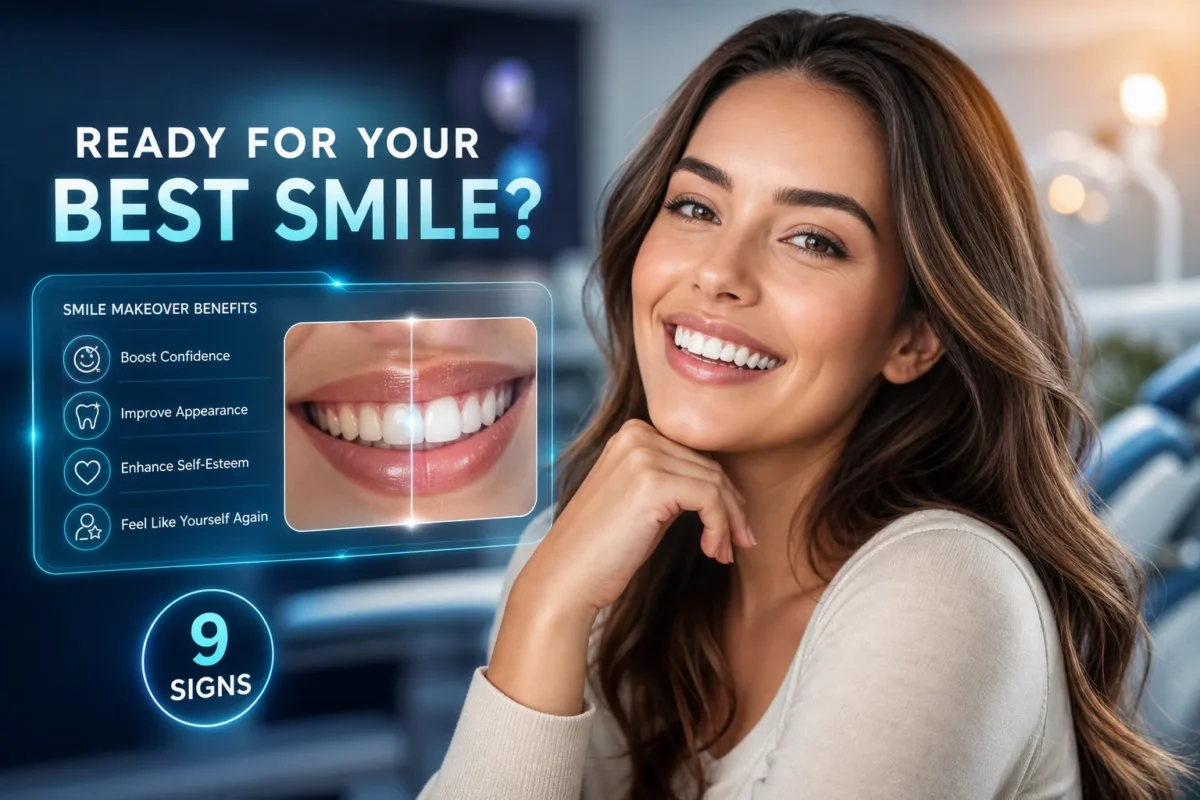
A smile makeover is a personalised sequence of cosmetic and, when needed, restorative treatments—not a single standard package. Cost and duration depend on the concerns being treated, oral health, number of teeth, chosen materials and whether whitening, bonding, veneers, crowns, aligners, gum treatment or implants are included.
Most people who are unhappy with their smile aren’t dealing with just one problem. There’s the staining from years of coffee, the chip on the upper left incisor, the gum line that sits too low, and the slight gap that’s been there since childhood. A single whitening session or one veneer often won’t fix all of that in a way that looks cohesive, in some cases, a single procedure is exactly right, but when multiple concerns are present, isolated fixes tend to clash. That’s where a smile makeover treatment comes in: a coordinated, customized plan that sequences multiple procedures so the result looks like it belongs on your face, not like a collection of dental work.
This guide breaks down every major procedure you’re likely to encounter, what each one fixes, how long everything takes, and what it costs in Canada in 2026. It also covers how to choose a dentist who will actually plan this with care rather than just sell you a package.
What a smile makeover treatment actually covers
A smile makeover is not a single procedure. It’s a sequence of cosmetic and, when necessary, restorative treatments chosen to address your specific concerns. Most patients need two to five procedures combined to get the result they’re after. The plan is shaped around what you want to fix: color, shape, alignment, the gum line, or missing teeth.
Before any cosmetic work begins, a quality dentist checks your oral health first. Gum disease, active decay, or bite problems have to be resolved before veneers or bonding are placed. Skipping this step is a leading reason cosmetic work fails early. The aesthetic layer only holds as long as what’s underneath it is stable.
Realistic expectations matter here. A typical transformation might look like this: a patient with overall staining, a gummy smile, and one chipped front tooth ends up with professional whitening, laser gum contouring, and two porcelain veneers. The result is natural and proportional, not aggressively white or reshaped beyond recognition. The goal is always a smile that looks like yours, only better.
The procedures most commonly included in a smile makeover treatment
Veneers, crowns, and bonding
These address shape and surface concerns. Porcelain veneers are thin shells bonded to the front of teeth and are ideal for stains, chips, gaps, and mild misalignment. They typically last 10 to 25 years (learn about the longevity of veneers). Composite veneers do similar work at a lower upfront cost but are more porous, stain faster, and usually need replacing after 5 to 8 years. When a tooth is too damaged or weakened for a veneer, a crown is the right call, it covers the entire tooth and restores structural integrity alongside the appearance.
Teeth whitening and gum contouring
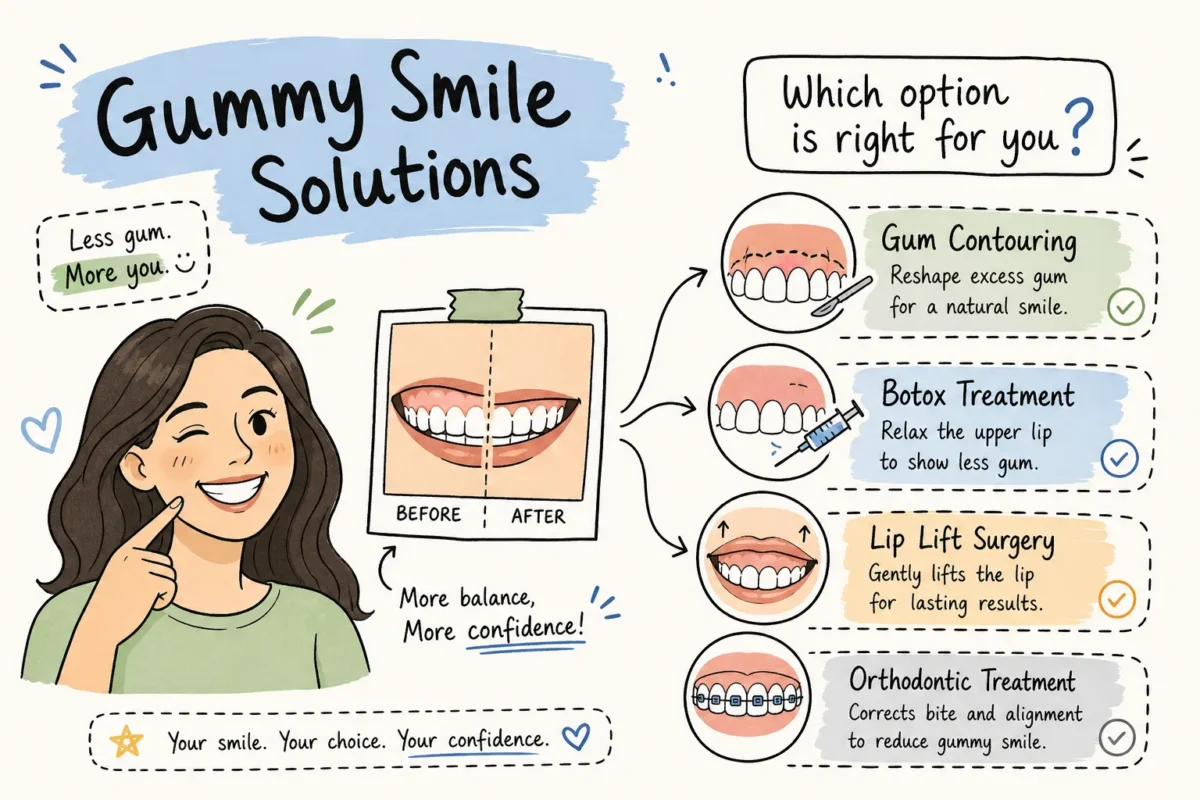
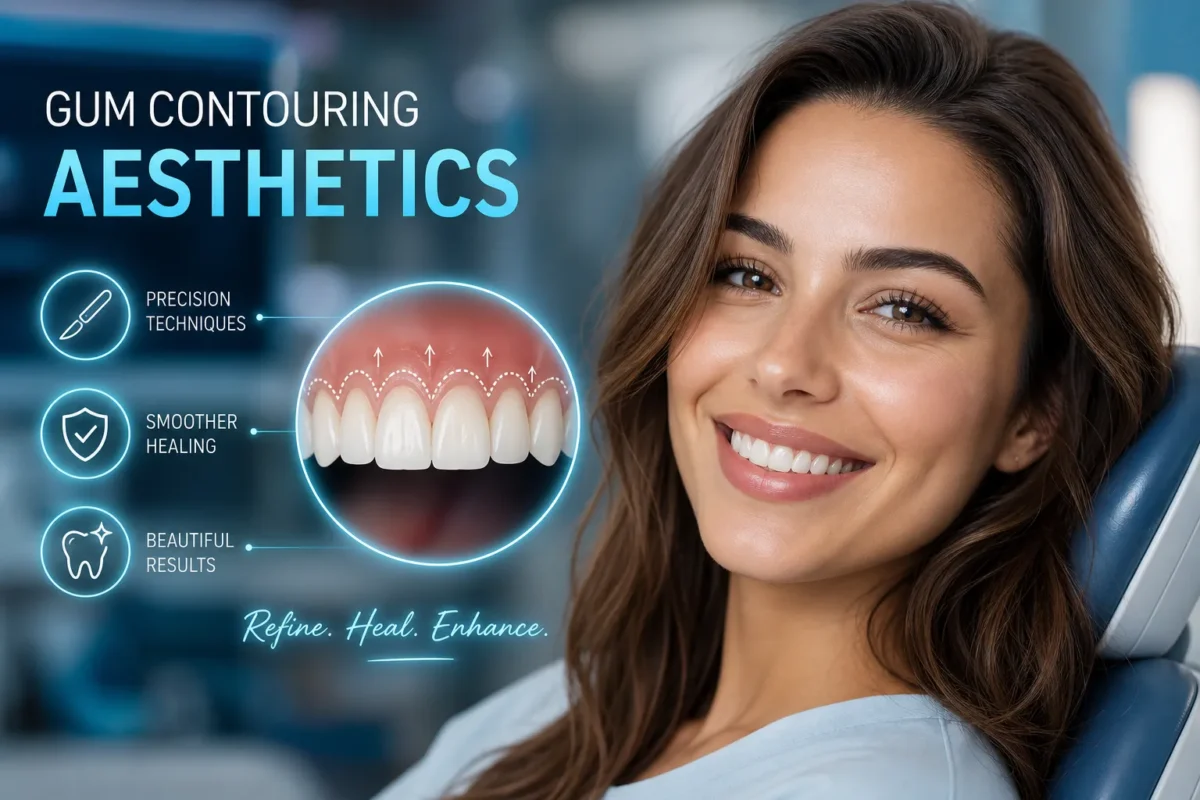
Teeth whitening sets the baseline shade before any restorative work is placed. This sequencing matters because you can’t whiten a veneer or crown after the fact. Whiten first, and your restorations can be matched to that brighter shade. Gum contouring, done with a laser or surgical approach, reshapes excess or uneven gum tissue. It’s one of the most overlooked procedures in cosmetic dentistry, and in many cases correcting a gummy smile or uneven gum line can have a larger perceived impact than adding veneers alone.
Clear aligners and dental implants
Clear aligners like Invisalign address crowding, spacing, and bite concerns over 6 to 18 months. Dental implants replace missing teeth and involve a titanium post fusing with the jawbone over 3 to 6 months before the final crown is placed. Both are typically sequenced first in a multi-procedure plan because moving teeth or filling gaps changes the layout of everything else.
How digital smile design makes the planning process personal
How digital smile design works (DSD) is the planning technology that separates intentional cosmetic dentistry from guesswork. Using 3D intraoral scans, high-resolution facial photography, and specialized software, the dentist maps your unique facial proportions and builds a digital simulation of your new smile before a single tooth is touched. You and your dentist can adjust tooth shape, size, and shade together until the design actually fits your face.
Dt. Çağrı Altuntaş Dental Clinic uses this technology as the foundation of every treatment plan. The clinic’s approach reflects the belief that a smile design should be as individual as the person wearing it. The 3D planning process makes that possible because it removes assumptions and replaces them with data from your actual facial structure. See the clinic’s About Dt. Çağrı Altuntaş, Dt. Çağrı ALTUNTAŞ for more on the team’s background and philosophy.
After the digital design is approved, many quality practices create a chairside mock-up or lab wax-up. This is a physical or temporary preview placed over your existing teeth so you can evaluate the result in real lighting, in real life, before any irreversible preparation happens. It’s a critical quality checkpoint. If a clinic skips this step and goes straight to preparation, that’s worth noting.
The sequencing logic for a multi-procedure plan follows a clear order. Oral health comes first: cleanings, periodontal treatment, any decay. Then structural work: implants and orthodontics. Cosmetic finishing, veneers and whitening, comes last. The order matters because cosmetic work placed on a shifting foundation won’t hold, and veneer shades locked in before alignment is finalized may not match the final result.
Smile makeover treatment timeline: what to expect from start to finish
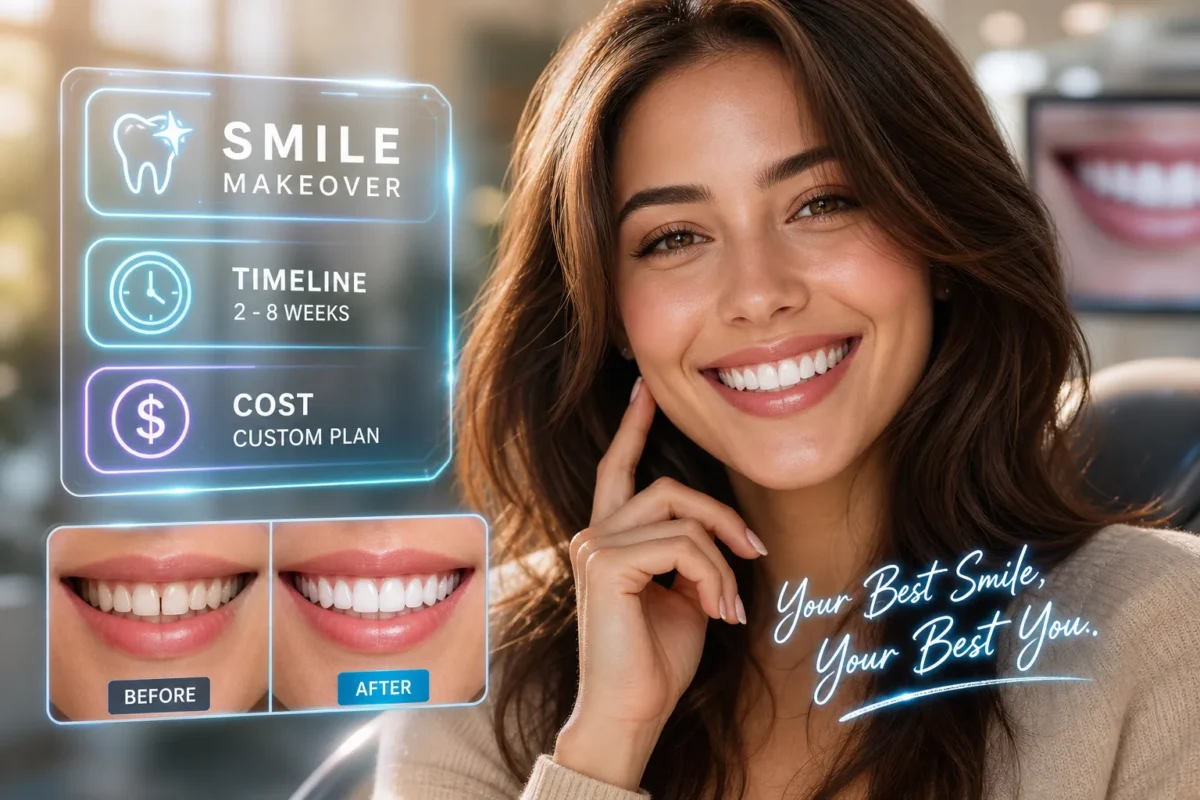
Some procedures are quick. In-office whitening takes a single session. Laser gum contouring is typically same-day, with soft-tissue healing generally expected within one to two weeks. Veneer placement usually spans two to three visits over a few weeks, with temporary sensitivity resolving within days to two weeks after final placement.
Multi-phase plans take longer by design. Dental implants require 3 to 6 months of osseointegration after placement before the final crown goes on, though most patients resume normal routines within 7 to 10 days of surgery. Invisalign runs 6 to 18 months depending on case complexity, with no significant downtime.
When procedures are stacked, a good treatment plan sequences them to minimize total visits and reduce overlap. A patient combining Invisalign, whitening, and veneers is typically in active treatment for 12 to 18 months. A simpler case pairing whitening with gum contouring might wrap up in a few weeks. Complexity drives duration, not the dentist’s schedule.
Smile makeover treatment costs in Canada and what drives the price
Here’s a clear breakdown of what you’re looking at in Canada in 2026:
- Porcelain veneers: CAD $900 to $2,500+ per tooth
- Composite veneers: CAD $300 to $1,500 per tooth
- Invisalign: CAD $3,000 to $9,000 depending on complexity
- Dental implants: CAD $3,000 to $7,350 per implant
- In-office whitening: CAD $300 to $800
- Gum contouring: CAD $500 to $3,000
A full smile makeover in Canada typically ranges from CAD $10,000 to $30,000 or more. Toronto and Vancouver tend to land at the upper end of that range, with premium downtown clinics sometimes reaching $50,000 for extensive full-mouth cases. Calgary and Montreal generally come in somewhat lower but still reflect the same cost drivers: dentist experience, materials used, and how many teeth are involved.
The math adds up fast. Eight porcelain veneers at $1,800 each, plus whitening and gum contouring, puts you at $16,000 to $18,000 before any implants or orthodontics enter the picture. Most cosmetic procedures aren’t covered by insurance, and that’s the point at which many Canadian patients begin exploring alternatives, including internationally trained specialists abroad. For an overview of typical smile makeover cost considerations and financing options, reputable resources can help frame the numbers and choices.
Dental tourism to Istanbul has grown as an option for this reason. Istanbul has a concentration of cosmetic dentists with international training, and some clinics carry accreditation through Turkey’s Health Tourism Authorization Certificate program, which sets minimum standards for facilities treating international patients. Cost differences can be substantial, though patients should research individual clinic credentials, read verified patient reviews, and factor in travel costs when making comparisons.
Dt. Çağrı Altuntaş Dental Clinic is one such option for Canadians considering treatment abroad. Based in Nişantaşı, Istanbul, the clinic uses digital smile design and 3D intraoral scanning technology. Dr. Çağrı Altuntaş has published credentials in oral surgery and implantology; for more on his background see Über Dr. Çağrı Altuntaş, Dt. Çağrı ALTUNTAŞ. The clinic offers free consultations and multilingual support for international patients. It’s worth reviewing the clinic’s patient documentation and verified reviews directly to assess fit for your specific case.
How to choose the right dentist for your smile makeover
A quality consultation covers specific ground. Your dentist should conduct a thorough diagnostic exam with intraoral photography, evaluate your bite and gum health, explain every recommended procedure and the reasoning behind it, show you a digital or physical mock-up before any commitment, and provide a written treatment sequence with timelines and costs. If any of those elements are missing, ask why.
The right questions reveal a lot about how a practice operates. Ask how many cases similar to yours the dentist has completed. Ask to see before-and-after examples from real patients. Ask whether you’ll see a digital preview before any tooth preparation begins. Ask what happens if you’re not satisfied with the result. A dentist who answers these questions with specifics, not generalities, is one who treats each case as its own problem to solve.
Red flags are worth knowing. Pressure to start treatment the same day as the consultation is a warning sign. So is any practice that skips the gum health and bite evaluation before recommending cosmetic work, or one that can’t show you a mock-up or digital preview. High-volume clinics that prioritize throughput over outcomes tend to produce results that look interchangeable. That’s the opposite of what a well-planned smile makeover is supposed to deliver.
A plan built around you, not a template
The best outcomes from a smile makeover treatment come from a dentist who starts with your oral health, uses digital planning to show you the result before anything is permanent, and sequences every procedure with intention. Whether you pursue treatment in Canada or consider a specialist abroad, the process should feel collaborative, transparent, and unhurried.
If you’re weighing your options, the free smile analysis at Dt. Çağrı Altuntaş Dental Clinic is a low-commitment starting point to see what a personalized treatment plan could look like for your specific smile. The clinic’s philosophy centers on designing around your facial proportions and personality rather than applying a standardized result, which is the standard any smile makeover should be held to. Learn more through the clinic’s Personalized Smile Analysis, Dt. Çağrı ALTUNTAŞ.
Request a consultation, ask to see a digital preview before any preparation begins, and make sure the full treatment sequence is explained to you in writing. A dentist confident in their process will have no hesitation doing all three.
Frequently Asked Questions
What treatments can be included in a smile makeover?
Depending on the case, the plan may combine whitening, bonding, veneers, crowns, clear aligners, gum contouring or implants.
How long does a smile makeover take?
Simple plans may take a small number of visits; orthodontics, implants or gum treatment can extend the process. A personal sequence is set after examination.
How is smile makeover cost calculated?
Cost reflects the number and type of procedures, tooth count, materials, laboratory work, diagnostics and any treatment needed to stabilise oral health first.
Do I need veneers for a smile makeover?
Not necessarily. Whitening, bonding, orthodontics or gum treatment may achieve the goal in suitable cases without veneers.
Why must oral health be treated first?
Active decay, gum disease and unstable bite problems can shorten the life of cosmetic restorations and should be addressed before elective aesthetic work.
Can I preview the result before treatment?
Digital smile design and, in suitable cases, a mock-up can help you review proposed proportions and communicate preferences before final treatment.