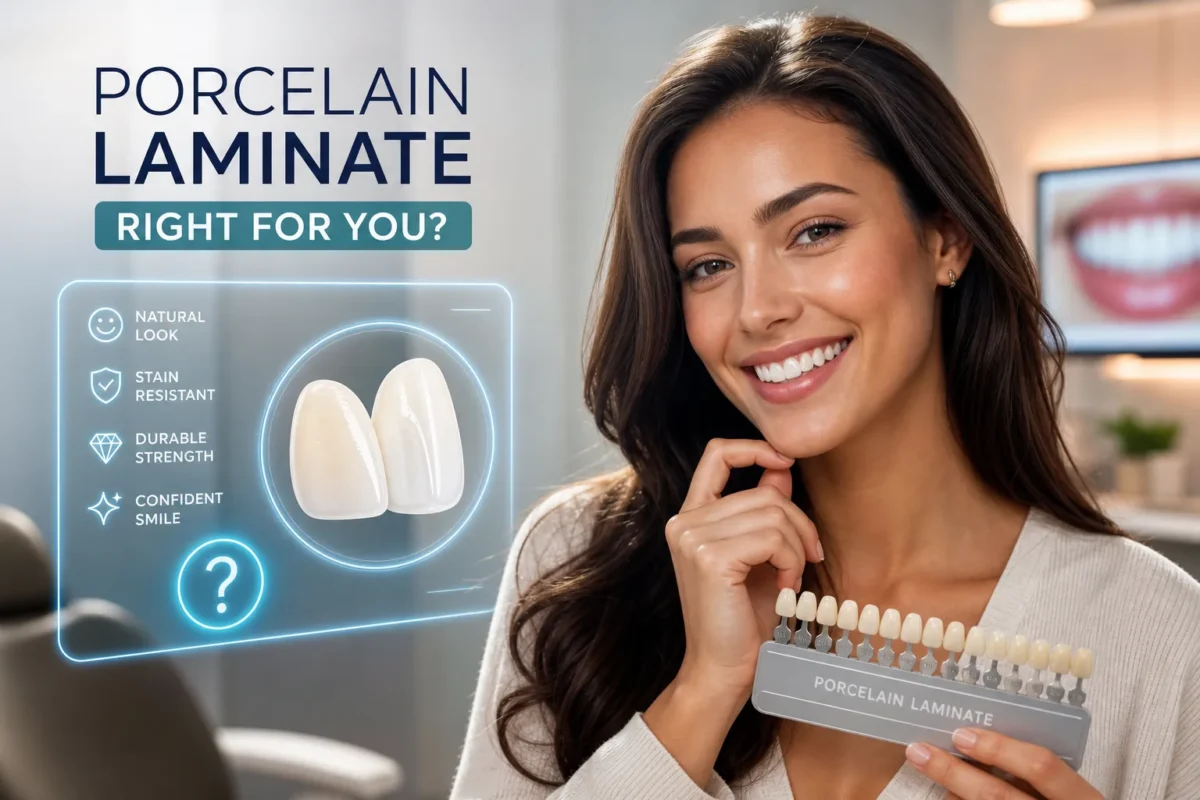
Porcelain laminate veneers are thin ceramic restorations designed to change the visible shape, colour or proportions of suitable teeth. They are most predictable when sufficient enamel remains and the bite is stable; active disease, severe grinding, major position problems or unrealistic expectations may require a different or staged approach.
Search for “porcelain laminate” or “porcelain veneers” and you’ll find yourself buried under before-and-after galleries, celebrity smiles, and price comparisons that vary wildly from one website to the next. The terminology alone is enough to stall a decision: laminate veneers, minimal-prep veneers, no-prep veneers, ceramic shells. Most people give up trying to understand the details and simply book a consultation hoping the dentist will sort it all out.
That rarely works well. You walk in without enough context to ask the right questions and walk out with a treatment plan you can’t properly evaluate.
What follows is a straight guide through the key facts: what porcelain laminate veneers are made of, how they behave on the tooth, who is and isn’t a good candidate, what the fitting process involves, what realistic UK costs look like in 2026, and how long the results genuinely last. By the end, you’ll know whether this treatment is a genuine option for your smile or whether a different route makes more sense for your situation.
What porcelain laminate veneers actually are
The ultra-thin shell concept
A porcelain laminate veneer is a custom-fabricated ceramic shell, typically 0.3 to 0.7 mm thick, bonded to the front surface of a tooth. To put that thickness in perspective: a standard laminate sits roughly as thin as a contact lens. Unlike a crown, which encases the entire tooth, a laminate veneer is a surface treatment. The underlying tooth structure stays largely intact, which is a significant clinical advantage.
Two ceramic materials are commonly used: feldspathic porcelain and lithium disilicate. Feldspathic porcelain offers superior translucency, making it the preferred choice for ultra-thin applications where depth of appearance is the priority. Lithium disilicate (known commercially as IPS e.max) is considerably stronger, with flexural strength reaching 360 to 530 MPa, making it a better option when durability needs to outweigh pure aesthetics.
How translucency creates a natural result
Porcelain’s optical properties are what set it apart in anterior aesthetics. Its refractive index and light-scattering behaviour closely mimic those of natural enamel, producing depth and luminosity that composite resin cannot replicate. When you look at a well-made porcelain veneer under natural light, it doesn’t read as a flat ceramic surface; it reads as a tooth.
Shade selection typically uses the Vita or 3D Master system. The underlying tooth colour plays a significant role in the final result: darker teeth require more opaque ceramic to mask the shade beneath, which can reduce the veneer’s translucency. This is one of several reasons why the diagnostic planning stage matters as much as the clinical skill applied at bonding.
Ultra-thin versus conventional laminate thickness
Standard porcelain laminates run 0.5 to 0.7 mm thick. Ultra-thin versions sit at 0.3 mm or below. The appeal of ultra-thin veneers is that they require less enamel removal during preparation, preserving more tooth structure and improving bond strength over the long term. The downside is that fabricating them consistently demands exceptional laboratory precision and thorough digital planning. When those conditions are met, the clinical results are strong.
How porcelain laminate compares to other veneer types
Porcelain versus composite veneers
The core trade-offs between these two materials are worth understanding clearly before any consultation. Porcelain laminates last 10 to 20 years, with clinical studies reporting a 93.5% survival rate at 10 years. Composite veneers typically require replacement within five to seven years and are significantly more prone to staining. Porcelain maintains colour stability with less than one Delta-E unit change over a decade, while composite accumulates discolouration despite regular polishing.
Porcelain costs roughly twice as much upfront. But on a per-year basis, factoring in replacement frequency, porcelain generally offers better value over a 10-year horizon. The one practical advantage composite holds is repairability: a chipped composite veneer can be fixed in a single visit, whereas a fractured porcelain veneer requires two appointments and a laboratory fabrication period.
Minimal-prep and no-prep variations
These terms cause genuine confusion. Minimal-prep and no-prep veneers are still porcelain laminate veneers. The distinction refers to the preparation technique, not the material. Minimal-prep reduces enamel removal to 0.3 to 0.5 mm rather than the 0.5 to 0.7 mm typical of conventional preparation. No-prep veneers remove zero enamel but suit only a narrow range of cases where there is sufficient space to add ceramic without the tooth appearing bulky.
Both approaches preserve more tooth structure than conventional preparation, which directly improves the bond. That difference in bond quality compounds significantly over 10 to 15 years.
When a crown is the right call instead
If a tooth is severely damaged, heavily decayed, or has undergone root canal treatment, a laminate veneer doesn’t provide adequate structural protection. Crowns encapsulate the full tooth and are appropriate when structural integrity, not aesthetics alone, is the primary concern. Veneers work best on teeth that are sound in structure but compromised in appearance. A dentist who recommends veneers on a heavily damaged tooth without addressing the structural issue first is not acting in your best interest.
Who makes an ideal candidate for laminate veneers
The role of enamel health in candidacy
This is the most important candidacy factor most people overlook. Clinical data shows veneer survival rates reach up to 99% when bonded to enamel, dropping to around 91% when bonded to dentin. If significant enamel is missing due to erosion, acid reflux damage, or previous dental work, the long-term prognosis for porcelain laminate veneers is materially worse. A thorough assessment of your enamel coverage is non-negotiable before treatment proceeds, and any practice that skips this step is cutting corners on the most consequential part of the planning.
Common aesthetic concerns porcelain laminates address well
Laminate veneers excel in a specific set of situations: persistent discolouration that whitening cannot correct, minor chips and cracks on front teeth, small gaps between teeth, slightly irregular tooth shapes, and mild crowding where orthodontic treatment isn’t the preferred or practical route. These are the cases where the clinical results consistently justify the investment. If your concern falls clearly within this list and your teeth are structurally sound, you’re likely a strong candidate.
Conditions that complicate or rule out treatment
Bruxism is the most significant risk factor. Grinding places sustained force on the ceramic and dramatically increases fracture risk. Studies report that patients with bruxism who don’t manage the habit with a night guard face failure rates eight times higher than those who do. Active gum disease, untreated decay, and severely misaligned bites are all contraindications that must be resolved before any veneer placement is considered. A thorough dentist will not proceed until pre-treatment work is complete, and they’ll tell you so directly.
The fitting process from consultation to final bond
Consultation, digital planning, and the diagnostic mockup
The first appointment covers shade analysis, digital photographs, an intraoral scan, and the creation of a diagnostic wax-up or digital smile mockup. This is where the aesthetic planning happens, and the quality of this stage shapes a significant portion of the final outcome. Practices that invest in a proper digital workflow map the precise dimensions of each veneer through 3D intraoral scanning and digital smile design software before any enamel is touched. Research reports up to 95% accuracy between digital preview and final bonded result. That level of pre-planning separates genuinely personalised outcomes from generic ones.
Tooth preparation and temporary veneers
The preparation appointment involves local anaesthesia, controlled enamel reduction of 0.3 to 0.5 mm for minimal-prep cases, digital impressions, and placement of temporary veneers. Temporaries protect the prepared teeth during the two-to-three-week laboratory fabrication period and give patients a visual preview of the approximate final shape and size. Any concerns about proportion or shape are far easier to address at this stage than after the permanent veneers are fabricated and delivered.
The bonding appointment
The final appointment begins with removal of the temporary veneers, followed by a try-in of the permanent ones using a water-soluble gel to verify shade and fit under natural lighting. Once both patient and dentist are satisfied, the teeth are etched, a bonding agent is applied, resin cement is placed, and each veneer is light-cured into position. This appointment typically takes 60 to 90 minutes. Most practices carry out an immediate bite check before you leave, with a further review typically scheduled one to two weeks later to confirm the bite has settled and identify any minor adjustments needed.
What porcelain laminate veneers cost in the UK in 2026
Typical UK price ranges per tooth in 2026
Most UK private clinics charge £700 to £1,500 per tooth for porcelain laminate veneers, with the majority of reputable practices quoting £800 to £1,200. Central London clinics frequently charge £1,000 to £2,000 or more per tooth. A “social six” (the six upper front teeth) typically runs £4,200 to £9,000. A full smile makeover covering eight to ten teeth can reach £15,000 in the capital.
What the quoted price usually includes and what it doesn’t
The per-tooth fee often covers tooth preparation, temporary veneers, laboratory fabrication, bonding, and a follow-up appointment. However, inclusion varies between practices: initial consultations are sometimes charged separately at £50 to £150, or offered free as a promotional appointment. Always request a full written breakdown before signing any treatment agreement. What the fee commonly excludes is worth knowing upfront: any pre-treatment work such as scaling, whitening for surrounding teeth, or X-rays, and future repairs if a veneer chips or debonds.
The Istanbul alternative that some UK patients consider
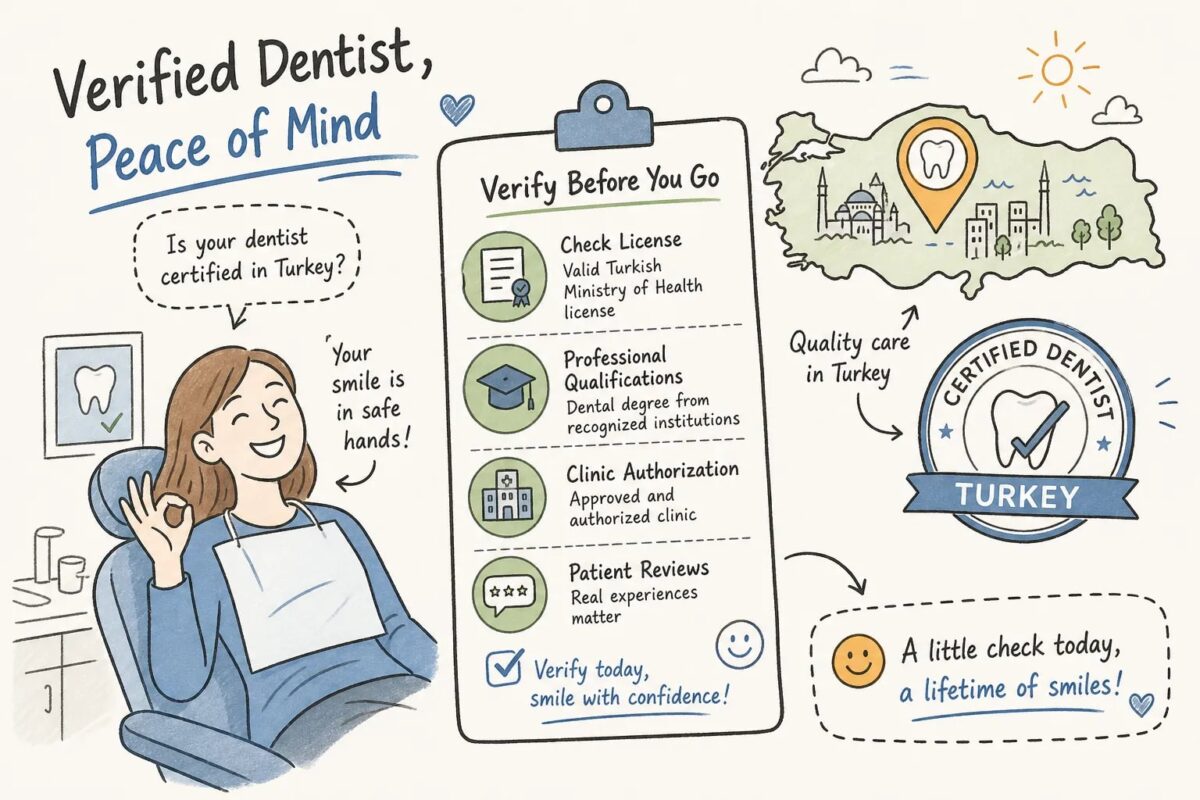
More UK patients are now travelling to Istanbul for laminate veneer treatment at considerably lower cost. Dt. Çağrı Altuntaş Dental Clinic, based in Istanbul’s Nişantaşı district, uses digital planning technology and premium ceramic materials as part of its cosmetic dentistry workflow. For patients treating six to ten teeth, the cost difference can reliably cover flights and accommodation, making dental tourism a financially practical option worth investigating. As with any clinic abroad, patients should verify credentials, request a written treatment plan, and confirm which materials will be used before committing.
How long they last and what the clinical data shows
Survival rates at 10 and 15 years
The clinical evidence is clear: studies report a survival rate of approximately 93.5% at 10 years and around 83 to 85% at 15 to 20 years. Some high-leucite ceramic veneer studies have reported 100% survival at 10 years under ideal conditions. For an elective cosmetic treatment, these are strong numbers. The longevity data holds across multiple large reviews, which makes the case for porcelain over composite particularly compelling when you’re treating multiple teeth.
Chipping, fracture, and the most common failure modes
Ceramic fracture accounts for approximately 45% of all long-term failures. Studies report a chipping rate of around 5% and a fracture rate of approximately 4 to 5% within the first 10 to 14 years. Some studies have reported around 8% of failures as repairable defects, with roughly 11% requiring full replacement, meaning a meaningful proportion of issues can be managed without replacing the veneer entirely. Bruxism patients face significantly higher failure rates than the clinical averages suggest, which is precisely why the candidacy assessment and the night guard conversation are so important before treatment begins.
The key variables that determine your outcome
The factors you can most influence are preparation approach, bruxism management, and dentist selection. Preserving enamel during preparation improves bond strength and directly extends longevity. Wearing a night guard if you grind substantially reduces fracture risk. Choosing a dentist with demonstrable ceramic case experience, rather than a high-volume provider turning out large numbers of veneers with minimal personalisation, is the most consequential decision in the entire process. The planning quality at the outset shapes the outcome for the next 15 years.
Aftercare that makes the difference long-term
The first two weeks after bonding
Mild sensitivity to temperature is normal in the first week or two and typically resolves within a fortnight. Stick to soft foods for the first 48 hours while the resin cement reaches full cure strength. Avoid very hot or very cold foods initially. If the bite feels uneven or a particular tooth feels high, contact your dentist promptly rather than waiting for a scheduled review. Small bite discrepancies left unaddressed place disproportionate force on the ceramic and can cause early failure.
Daily habits that protect the ceramic
Use a soft-bristled toothbrush, a non-abrasive fluoride toothpaste, and floss carefully around the veneer margins. Avoid biting directly into hard foods with your veneered teeth: ice, crusty bread, hard sweets, and raw carrots or similar hard vegetables are the most common culprits. Limit coffee, red wine, and tobacco. The porcelain itself resists staining well, but the resin cement at the margins is far less resistant to pigmentation over time. Attend professional cleans every six months so the margins remain plaque-free and any early wear is caught before it becomes a problem.
When a night guard is non-negotiable
Any patient with a history of bruxism or clenching must wear a custom night guard after bonding. This is not optional advice. Clinical data shows fracture probability is eight times greater in bruxism patients who don’t wear a required splint. The guard distributes force evenly across the teeth during sleep, protecting both the ceramic surface and the adhesive bond beneath it. Among all the post-treatment investments available, this is the one with the clearest and most direct return.
Questions worth raising at your consultation
Questions about your specific candidacy
Go in prepared. Ask how much usable enamel you have on the teeth being prepared, and whether you’re a minimal-prep or no-prep candidate based on your specific tooth anatomy. Find out whether you need any pre-treatment work before veneers can be placed. If you have a history of grinding, ask directly how that affects the treatment plan and the expected longevity. The depth and specificity of the answers will tell you whether the assessment is thorough or superficial.
Questions about the process and materials
Ask which ceramic material the dentist plans to use and why it suits your case specifically. Find out whether you’ll receive a diagnostic mockup before any preparation begins. Ask how long the laboratory technician has been working with porcelain laminates. Request to see before-and-after cases from the dentist’s own patients rather than stock photography. These questions separate experienced practitioners from those who apply the same standard plan regardless of individual anatomy.
Questions about cost, longevity, and what-ifs
Get the full scope of what the quoted price covers, in writing, before you commit. Ask about the practice’s policy if a veneer chips or debonds within the first two years. Find out how many laminate cases the dentist completes per year. These questions reveal both experience level and how seriously the practice takes long-term patient outcomes. A dentist who hesitates at any of them is giving you useful information, just not the kind they intend to.
The bottom line on porcelain laminate veneers
Porcelain laminate veneers are among the most aesthetically capable treatments in cosmetic dentistry. The clinical data supports their reputation: strong survival rates, natural-looking results, and minimal tooth reduction when the preparation is handled correctly. For the right patient, they’re one of the best-evidenced elective dental treatments available.
But they’re not a universal answer. Enamel health, bruxism history, tooth condition, and budget all shape whether they’re the right fit for your specific situation. Rushing into treatment without addressing those factors is how patients end up with outcomes that disappoint or fail early.
Go to your consultation with the questions listed above. Understand exactly what preparation is involved and what enamel you’re permanently surrendering. Choose a dentist who uses digital planning rather than approximation, whether that’s a practice here in the UK or a well-credentialled clinic abroad, such as Dt. Çağrı Altuntaş Dental Clinic in Istanbul. The planning quality is the single variable that separates a natural-looking result that lasts 15 years from one that fails or disappoints within five.
Frequently Asked Questions
Is porcelain laminate the same as a veneer?
Porcelain laminate is a common term for a thin ceramic veneer bonded primarily to the front surface of a tooth.
Who is a good candidate for porcelain laminates?
Patients with stable oral health, adequate enamel and suitable colour, shape, spacing or wear concerns may be evaluated.
Do laminate veneers require tooth shaving?
Preparation is case-specific. Conservative treatment aims to preserve enamel; no-prep treatment is appropriate only when added volume will remain natural and cleanable.
Can porcelain laminate veneers be whitened?
No. Ceramic colour does not change with whitening gel, so shade planning and any whitening should happen before final fabrication.
How long do porcelain laminates last?
Longevity varies with bonding, bite, grinding, hygiene and maintenance. No fixed lifespan can be guaranteed for an individual patient.