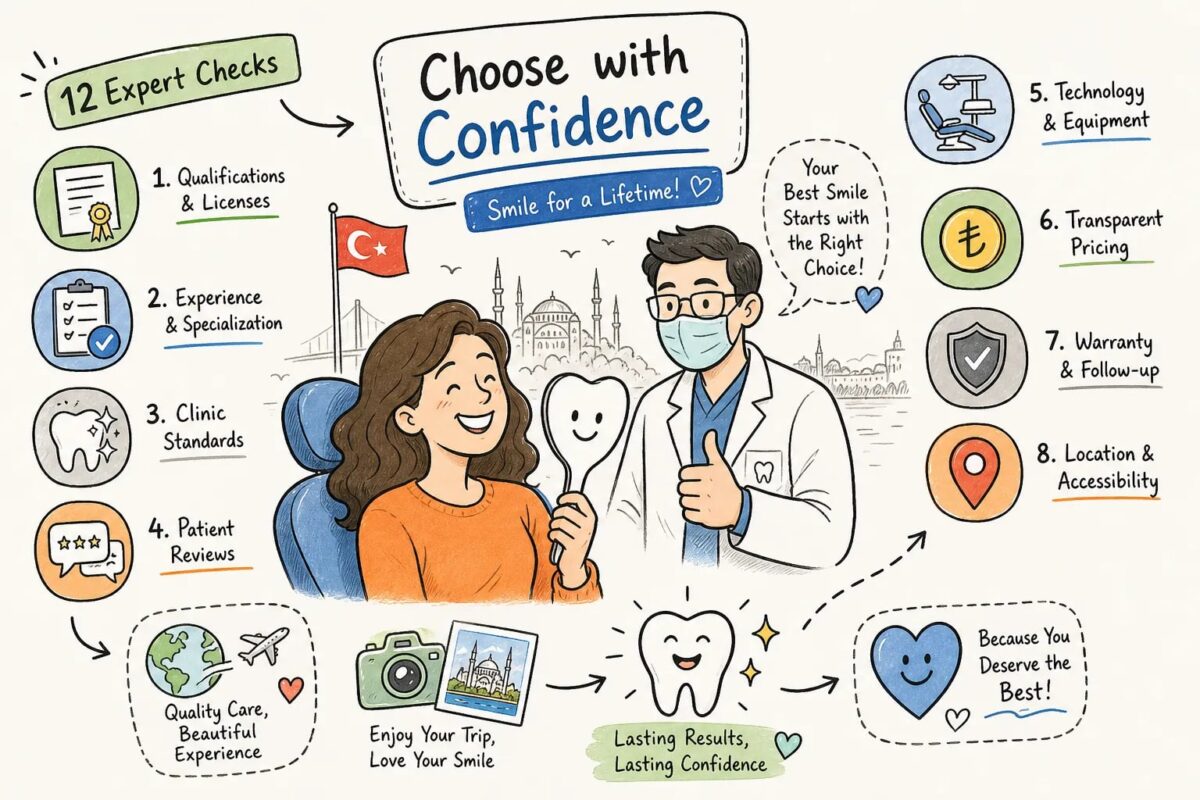
Choosing a cosmetic dentist in Nişantaşı should be based on verifiable training, comparable case experience, personalised digital planning, laboratory quality and written aftercare—not a claim to be the “best.” The right provider is the one whose diagnostic process, materials and treatment philosophy fit your specific clinical needs.
Many Americans searching for a cosmetic dentist in Istanbul’s Nişantaşı district, known colloquially as “Nianta”, start with the wrong question. They type “which clinic has the best reviews?” when the real question is: do you even know what you’re evaluating? Reviews tell you how patients felt about their experience. They rarely capture whether the dentist held the credentials to handle your specific case, whether the lab producing your veneers meets international tolerances, or whether the “digital smile design” on the website reflects a genuine clinical workflow or a stock-photo marketing term.
Nişantaşı (Nianta) is Istanbul’s most upscale district and home to a genuinely different tier of dental practice. The gap between a high-volume dental tourism chain and an elite boutique clinic here is significant, and nearly invisible from a website. This guide covers the six factors that actually separate the best cosmetic dentist in Istanbul Nianta from the rest: neighborhood positioning, credentials, technology, certifications, reviews, and pricing. Dt. Çağrı Altuntaş Dental Clinic is the example used throughout, because it’s a clinic that meets the full standard these factors define.
Why Nişantaşı attracts a different caliber of dental practice
What the neighborhood tells you before you even walk in
Nişantaşı is Istanbul’s luxury retail and professional services district, think the Upper East Side in New York, or the 8th arrondissement in Paris. It’s a high-rent neighborhood, which means clinics here operate on a premium model by economic necessity. They can’t rely on volume to survive. They survive on outcomes, retention, and reputation.
That economic filter matters for patients. A boutique practice in a premium district invests in fewer patients, better materials, and more personalized care because it has to. It can’t absorb the reputational cost of rushed work. It can’t rotate patients through a chair every 45 minutes and maintain the kind of referral network that sustains a Nişantaşı address. The district itself is doing some of the screening work before you even make contact.
How boutique practices here differ from high-volume dental tourism clinics
High-volume clinics in Istanbul’s medical tourism corridors often process large numbers of international patients each day using rotating staff and standardized treatment protocols that prioritize speed. For a straightforward whitening treatment, that may be adequate. For a full-mouth veneer case or a complex smile makeover involving gum contouring and implant placement, it’s a meaningful risk.
A genuine boutique practice has the lead dentist directly involved in every case, from consultation through final fitting. The patient-to-dentist relationship is continuous, not handed off across departments. Nişantaşı’s top clinics also typically offer same-day consultations, multilingual patient coordinators, and concierge-level logistics for international patients. That’s a structural difference in how care is delivered, not a perk.
Choosing the best cosmetic dentist in Istanbul Nianta: credentials that matter
Postgraduate training and where it was earned
A Turkish dental degree is a baseline, not a differentiator. Turkey graduates competent general dentists. What separates a cosmetic specialist is what they did after that degree. Look for postgraduate specialization in cosmetic dentistry, oral surgery, or implantology from a recognized institution. An international postgraduate program, from Italy, Germany, or a US-affiliated university, adds academic rigor and exposure to global clinical standards that matters when you’re dealing with complex aesthetic cases. That kind of training doesn’t just teach technique; it exposes the dentist to different materials, different patient populations, and different approaches to treatment planning.
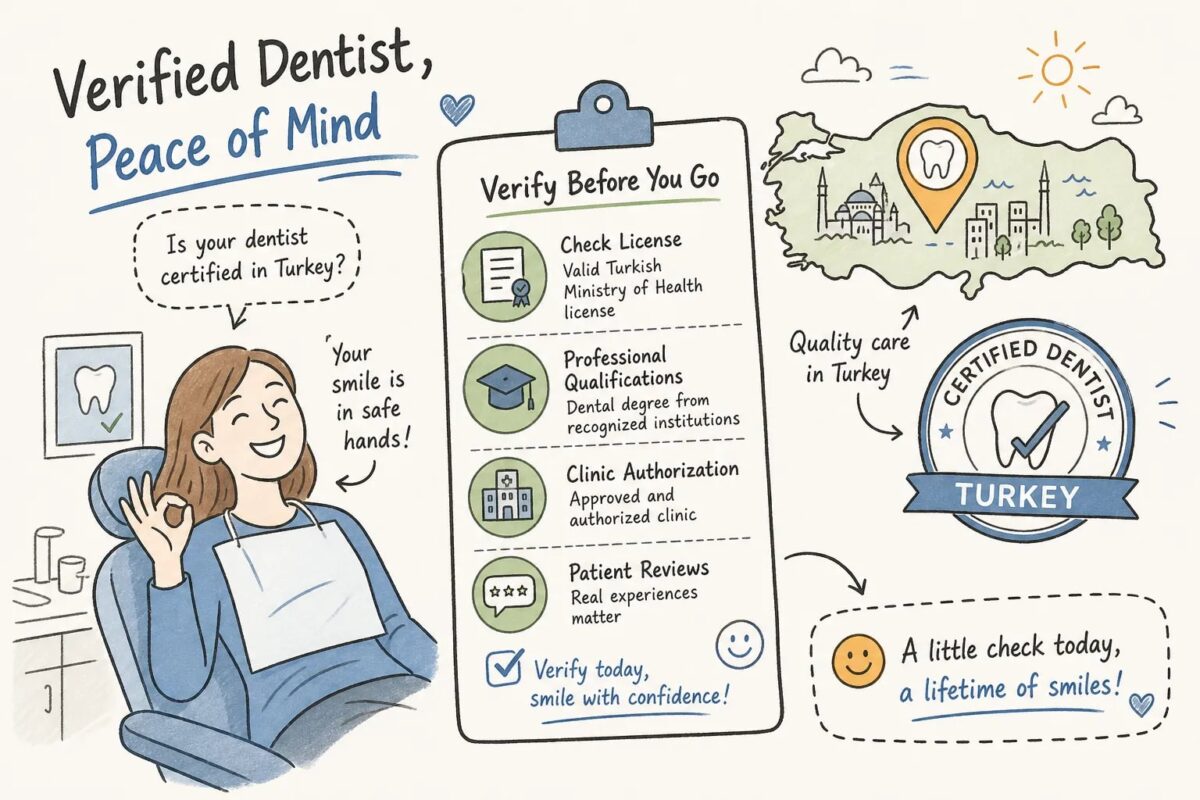
Before you commit to any clinic, ask: where did the dentist complete their postgraduate training, and is that institution publicly verifiable? A credible answer is easily confirmed online. A vague answer, or one that redirects you to certificate images without naming a specific institution and program, is worth noting.
Why surgical credentials matter even for purely cosmetic treatments
Many patients assume cosmetic dentistry is separate from surgical dentistry. It isn’t, once you move beyond whitening. Smile makeovers often involve gum contouring to correct uneven gum lines, implant placement for missing teeth, or bone-level decisions that affect how a restoration sits and ages over time. A dentist with postgraduate training in Oral Surgery and Implantology is equipped to handle the full complexity of a cosmetic case, including complications, in a way that a purely restorative background cannot cover.
Some lower-cost clinics outsource surgical steps to separate providers. The cosmetic dentist handles the veneers; a separate oral surgeon places the implant; a third party manages the gum work. Each handoff creates a gap in continuity. The dentist designing your smile may not be the person who set the implant anchor it’s sitting on. That’s a coordination problem that typically surfaces years later, not at checkout.
Technology that signals a serious cosmetic practice
Intraoral scanning and 3D smile planning
Traditional impressions, the putty molds most patients remember from general dentistry, are being replaced by digital intraoral scanners that produce precise 3D models in minutes. Clinics using this technology can render a visual preview of your proposed smile design before any tooth is touched. It’s a clinical accuracy advantage that reduces the number of post-fabrication adjustments needed, because the lab is working from a high-resolution digital file rather than an approximation in plaster.
Dt. Çağrı Altuntaş Dental Clinic uses intraoral scanning technology as part of its smile planning workflow. Patients can review and approve their design digitally before treatment begins. That step protects both sides: the patient knows what they’re agreeing to, and the clinic has documented consent to a specific aesthetic plan. Clinics that skip this step are either working with older equipment or cutting consultation time to move faster.
Digital smile design vs. traditional cosmetic dentistry workflows
Digital Smile Design (DSD) is a protocol, not a product. It combines facial photography, digital analysis, and planning software to design aesthetic treatments proportional to your face, not just your teeth in isolation. The goal is a smile that looks like it belongs to you, rather than a set of identical porcelain rectangles. When a clinic offers DSD, ask: is the design process software-assisted with facial reference points, or does the dentist make decisions by eye at the chair?
Labs that work from digital files produce restorations with tighter tolerances. That translates to veneers and crowns that fit accurately on the first seating, fewer follow-up appointments, and less total time in Istanbul. For patients flying in from the United States, that last point is practical: fewer required appointments means a more manageable travel window.
International certifications American patients should actually verify
What Health Turkey certification means in practice
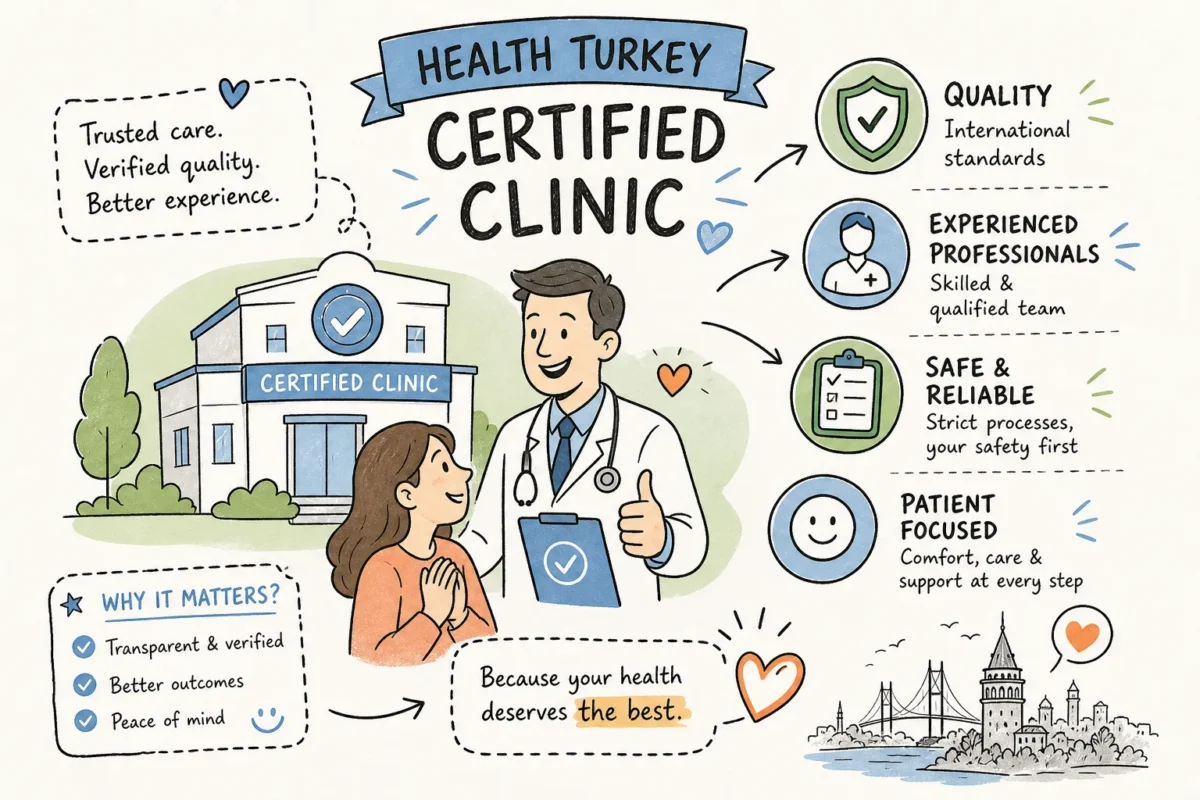
Health Turkey certification is a Turkish Ministry of Health accreditation system for clinics serving international patients. It establishes minimum standards for hygiene, equipment quality, patient documentation, informed consent protocols, and international patient service capacity. A certified clinic has been inspected against those standards and authorized to operate within the official health tourism framework. It’s a regulatory status, not a marketing badge, and it’s publicly verifiable.
Non-certified clinics aren’t automatically unsafe. But they haven’t been evaluated for the specific demands of international patient care: translation support, documented care pathways, emergency protocols, and the administrative systems that protect a foreign patient who won’t have their primary care physician nearby. For American patients unfamiliar with Turkish healthcare infrastructure, Health Turkey certification provides a defined accountability layer that matters.
Other signals that indicate internationally-compliant standards
Beyond Health Turkey, look for clinics with ISO 9001 certification, which signals quality management systems, or affiliations with professional bodies like the Turkish Dental Association. Clinics that provide multilingual informed consent forms, written treatment plans with itemized costs before you travel, and documented aftercare protocols are operating to a standard recognizable to any international patient. Membership in organizations such as the European Society of Cosmetic Dentistry or the International Team for Implantology (ITI) adds further context about the dentist’s ongoing professional engagement.
Ask for a written treatment plan before you book a flight. A clinic that hesitates on that request is telling you something important about how it operates. A confident, credible practice will send you a documented plan, with itemized procedures and costs, without hesitation.
How to read Nianta dental reviews without being misled
Where credible reviews for Istanbul Nianta dental clinics actually appear
Google reviews are the most accessible and the most easily manipulated. Look for reviews with photos, detailed descriptions of specific procedures, and clinic responses that address individual situations rather than generic thank-you replies. WhatClinic uses a verified review system tied to clinic profiles, where individual reviews are labeled as verified, a more structured signal than a raw star count. Ask clinics directly for patient references or documented before-and-after case studies. A confident practice will share them without prompting.
Cross-referencing is the most reliable approach. If a clinic has strong Google ratings, a WhatClinic presence, and patient case documentation available on request, that’s a meaningful pattern. If the only evidence of quality is a polished website and a Google profile with uniform 5-star ratings posted in clusters, that’s a different pattern entirely.
Red flags in before/after galleries and review patterns
Stock-photo smiles or results that look identical across every patient in a gallery are a warning sign. Elite cosmetic dentists produce varied results because they’re designing for individual faces, not applying a single template. Natural-looking outcomes require personalization, and personalization shows in the variation across a gallery. If every before/after features the same shade of white on the same tooth shape, ask yourself whether you’re looking at real patient work or curated imagery.
Review profiles showing a burst of 5-star ratings over a short window, all using similar phrasing, should trigger skepticism. A credible review pattern includes some 4-star ratings, detailed procedure feedback, and honest mentions of minor complications that were handled well. That specificity is difficult to fabricate at scale and usually reflects genuine patient experience.
What a real first consultation should include
Free smile analysis and what happens during the planning phase
A genuine cosmetic consultation in Nişantaşı includes a clinical examination, digital photographs, an intraoral scan, and a structured conversation about your facial aesthetics, not just your teeth. A serious cosmetic dentist looks at tooth proportions relative to your lips, the symmetry of your gum line, how your smile interacts with your face shape, and color matching relative to your skin tone. The treatment plan that results should explain the reasoning behind every element of the proposed work.
If a clinic offers you a quote within 10 minutes of first contact with no diagnostic process, that’s a volume operation. Volume operations produce volume outcomes. They may be fine for basic treatments. They’re the wrong environment for a case where aesthetics and long-term function both depend on precision planning.
Questions to ask before committing to any cosmetic treatment
These aren’t rhetorical, the answers reveal how the clinic actually operates. Ask every clinic these three questions before you book:
- Who performs each step of the treatment: the lead dentist you consulted with, or a supervised associate?
- What happens if a veneer chips or a crown needs adjustment after you return to the United States, is there a warranty, and what does it cover?
- What is the realistic minimum time you need to be in Istanbul, and how many appointments does the treatment require?
A clinic that answers confidently, with specific commitments rather than vague reassurances, has thought through the international patient experience in practice. A clinic that gets evasive on warranty terms or deflects on who performs the surgical steps is showing you its operating model.
Price expectations for cosmetic dentistry in Nişantaşı
How Nişantaşı pricing compares to other Istanbul areas and the US market
Premium district clinics in Nişantaşı are priced above Istanbul’s dental tourism average. Higher real estate, better materials, more experienced practitioners, and boutique-scale care all cost more than high-volume alternatives. But they’re still substantially below US cosmetic dentistry rates. In the United States, a single porcelain veneer typically runs between $1,500 and $2,500, and a full-mouth veneer case can reach $30,000 to $50,000. At a premium Nişantaşı practice, 2026 pricing for porcelain veneers generally falls in the range of €200 to €350 per tooth. Even at the top of that range, the economics for an American patient remain compelling.
Patients who choose the cheapest available option in Istanbul sometimes return home needing corrections, and corrective veneer work in the United States typically costs more than the original treatment would have. The savings from a low-cost clinic can evaporate quickly once you factor in remediation at home. That’s a pattern worth taking seriously when you’re comparing quotes.
What’s typically included and what gets added later
A transparent clinic will give you a written quote that itemizes consultation, diagnostic imaging, the procedure itself, lab fabrication costs, temporaries if applicable, and aftercare visits. Watch for clinics that quote per tooth without clarifying lab fees or follow-up appointments. Those add up, and they add up faster when you’re making decisions from abroad without a clear total in front of you.
Travel costs, including flights from a major US hub to Istanbul and hotel accommodation, are part of your real cost equation. Factor them in honestly. A round-trip from New York or Los Angeles to Istanbul, combined with a week’s accommodation, still lands most patients well below what comparable cosmetic dental work costs domestically. The math works. But it works better when you’ve chosen the right clinic the first time.
How Dt. Çağrı Altuntaş Dental Clinic measures against these standards
Credentials, technology, and certification: the best cosmetic dentist in Istanbul Nianta standard
Dr. Çağrı Altuntaş completed postgraduate training in Oral Surgery and Implantology at Saint Camillus University in Italy, the kind of internationally-earned credential this guide identifies as a meaningful differentiator. That’s a rigorous academic qualification from a verifiable European institution, not a short-course certificate. It means Dr. Altuntaş is equipped to handle the full clinical complexity of a cosmetic case, including surgical components, without outsourcing steps to other providers.
The clinic operates under Health Turkey certification and incorporates digital intraoral scanning technology into its 3D smile planning workflow. Located in Nişantaşı at a boutique scale, this isn’t a high-volume tourism operation. Dr. Altuntaş serves as the lead practitioner on every case, from digital smile design through final delivery of veneers, implants, or full-mouth restorations. The continuity of care that matters for complex cases is built into how the clinic operates, not promised and then quietly delegated.
What the process looks like for American patients considering treatment
The clinic offers smile analysis consultations, same-day appointments, and multilingual support for international patients. For Americans used to coordinating logistics in an unfamiliar country, that means the process is handled by people who have navigated it many times before. Treatment options cover the full cosmetic range: porcelain veneers, zirconia implants, gum aesthetics, teeth whitening, and digital smile design.
The practical next step for any American patient comparing options is a no-obligation consultation. Share photos of your smile, describe what you want to change, and request a written treatment plan with itemized costs. Then evaluate that plan against any other clinic you’re considering. The transparency and specificity of the response will tell you more about the clinic than any review aggregator can.
The right approach to finding the best cosmetic dentist in Istanbul Nianta
Finding the best cosmetic dentist in Istanbul’s Nişantaşı district doesn’t require insider knowledge. It requires asking the right questions about credentials, technology, certification, and process. The district filters out a significant amount of noise on its own, high-volume, discount-model clinics don’t sustain a premium neighborhood address. Your job is to apply the remaining filters using the signals covered in this guide.
Dt. Çağrı Altuntaş Dental Clinic meets the standard outlined here: postgraduate credentials from a verifiable European institution, Health Turkey certification, digital scanning technology, boutique-scale care with the lead dentist on every case, and an established track record with international patients. The economics for American patients already make Istanbul worth a serious look. What this guide adds is a framework for making sure the savings don’t come back to bite you.
Reach out, share your case, and get a written treatment plan before you book a flight. That one step, asking for documented specifics rather than accepting a vague quote, separates confident clinics from evasive ones. The answer will tell you what no review aggregator can. Book a free consultation with Dt. Çağrı Altuntaş Dental Clinic today.
Frequently Asked Questions
Why do patients look for cosmetic dentistry in Nişantaşı?
The district has a concentration of private clinics and international-patient services, but location alone does not prove quality.
How should I compare cosmetic dentists?
Compare credentials, similar cases, diagnostic depth, material and laboratory details, conservative treatment options and follow-up terms.
What should happen during a cosmetic consultation?
The dentist should assess oral health, bite, gums and facial proportions, discuss alternatives and explain what may change after diagnostics.
Does digital smile design guarantee the result?
No. It improves planning and communication but remains a preview that must be adapted to clinical and biological findings.
What is a red flag in cosmetic treatment planning?
A standard package recommended before examination, unnecessary aggressive preparation and refusal to provide an itemised plan are warning signs.