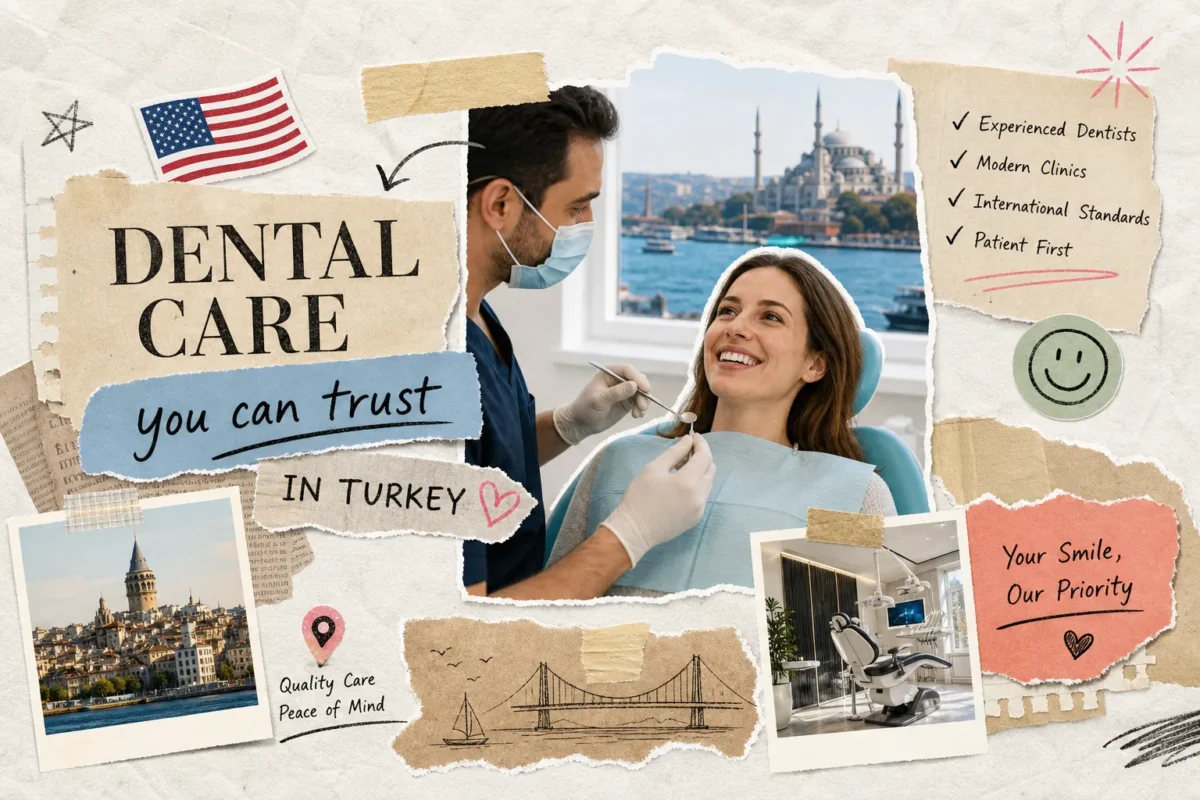
U.S. patients are flying to Istanbul for dental work at a rate that has grown substantially in recent years. The price gap is real. So are the horror stories. And the difference between a great outcome and a corrective nightmare almost always comes down to one decision made before anyone books a flight: picking the right dentist. Not the cheapest one on a comparison site. Not the one with the slickest Instagram page. The right one.
This guide gives U.S. patients traveling to Turkey for dental care a practical framework to do exactly that, from reading cost estimates without getting misled to asking the questions that separate qualified clinics from high-volume tourist traps. The kind of clinic this guide is designed to help you find looks something like Dt. Çağrı Altuntaş Dental Clinic in Istanbul’s Nişantaşı neighborhood: boutique, credential-backed, and built around personalized outcomes rather than patient throughput. But more on that later. First, the numbers.
What dental procedures actually cost in Turkey vs. the U.S.
The savings are real, but the numbers quoted online are often stripped of context. A headline price means nothing until you know what materials it covers, whether the quote includes the full treatment workflow, and who is actually doing the work. Here is an honest, procedure-by-procedure breakdown.
Veneers and smile makeovers: where the biggest gap lives
Porcelain and E-max veneers run $220 to $600 per tooth in Turkey versus $900 to $2,500 per tooth in the U.S. A 16-tooth smile makeover that costs $15,000 to $40,000 in America can be completed for $3,200 to $6,800 in Istanbul using the same materials and lab standards. The price difference is not about cutting corners on materials. It comes down to labor costs and overhead, both of which are substantially lower in Turkey than in any major U.S. metro. For additional context on comparative veneer pricing, see the detailed U.S.-vs.-Turkey breakdown on dental veneers cost in Turkey vs. the USA.
That is a meaningful gap. For a U.S. patient pricing a full smile transformation, the savings, often $10,000 or more on a comparable case, can cover round-trip flights, accommodation, and several days of exploring Istanbul with money left over.
Dental implants in Turkey: what U.S. patients actually save
Single dental implants cost $600 to $1,200 in Turkey versus $3,000 to $5,000 in the U.S. Even after factoring in round-trip airfare and a week in Istanbul, U.S. patients on multi-unit cases typically save 50 to 70 percent. The math is hard to argue with, especially for patients who have been quoted $15,000 or more for a multi-implant restoration at home. For a practical primer on implants and what to expect when traveling to Turkey for implant work, read an overview of dental implants in Turkey and what you need to know.
One caveat on all-inclusive packages: watch what they actually include. Some packages bundle flights and hotels into the headline price, making procedure cost comparisons difficult. Always ask for an itemized breakdown of the dental work itself, separate from travel costs.
What the numbers don’t tell you
Not all $400 veneers and $800 implants use the same materials or follow the same workflow. A quoted price only means something when you know the material tier: composite versus E-max versus zirconia, and whether the quote covers the complete treatment from diagnostics through final placement. A low number that excludes abutment, crown, CBCT imaging, or temporary restorations is not the price you will actually pay. Get everything itemized in writing before you commit to anything.
The risks that are real vs. the ones that are overblown
U.S. patients encounter two failure modes when researching dental tourism in Turkey. The first is dismissing risk entirely because they found a great-looking clinic online. The second is letting fear talk them out of a procedure that could have been done safely at a fraction of the domestic cost. Both are mistakes. For a balanced discussion of dental tourism and its risks, consider reviews and analyses that outline common pitfalls and safety considerations.
What actually drives complications abroad
According to a survey of U.S.-based dentists conducted by the Oral Health Foundation, 86% reported treating patients whose dental work done abroad needed correction, with implants topping the list at 85% of remedial cases. The root causes are consistent: implant misplacement from inadequate CBCT imaging, peri-implantitis from improper post-op protocols, infection from poor sterile technique, and rushed timelines that skip necessary healing stages. These are process failures, not geography failures. They happen in bad clinics, whether those clinics are in Istanbul, Mexico, or New Jersey. Peer-reviewed literature on implant complications and peri-implant disease can help you understand the clinical risks and how they are measured post-treatment.
The complications that don’t get talked about enough
Nerve damage, sinus perforation, and bone loss after poorly planned implants can require expensive corrective surgery back in the U.S. Veneer debonding and bite misalignment from labs that were not properly supervised are also common outcomes at high-volume Turkish dental clinics. For a patient who flew home after a week in Istanbul, these complications surface weeks or months later, at which point they become a domestic problem requiring a domestic solution at full domestic prices. That scenario erases every dollar saved.
How to calculate your actual exposure
Risk drops sharply when a clinic uses proper diagnostics, named implant brands with traceable components, and provides written records before you leave. The goal is not to avoid risk entirely, it is to control it through vetting. A patient who does that due diligence is not taking a gamble. They are making a well-researched decision that happens to save them a significant amount of money.
How U.S. patients can vet a dentist in Turkey before booking
This is where most patients underinvest. Browsing a clinic’s website for twenty minutes is not vetting. Here is what actual due diligence looks like.
Credentials that actually matter for international patients
Health Tourism authorization from the Turkish Ministry of Health is a non-negotiable starting point for any Turkish dental clinic treating international patients. You can request the clinic’s authorization certificate and cross-check it against the official Turkish Ministry of Health registry. Look for Turkish Dental Association (TDB) affiliation as a baseline professional standard. Beyond that, international postgraduate training matters more than years of general experience. A dentist with a postgraduate degree from a European or North American institution brings a different level of surgical precision and case selection rigor than someone who completed general dental training only. The treating dentist’s name, license details, and credentials should be publicly visible or available on request without hesitation.
Questions to send before you pay a deposit
Send these questions by email or WhatsApp and evaluate how the clinic responds, not just what they say:
- What is the exact implant brand and abutment system you use?
- Will I receive a written, itemized treatment plan before I travel?
- Can I have a video consultation with the treating dentist, not a coordinator?
- What does the written warranty cover, how long does it last, and what voids it?
- Will I receive English-language records, X-rays in DICOM format, and a treatment summary to share with my U.S. dentist?
A clinic that answers these questions clearly and promptly is worth continuing the conversation. A clinic that hedges, deflects, or routes you to a sales script is giving you your answer.
How to read Turkey dental clinic reviews without being misled
Ratings on clinic websites are curated. Look for reviews on Trustpilot, Google, and Bookimed that include specific procedure names, treatment dates, and follow-up notes. U.S. patient video testimonials are worth more than anonymized five-star ratings. At a high-volume clinic, the complete absence of any negative reviews should raise questions, not confidence. Real patient experiences, at sufficient scale, will include at least some mixed feedback. You can also consult the clinic’s published patient feedback directly via its reviews section (Görüşler, Estetik Diş Hekimi İstanbul).
What U.S. patients should know about choosing a clinic: a real example
After establishing what to look for, it helps to see those criteria applied to a real practice. Dt. Çağrı Altuntaş Dental Clinic in Istanbul is a working example of what the benchmark looks like in practice. The details below are drawn from the clinic’s published credentials and patient-care model, U.S. patients are encouraged to verify specifics directly during an initial consultation. For the clinic’s professional profile and contact information, see the practice listing for Cosmetic Dentist in Istanbul | Dt. Çağrı Altuntaş, Dt. Çağrı ALTUNTAŞ.
The academic and clinical profile that sets a different bar
Dr. Altuntaş holds a Master’s degree in Oral Surgery and Implantology from Saint Camillus International University in Italy, a program specializing in implant dentistry, advanced oral surgery, and prosthetic rehabilitation. That combination of surgical precision and cosmetic dentistry specialization, built over more than 15 years of clinical practice, is unusual in a market dominated by high-volume, coordinator-driven operations. Postgraduate training at the university level means systematic case selection, protocol-driven surgical planning, and a standard of diagnostic rigor that most general dental tourism clinics do not bring to the table. Ask the clinic to share credential documentation during your initial consultation, a qualified practice will provide it without hesitation.
Why location and operating model signal quality
The clinic’s Nişantaşı base positions it outside Istanbul’s tourist-facing dental district. Nişantaşı is the city’s most upscale neighborhood, and a clinic operating there serves a different clientele with different expectations. The practice holds Health Tourism authorization from the Turkish Ministry of Health, meaning it meets government-mandated standards for treating international patients. The practice operates as a boutique model, according to the clinic, each case is handled by Dr. Altuntaş directly, rather than delegated down a clinical hierarchy to less experienced staff. That is worth confirming in your pre-booking conversation, but it is the right question to ask any Turkish dental clinic you are evaluating.
What the clinic’s patient profile reveals
The clinic’s focus on natural-looking results, personalized smile design, and digital 3D planning tells American patients something specific: this is not a factory applying the same veneer set to every patient who books online. The free smile analysis consultation is a meaningful signal in itself. It separates patients who are a good fit for a specific treatment from those who are not, rather than simply confirming a booking. That first consultation is where serious dentists invest time before a single procedure begins. You can also review individual patient accounts such as Gökçe S., Estetik Diş Hekimi İstanbul for the level of detail typical patients share about steps, healing, and results.
Planning your trip, your recovery, and your follow-up care
A poorly planned trip can compromise even excellent dental work. Build your timeline around the procedure, not around the cheapest available flights.
How many days to plan for each procedure type
Simple procedures like whitening or composite veneers need 2 to 5 days. Porcelain veneer cases require a minimum of 5 to 7 days. Single-stage implants involve a first trip of 5 to 7 days, followed by a healing interval of several months for osseointegration, then a second trip of 1 to 3 days for the final restoration. Full-mouth restorations can require 10 to 14 days or multiple separate visits depending on surgery, lab work, and adjustments. Build in at least one buffer day at the end of any trip for bite checks and final adjustments before flying.
Visa, travel, and documentation logistics
U.S. citizens with ordinary passports are generally visa-exempt for stays up to 90 days in any 180-day period in Turkey. You still need a passport valid for at least six months from your arrival date, with enough blank pages for entry and exit stamps. Bring digital and printed copies of your treatment plan, clinic authorization documents, and travel insurance details. Confirm in advance whether your travel insurance policy covers dental complications abroad, most standard travel insurance policies exclude routine dental care and post-procedure complications, so review your policy terms carefully before you travel.
Setting up aftercare before you leave Istanbul
Before you fly home, collect English-language printed records, your X-rays in DICOM format, implant brand documentation with batch or serial numbers, and the clinic’s direct contact information for post-treatment concerns. Identify a U.S. dentist who can handle emergencies or follow-up appointments before you travel, not after something goes wrong. Confirm how remote follow-up works with your Istanbul clinic. The best clinics build that communication channel into the treatment plan from the start.
The decision comes down to your research, not your destination
The savings are real enough to justify the trip for U.S. patients who approach dental tourism in Turkey the right way. Americans who come back satisfied with their Istanbul experience and Americans who come back needing corrective work are almost always separated by the same variable: how thoroughly they vetted their dentist in Turkey before booking.
The standards exist. Health Tourism authorization from the Ministry of Health, documented postgraduate credentials, written warranties, named implant brands with traceable components, itemized treatment plans, and a dentist who spends the first consultation understanding your case rather than selling a package. These are not luxuries. They are the minimum baseline for a procedure done right.
For U.S. patients choosing a dentist in Turkey, the research you do before booking will determine whether you return home with a great result or need corrective care. Find a clinic that meets those standards and Istanbul becomes one of the best decisions you will make for your smile. If you are ready to start with a practice that checks every box, Dt. Çağrı Altuntaş Dental Clinic offers a free smile analysis consultation with no obligation. Request yours, ask the hard questions outlined in this guide, and see exactly what you are working with before you commit to anything.
How can a U.S. patient find a trustworthy dentist in Turkey?
Start by prioritizing credentials and personalized outcomes over price or social media polish. Ask detailed questions about who will perform each step, request itemized written quotes, and look for boutique, credential-backed clinics like Dt. Çağrı Altuntaş Dental Clinic in Nişantaşı rather than high-volume tourist operations.
Are dental procedures in Turkey significantly cheaper than in the U.S.?
Yes — the article gives concrete examples: porcelain and E-max veneers run $220 to $600 per tooth in Turkey versus $900 to $2,500 in the U.S., and single implants cost $600 to $1,200 in Turkey versus $3,000 to $5,000 in the U.S. Labor and overhead differences, not necessarily inferior materials, explain most of the gap.
What should I check in a price quote to avoid being misled?
Confirm the material tier (composite, E-max, zirconia) and whether the quote covers the full treatment workflow from diagnostics through final placement. Insist on an itemized breakdown that separates dental procedure costs from travel, and verify whether items like abutments, crowns, CBCT imaging, and temporary restorations are included.
How much can I save on a full smile makeover in Istanbul?
A 16-tooth smile makeover that might cost $15,000 to $40,000 in the U.S. can be completed for about $3,200 to $6,800 in Istanbul using comparable materials and lab standards. Those savings often cover round-trip flights, lodging, and several days in Istanbul with money left over.
Do all-inclusive dental packages in Turkey make cost comparisons difficult?
Yes — some packages bundle flights and hotels into the headline price, which obscures the true procedure cost. Always request the dental work cost itemized separately from travel expenses so you can compare apples to apples.
How much do dental implants typically cost in Turkey versus the U.S., and what are typical savings?
Single implants in Turkey typically run $600 to $1,200 compared with $3,000 to $5,000 in the U.S. After factoring in airfare and a week in Istanbul, multi-unit cases commonly save U.S. patients 50 to 70 percent.
What are the real risks of dental tourism and how do I avoid them?
The two main pitfalls are underestimating risk because a clinic looks good online, and overestimating risk to the point of avoiding a safe, cost-effective procedure. Mitigate both by vetting credentials, asking detailed workflow and materials questions, getting itemized quotes in writing, and choosing clinics focused on personalized outcomes rather than high patient throughput.