
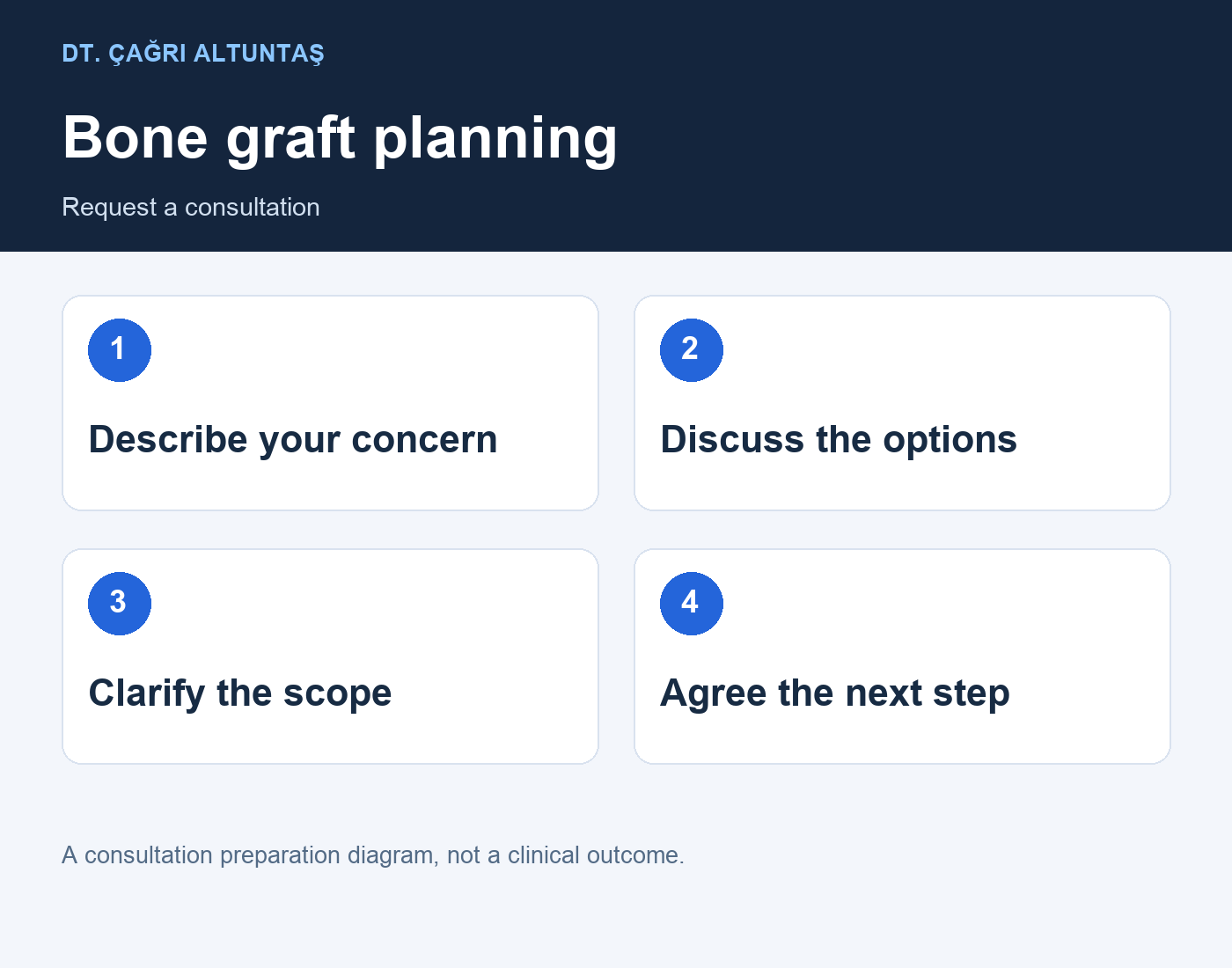
A proposed bone graft should come with an explanation of the site, purpose and effect on the treatment sequence. The need cannot be determined from a generic implant package or an ordinary photograph. For a UK patient organising travel to Istanbul, the important question is how the assessed treatment stages influence appointments, consent and the complete quote.
Bone grafting is not one identical extra
Ask the dentist to name the proposed procedure and show the area concerned. A limited procedure and a separate, more extensive stage are not equivalent entries in a quotation. Understanding the scope prevents an unexplained label from becoming an assumed fixed-price item.
Leeds Teaching Hospitals explains that the amount of bone required can affect whether grafting is carried out with implant placement or as an earlier stage. The page provides general information, not your personal surgical timetable. Leeds information on implants and bone grafting.
Use a site-specific question sheet
| Topic | Information to request |
|---|---|
| Reason | Which finding supports the proposed additional procedure? |
| Site | Does it concern one area or a larger region? |
| Sequence | Is it planned with implantation or separately? |
| Material | What would be used and how will it be explained? |
| Alternatives | Were other treatment or restoration options considered? |
| Quote | What is included in the additional fee? |
If two clinics suggest different approaches, compare their findings and intended endpoints before comparing the totals. A difference in the proposed procedure is not explained by the price alone.
Understand what remains provisional
Ask which decisions can be discussed from existing records and which require an examination. Tell the clinic the dates of any records you already have. Do not arrange new scans solely to obtain a quote without professional direction about what is required.
If the sequence may change, ask when the next stage can be confirmed and what review it depends on. Avoid treating an estimated interval as a guaranteed booking date. Keep clinical stages and the number of trips clearly separated in your notes.
Read extra costs before paying a deposit
Have the core implant plan, any grafting proposal, temporary restoration and final restoration listed separately. Clarify how unexpected findings are presented before you agree to additional treatment. Ask about the quote's currency, validity and payment stages.
For the travel budget, consider the visits that are actually proposed rather than assuming a single holiday-length stay. Ask what a change of plan means for accommodation and return arrangements. The GDC encourages patients considering overseas treatment to clarify care and aftercare before committing. GDC patient guidance.
Share the right information through the right channel
Start with a consultation request and ask how medical records should be provided. Bring your medication and health history to the assessment. Do not stop prescribed treatment or make changes yourself in anticipation of dental surgery.
The first contact should help organise a proper assessment. It should not be treated as a message-based final decision about the anatomy, surgical method or personal fee. Keep the agreed explanation and records of completed work for later care.
Frequently asked questions
Does every dental implant require a bone graft?
No. The need is assessed for the particular site and plan. Its presence or absence on a quotation does not by itself establish whether the proposal is appropriate.
Can the fee change after examination?
Ask which parts are estimates and how any proposed change will be explained and authorised. The important point is a clear scope and consent process.
Can a photograph confirm the need?
An ordinary photograph does not replace assessment of the implant site. Ask the treating professional what information and examination are necessary.