Our primary goal in cosmetic dentistry is not merely to create white teeth, but to design long-lasting, healthy smiles that harmonize perfectly with the patient’s facial features. E-Max Veneer (lithium disilicate glass ceramics), one of the strongest representatives of the biomimetic (nature-inspired) dentistry philosophy I practice in my clinic, is considered the pinnacle of modern aesthetic restorations. In this comprehensive guide prepared by Dr. Çağrı Altuntaş, we thoroughly explore the structural properties of the E-Max system, its unique play of light, and the long-lasting biological comfort it offers our patients.
1. What Is E-Max? The Biomimetic Power of Glass-Ceramic
E-Max (IPS e.max), referred to in the dental literature as lithium disilicate glass-ceramic, is a high-tech dental material shaped using pressing or computer-aided design and manufacturing (CAD/CAM) technologies.
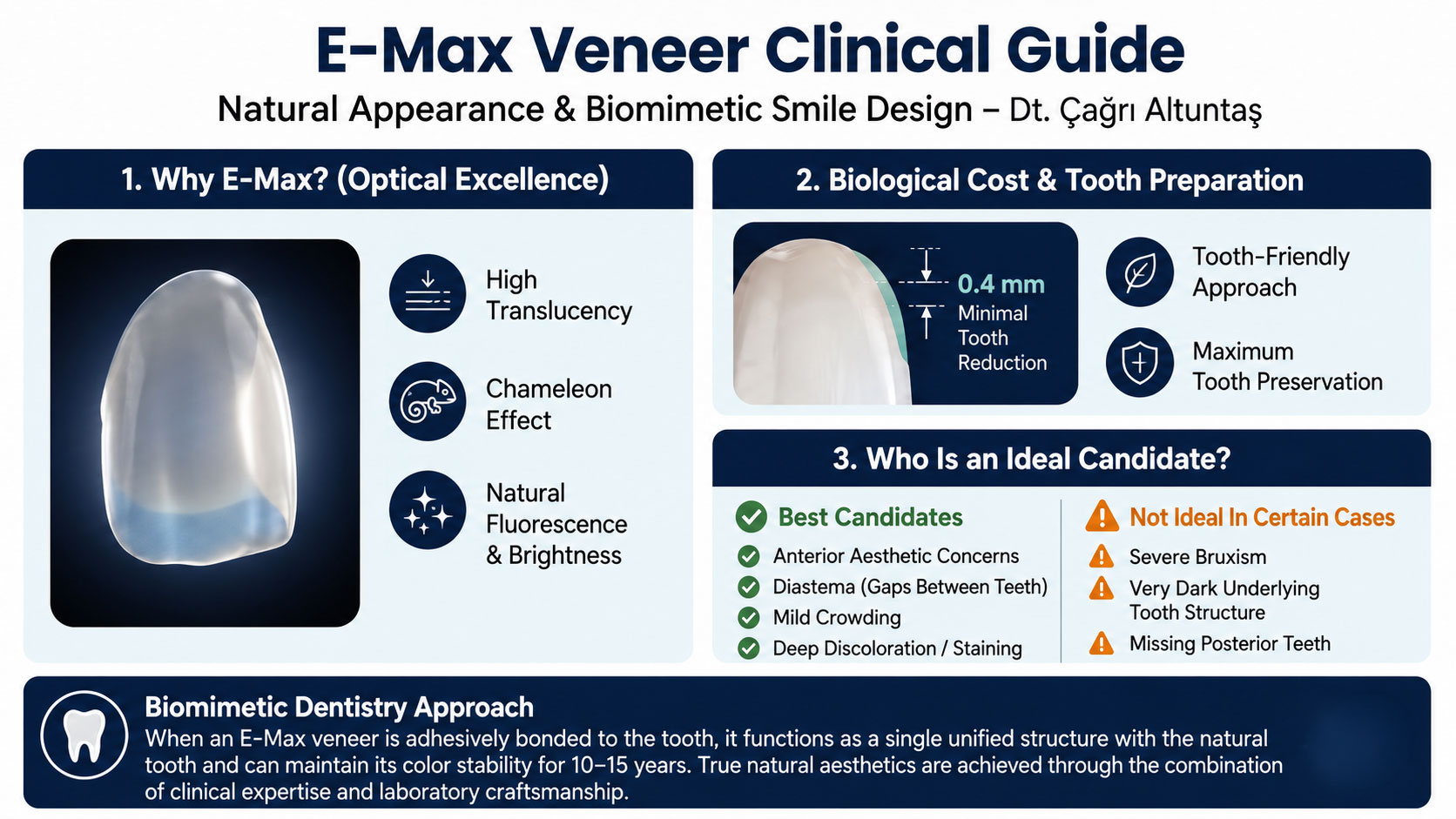
Its most significant difference from traditional porcelains and opaque zirconia is that the light-refracting and transmitting capabilities of the crystalline needles in its structure are nearly identical to those of natural tooth enamel. In dentistry, for a material to look natural, it is not enough for it to simply be “white”; it must absorb, reflect, and transmit light to create a sense of depth. Thanks to its crystalline glass structure, E-Max is the aesthetic restoration that offers the best optical performance in the world.
2. Why E-Max? Natural Appearance and Optical Benefits
In aesthetic dentistry for the front teeth, patients’ greatest concern is ending up with a look that appears artificial, chalky, or reminiscent of bathroom tiles. The E-Max system has four key optical and physical properties that completely eliminate this artificial appearance:
A. High Translucency (Light Transmission)
When light hits a natural tooth, it doesn’t just reflect off the surface; it penetrates deep into the enamel, strikes the underlying dentin, and is filtered out from there. This phenomenon is known as the “sense of depth.” E-Max Veneers, with their semi-translucent structure, allow light to pass through. As a result, the vitality of the underlying tooth structure is reflected on the surface of the restoration.
B. The Chameleon Effect
E-Max has the ability to absorb the color tones of the adjacent teeth and the underlying natural tooth structure. As a result, even if just a single tooth is restored with E-Max, the material blends seamlessly with the color of the natural teeth next to it and is completely indistinguishable to the naked eye.
C. Fluorescence and Opalescence Excellence
Natural teeth emit a blue-white glow under sunlight or UV (ultraviolet) lights in nightclubs. The E-Max material retains this natural fluorescent property during laboratory processing. Unlike standard veneers, it does not appear as a “dull gray/black” mass in dark environments or when a flash goes off; it maintains its vibrancy.
D. Compatibility of Wear Resistance with the Enamel
E-Max has an ideal level of hardness (approximately 400–500 MPa flexural strength). This hardness is strong enough to prevent the restoration from breaking, yet flexible enough not to wear down the natural teeth in the opposing arch. In other words, it works in perfect mechanical harmony with your natural tooth enamel.
3. How Durable Are E-Max Veneers, and What Is Their Lifespan?
One of the most common questions we receive from our patients is: “How can a structure this thin and glass-based be durable? Won’t it break easily?”
The secret lies in “biomimetic adhesion,” or bonding technology. On their own, E-Max Veneers are like fragile sheets of glass when outside the mouth. However, once the tooth surface is microscopically roughened with special acid gels and the interior of the veneer is treated with hydrofluoric acid, and then bonded to the tooth using high-tech adhesives known as resin cements, the tooth and porcelain become a single, unified structure.
Monolithic Strength: Because the restoration chemically bonds to the tooth, chewing forces are transmitted directly to the tooth’s root.
Clinical Lifespan: Data from the literature and our clinical experience indicate that E-Max Veneers, when placed under appropriate indications and with proper oral hygiene, can remain in the mouth for 10 to 15 years or more without discoloration, wear, or loss of luster.
4. Selecting the Right Patients (Indications): Who Is E-Max Ideal For?
While E-Max is an exceptional material, 50% of its success lies in selecting the right patient. E-Max is not suitable for every patient.
Ideal Candidates for E-Max (Indications):
Front-Region Single-Tooth or Multiple Restorations: For those seeking maximum naturalness in the smile line (aesthetic zone).
Mild to Moderate Misalignment: Patients who do not wish to undergo orthodontic treatment (clear aligners or braces) and want to straighten their teeth with minimal tooth reduction.
Diastema (Gaps Between Teeth): For those who want to take advantage of the translucency of porcelain veneers when closing gaps between teeth.
Tetracycline (Antibiotic) or Fluorosis Stains: For masking deep discoloration that has penetrated the tooth’s enamel and cannot be removed by teeth whitening (bleaching) methods.
Worn and Aged Teeth: Restoring teeth that have become shorter, have chipped cutting edges, or have suffered erosion due to aging to their original form.
Who Should Not Use E-Max? (Contraindications):
Severe Bruxism (Teeth Clenching and Grinding): In patients who uncontrollably apply very high levels of force at night, performing E-Max restorations without Botox treatment or a night guard is risky.
Very Dark-Colored / Root-Canaled Teeth with Metal Posts: Because E-Max is semi-translucent, if the underlying tooth root has turned black like charcoal or contains a metal post, it may reflect this dark appearance. For such dark backgrounds, multi-layered zirconia restorations with high opacity are a better choice.
Extensive Tooth Loss and Posterior Bridges: E-Max may fracture in long bridges spanning multiple adjacent missing teeth due to its lack of flexural strength. Zirconia or metal-ceramic frameworks should be preferred for long bridges in the posterior region.
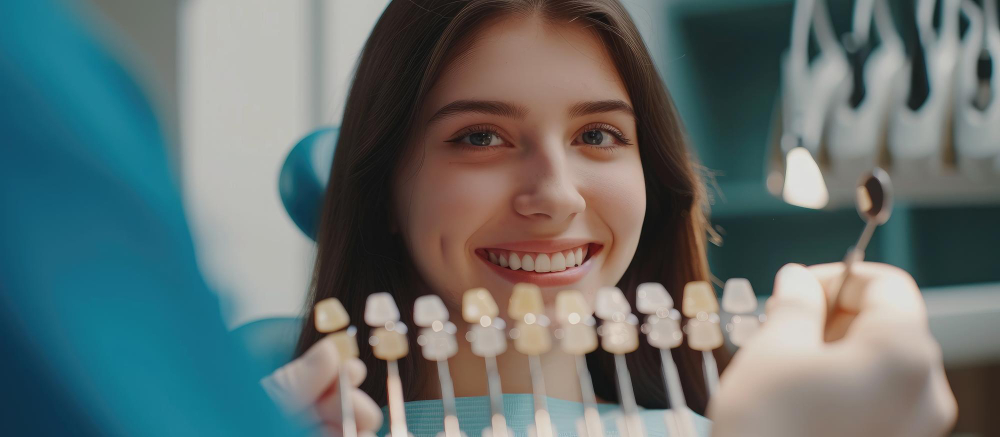
5. Types of E-Max: Laminate Veneers, Crowns, and Inlays/Onlays
The E-Max dental system is not used in a single form. At our clinic, we choose from the following three different variations depending on the patient’s tissue loss:
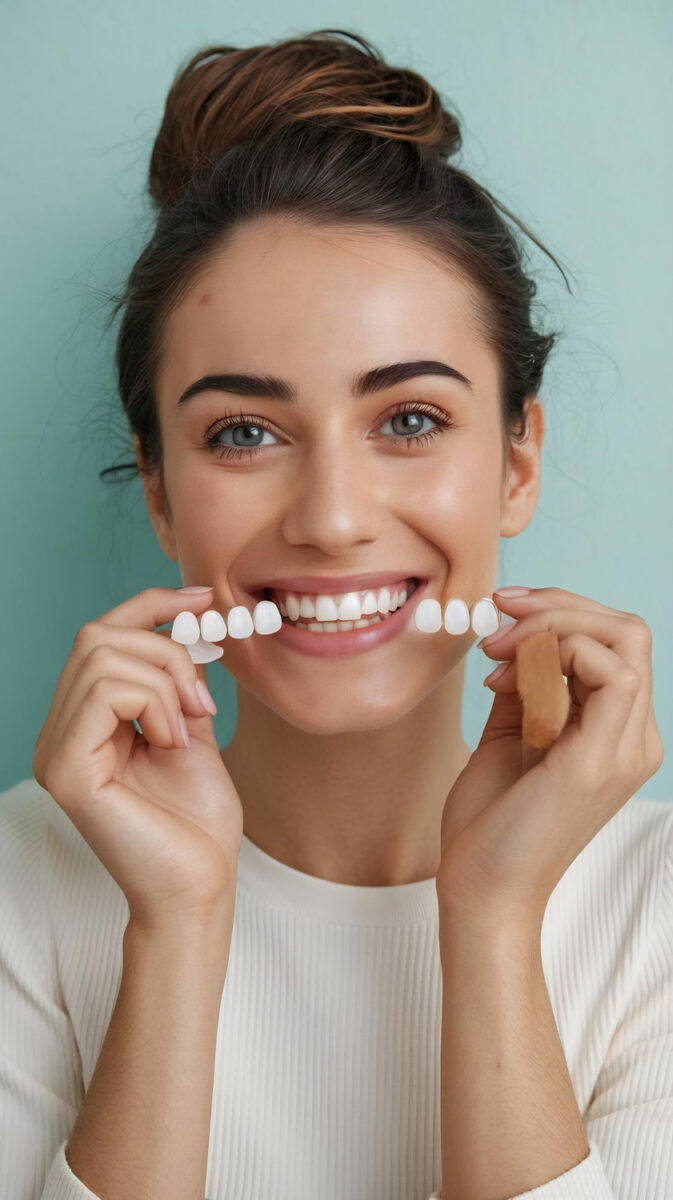
E-Max Laminate Veneer (Laminate Veneer): These are veneers applied by removing only a microscopic layer of tissue—typically 0.3 to 0.5 mm—from the front surface of the tooth (sometimes without any cutting at all—Non-Prep). They provide maximum tooth preservation.
E -Max Full Crown: These are aesthetic crowns that cover the entire tooth in cases where the tooth has been previously prepared, has large fillings, or structurally requires circumferential support.
E -Max Inlay / Onlay (Porcelain Restorations): These are custom-made block restorations produced in a laboratory for molars in the posterior region, specifically for cases of extensive tooth structure loss following root canal treatment that cannot be restored with a standard filling. They prevent the remaining healthy walls of the tooth from fracturing.
6. E-Max Veneer Application Process: Step-by-Step Digital Smile Design
At our clinic, the E-Max Veneer process is completed in three main sessions, from start to finish, using digital engineering and in accordance with the principles of aesthetic anatomy:
[Session 1: Digital Scan & Mock-Up] ──> [Session 2: Minimal Preparation & Temporary Crown] ──> [Session 3: Biomimetic Cementation]
Session 1: Diagnosis, Digital Scan, and Mock-Up (Smile Simulation)
Our patient’s mouth is scanned using high-resolution 3D scanners (such as dental scanners that offer optical clarity comparable to the DJI Osmo Pocket 3 we use in everyday life). Macro photographs are taken in a studio setting. A smile design tailored to the patient’s facial features is created using computer software. Thanks to mock-up technology, our patient can experience a plastic prototype of the final result in their mouth without any work being done on their teeth, allowing them to test the fit and how it affects their speech.
Session 2: Minimally Invasive Preparation and Digital Impression
Guided by the mock-up we approved together, minimal (0.4 mm) enamel reduction is performed, ensuring it remains strictly within the enamel margins on the front surfaces of the teeth. The goal is to create a flawless step line where the adhesive agent can bond. A digital impression is taken and sent to the laboratory. To ensure the teeth do not cause sensitivity and the patient can continue their social life, laboratory-quality temporary teeth are prepared and bonded during the same session.
3. Seans: Laboratuvar Provası ve Biyomimetik Yapıştırma (Simantasyon)
Laboratuvarda seramistimizin (diş teknisyeni) el işçiliğiyle, porselen tozlarını tabaka tabaka işleyerek ürettiği E-Max Veneer’lar kliniğe gelir. Ağızda renk, form ve kapanış provası yapılır. Her şey kusursuzsa, özel izolasyon setleri (rubber dam) altında dişler tükürükten tamamen arındırılır. E-Max kaplamalar, estetik rezin simanlar kullanılarak dişe kimyasal olarak kilitlenir.
7. E-Max, Zirconia, or Bonding? (Technical Comparison)
The table below clearly outlines the clinical and practical differences between three popular methods frequently compared in cosmetic dentistry:
| Criterion | E-Max Veneer / Lamina | Zirkonyum Kaplama | Bonding (Composite) |
|---|---|---|---|
| Light Transmission & Aesthetics | Flawless (Highest). Offers the most natural depth perception and a translucent structure, closest to that of natural tooth enamel. | High / Medium. New-generation multi-layered zirconia is aesthetic but not as translucent as E-Max. | Medium / Opaque. Due to its chemical resin structure, it cannot provide the same depth of light reflection as porcelain materials. |
| Tooth Reduction Amount | Minimum (0.3–0.5 mm). Only the front surface of the tooth is abraded at the micron level; sometimes no reduction is performed at all. | More (1.5 - 2 mm). The tooth must be reduced circumferentially (front, back, and sides) and a step must be created. | Zero Preparation (0 mm). Healthy tooth structure is not touched; only the surface is microscopically roughened. |
| Color Retention & Stain Resistance | 100% Permanent. The non-porous glass-porcelain surface is completely resistant to external factors such as tea, coffee, and cigarette smoke, and does not stain. | 100% Permanent. No color change occurs; it retains its aesthetic form for years thanks to its smooth surface. | May Discolor Over Time. Due to its porous structure, it may yellow from tea/coffee and requires periodic polishing maintenance. |
| Lifespan | 10–15 years+. Because it bonds to tooth enamel through an adhesive (chemical) process, it is a long-term, permanent, and durable investment. | 10–15 Years+. It has very high resistance to structural fracture and bending, and adheres to the tooth mechanically and with cement. | 3–5 Years. It is an economical and quick solution but is not as long-lasting as porcelain restorations. |
| Ideal Application Areas | Anterior Aesthetic Zone. It is the gold standard for incisors, the smile line, diastema closure, and single-tooth restorations. | Posterior Region & Bridges. Ideal for molars subjected to high chewing forces and gaps caused by missing teeth. | Minor Defects. A protective solution for small interdental spaces, minor fractures, and younger patients. |
8. Frequently Asked Questions (FAQ)
Do E-Max veneers yellow or change color over time?
No. E-Max features a non-porous glass-ceramic surface that is fired at very high temperatures in a laboratory setting. The pigments from tea, coffee, cigarettes, or colored foods cannot adhere to this smooth surface. The color and luster present on the first day remain exactly the same even after 15 years.
Will I experience tooth sensitivity or pain during or after treatment?
Since your teeth and surrounding tissues are completely numbed with local anesthesia during the procedure, you will not feel any pain or discomfort. Since your temporary teeth are in place between sessions, you will not experience sensitivity to hot or cold. After the permanent bonding (cementation), your teeth will become completely pain-free, just like your natural teeth, following a brief adjustment period of a few days.
Do E-Max Veneers Come Loose or Fall Out?
Thanks to the adhesive (chemical) bonding protocols used in biomimetic dentistry, E-Max bonds microscopically to the tooth enamel. When bonded using the correct technique, it is highly unlikely for a porcelain veneer to shift or fall out on its own. However, in the event of a severe impact (accident, collision), the veneer may crack or be damaged, just as your natural tooth might break.
What should I be careful about after getting E-Max crowns? How do I care for them?
Caring for E-Max crowns is no different from caring for your natural, healthy teeth. Brushing your teeth twice a day using the correct technique and flossing once a day will extend the life of your restorations. You should follow the same rules you would for your natural teeth: Avoid bad habits such as using your teeth to crack nuts, open packages, or bite on pens.
Result: A Step Toward Flawless Naturalness
Smile design is not just about creating white, straight teeth; it is the art of restoring the patient’s character, energy, and natural beauty to their face. The E-Max Veneer system is the most aesthetic, protective, and biocompatible material modern dentistry has to offer. When properly planned and combined with a specialist dentist’s vision and a ceramist’s artistic craftsmanship, the result you’ll see in the mirror won’t be an artificial mask—it will be your own natural self.
To find out if you’re a suitable candidate for E-Max treatment, redesign your smile from scratch using digital scanning methods, and see the final result of your treatment via live simulation before the process even begins, contact Dr. Çağrı Altuntaş and immediately begin your personalized minimally invasive treatment planning.