
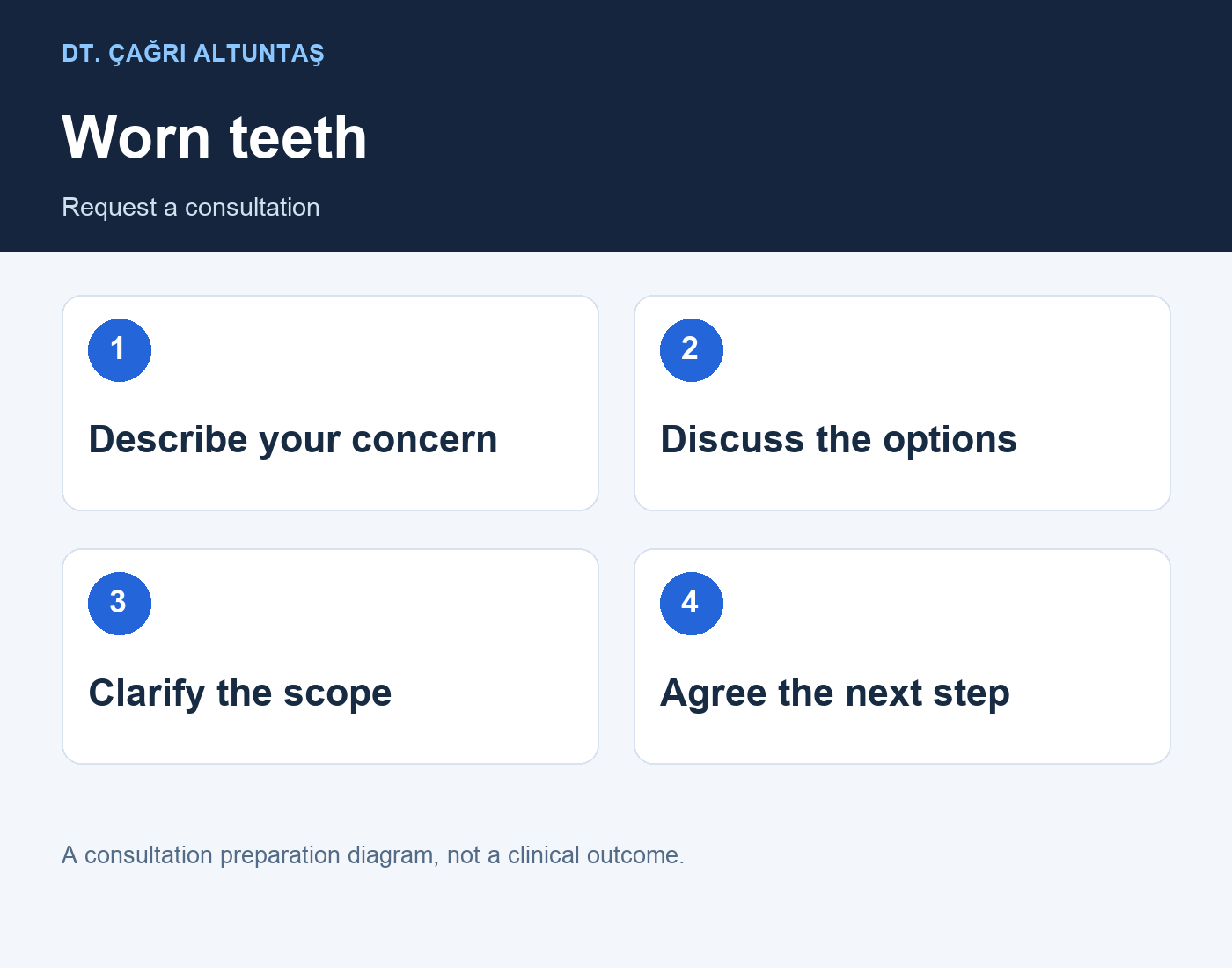
When several teeth show wear or repeated restoration problems, it can be useful to discuss how the findings relate to one another. A full-mouth assessment does not mean every tooth needs a crown. Its purpose is to clarify the problems, priorities and options before committing to a list of procedures.
Bring a history of what keeps happening
Note which repairs have been repeated, when problems recur and any discomfort you have noticed. Tell the dentist about tooth clenching, morning jaw tiredness or changes in chewing if relevant. These observations help the assessment; they do not establish a diagnosis by themselves.
The NHS describes possible damage associated with tooth grinding. It does not follow that every worn tooth has the same cause or needs the same restoration. NHS information on bruxism.
What should a broader assessment explain?
Ask which teeth can remain unchanged, which may need treatment and which questions require further evaluation. A coordinated proposal should connect the findings with an agreed aim, rather than turn the phrase “full mouth” into an identical crown package.
The American College of Prosthodontists describes reconstruction as potentially combining different treatments for widespread needs. This supports discussing an overall plan, not presuming a particular procedure for every tooth. ACP full-mouth reconstruction overview.
Read a plan through these headings
| Heading | What you should understand |
|---|---|
| Existing problems | Which findings concern which teeth? |
| Preservation | Where might monitoring or more limited work be considered? |
| Restoration choice | Why is a filling, onlay or crown discussed for that tooth? |
| Interim stages | What will be evaluated before final decisions? |
| Contributing factors | What needs separate investigation or management? |
| Maintenance | How will the result and ongoing risks be reviewed? |
The name of a material is not a complete answer. Ask why a particular design is proposed for a particular tooth, especially if several teeth are included in one quote.
Restoring damage is different from stopping a habit
Do not assume that a new shape or set of restorations will automatically stop clenching or grinding. Ask how restoration of existing damage is distinguished from assessment and management of contributing factors. Any protective approach should have its own purpose and instructions.
Avoid selecting an appliance or changing your bite based on an internet description. This guide does not prescribe exercises, appliances or changes to your teeth. Your dental team should explain what is appropriate after assessment.
Plan care across the UK and Istanbul
Before booking travel, distinguish the initial assessment from any later treatment and review appointments. Ask how changes requested during trials or reassessment would affect the schedule. A return date should not replace an agreed clinical decision point.
Speak to your existing dentist about any proposed local involvement. Keep the written plan, actual treatment summary and contact arrangements together. A maintenance plan is part of evaluating the proposal, even if the initial concern is mainly appearance.
Ask for an assessment with a clear purpose
An initial enquiry can say that you would like repeated repairs and wear assessed together. Bring the history you have and ask what records are useful. You do not need to decide in advance how many crowns or onlays to purchase.
Frequently asked questions
Does tooth wear always need crowns?
No universal procedure follows from that observation. Ask about the remaining structure and options for each tooth.
Will new restorations stop grinding?
That should not be assumed. Request separate explanations for restoring damage and addressing relevant habits or contributing conditions.
Can I obtain a reliable full-mouth price without an examination?
You can discuss a provisional scope, but unresolved findings should remain clearly provisional. A personal plan and fee should be tied to a proper assessment.