
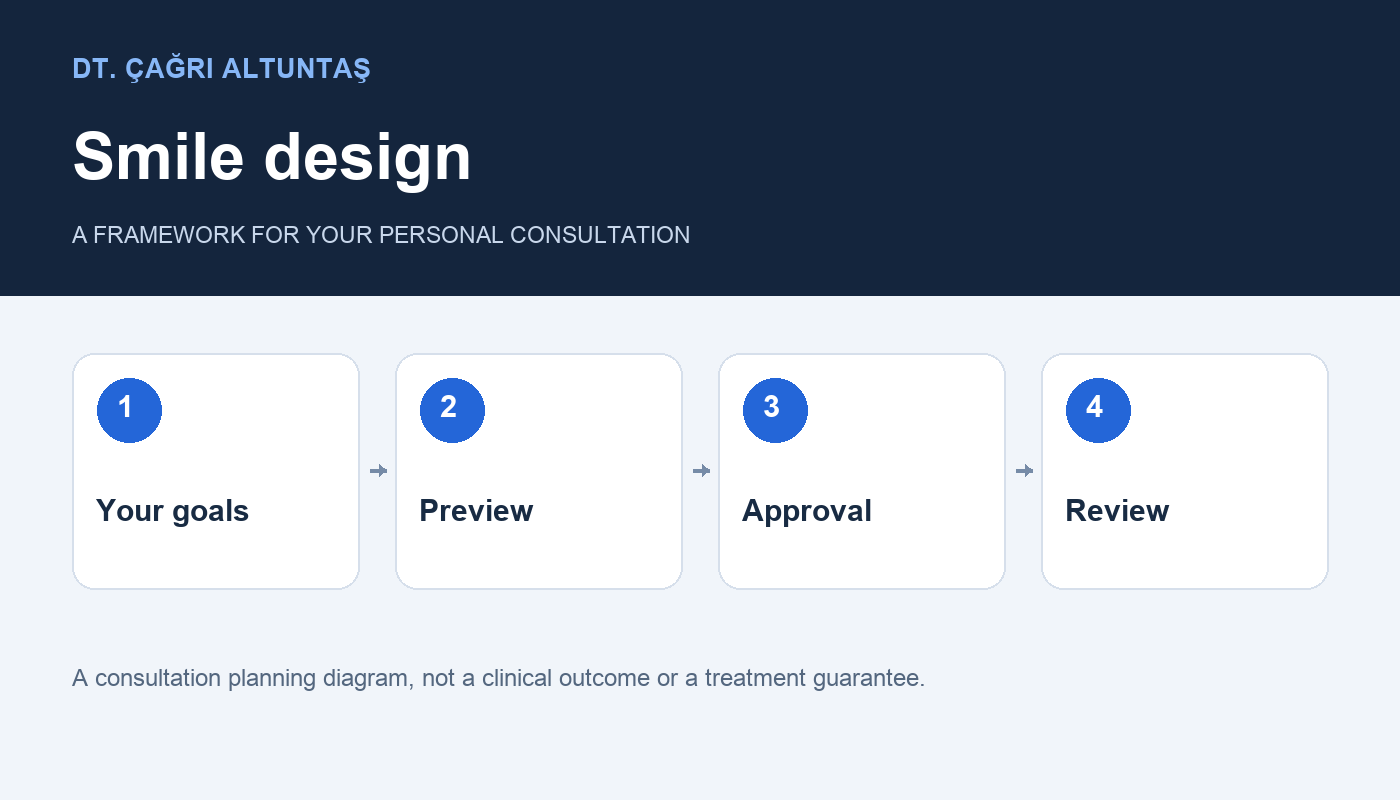
A digital smile design consultation should help you understand the proposed changes to your teeth before you consent to treatment. A picture alone does not explain which procedures are needed. Ask what the preview represents, which teeth are involved, what alternatives were considered and when you will be asked to approve the definitive plan.
Bring a brief, not a celebrity template
Write down the two features you most want to change and the two you want to preserve. Examples might include a darker front tooth, an uneven edge or a smile that feels too wide in photographs. Describe the feature rather than prescribing a material or a fixed number of veneers.
If you bring reference photographs, explain what you like about them: tooth length, softness of the corners or a less uniform shade. A photograph is a communication aid, not evidence that the same result can be reproduced in a different mouth. Avoid making a travel booking dependent on an unexamined cosmetic assumption.
Find out what kind of preview is being offered
The words “digital design” may be used for different services. Ask whether you will see a two-dimensional image, a model or an intraoral mock-up, and what is actually included in the consultation fee. Do not assume that a screen image and an in-mouth trial answer the same questions.
| Decision | Useful question at the consultation |
|---|---|
| Shape | Which specific edges or proportions are proposed to change? |
| Scope | Can the proposed teeth be marked on a dental chart? |
| Preview | What can this preview demonstrate, and what can it not demonstrate? |
| Preparation | What treatment of the existing teeth is proposed? |
| Approval | At which stage can I request a change, and what would that involve? |
Ask to record your feedback in words. “The two front teeth look too long to me” is easier to discuss than “make it more natural.” If a revision is requested, ask which part of the plan changes and whether the timing or fee is affected.
Understand the treatment behind the image
Whitening, orthodontic treatment, bonding, veneers and crowns address different situations. A design consultation should lead to an explanation of the options for your findings, rather than an assumption that every visible tooth needs the same procedure. The ADA outlines several distinct ways of changing a smile. ADA overview of smile options.
Where veneers are proposed, ask how much tooth preparation is planned and why. The ADA describes veneers as front-surface coverings and notes the irreversible nature of treatment involving enamel removal. That is a reason to understand consent before choosing a package. ADA patient information on veneers.
Read consultation fees and treatment fees separately
For UK, US and Canadian patients comparing a local consultation with one in Istanbul, use the same scope. Does the appointment include an examination, photographs, a design presentation, a mock-up or a written treatment plan? Which of these are separate services? Ask whether a consultation payment is credited toward later treatment and under what written conditions.
No fee is quoted here because “smile design consultation” is not a single uniform service. A useful written estimate identifies the service you receive even if you decide against further treatment. It should also distinguish a provisional recommendation from the definitive plan agreed after assessment.
Plan the decision time into your trip
Ask how long you have to consider the proposal and what happens if you do not approve the first preview. Leave room for discussion rather than treating the return flight as the deadline for agreement. Your dentist should explain the planned stages; this article does not set a treatment duration.
Discuss communication after you return home and which documents you will receive. The General Dental Council's guidance for patients considering overseas dentistry includes checking the treating professional, aftercare arrangements and the scope of the proposed care. GDC advice on dental treatment abroad.
Frequently asked questions
Does approving a digital image guarantee that exact result?
No. Ask the treating dentist to explain the preview's limitations and which decisions are confirmed later. A design presentation is not a substitute for the clinical assessment and consent process.
Is a mock-up the same as receiving veneers?
No. Clarify what the trial involves, whether any treatment of your teeth is planned at that appointment and what you are consenting to. Do not rely on the label alone.
Should every tooth in my smile be treated?
Not automatically. Request the reason for each proposed tooth and ask which features could be improved while preserving untreated teeth. The appropriate scope depends on your own findings.