
Root Canal Treatment (Endodontics) is one of the most important dental procedures performed to save an infected or decayed tooth. It involves cleaning, disinfecting, and filling the soft tissue (pulp) at the center of the tooth.
At his modern clinic in Nişantaşı, Istanbul, Dr. Çağrı Altuntaş performs root canal treatment painlessly and with a high success rate using advanced rotary instrument systems and digital imaging techniques.
What Is Root Canal Treatment?
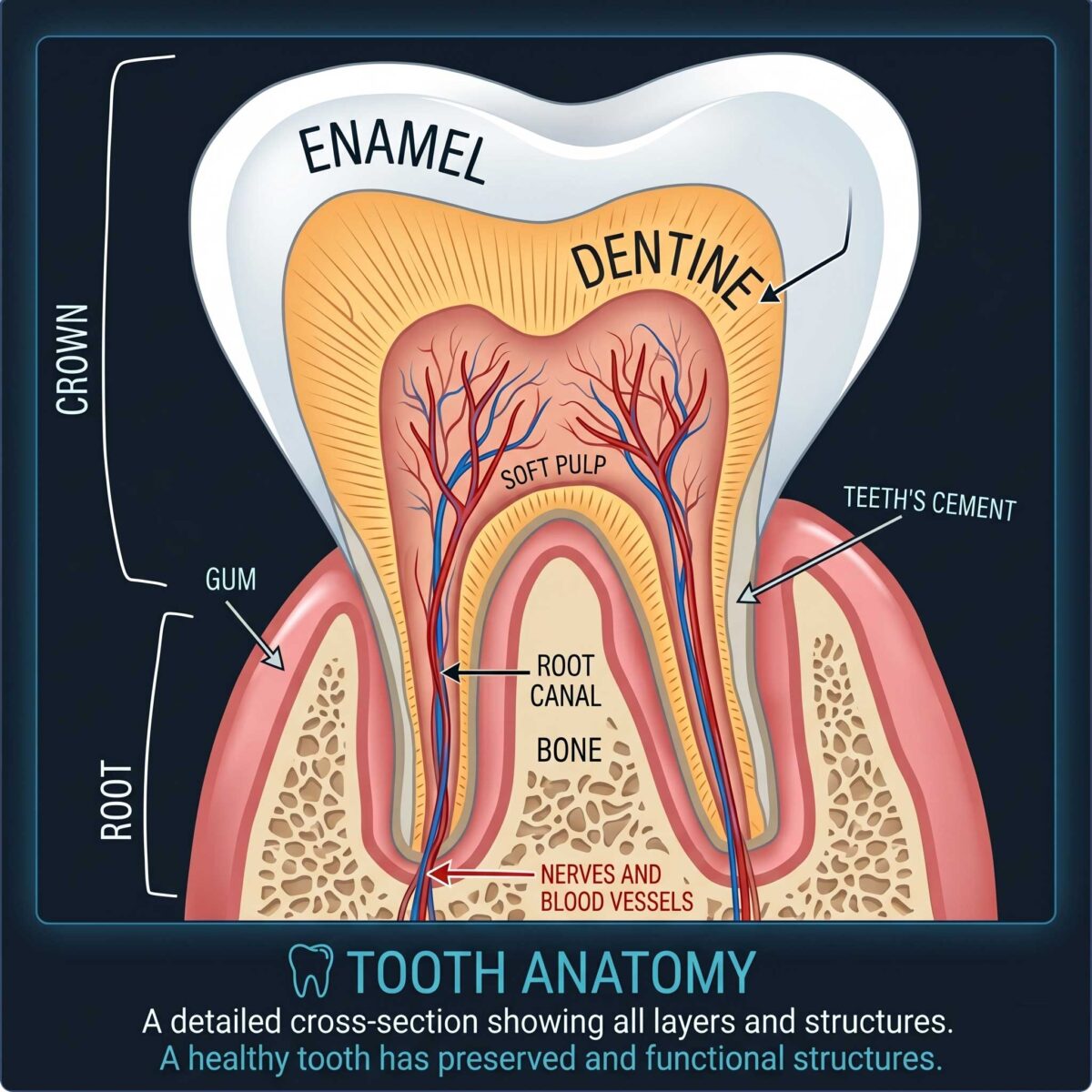
Beneath the enamel and dentin layers of the tooth lies the pulp chamber, which contains the blood vessels and nerves that nourish the tooth. If this tissue becomes inflamed due to deep cavities, cracks, or trauma, it can lead to severe pain and abscesses. Root canal treatment is the final option that prevents the tooth from being extracted, allowing your natural tooth to remain in your mouth.
Symptoms That Require Root Canal Treatment
The most common signs that your tooth needs root canal treatment are as follows:
- Severe Tooth Pain: Throbbing pain that worsens, especially at night.
- Sensitivity: Prolonged, persistent sensitivity to hot or cold foods.
- Discoloration: The tooth turning a darker or grayish color than its normal shade.
- Gum Swelling: Small, pimple-like bumps or general swelling near the tip of the tooth’s root.
- Difficulty Chewing: Sharp pain when pressure is applied to the tooth.
How Does the Treatment Process Work?
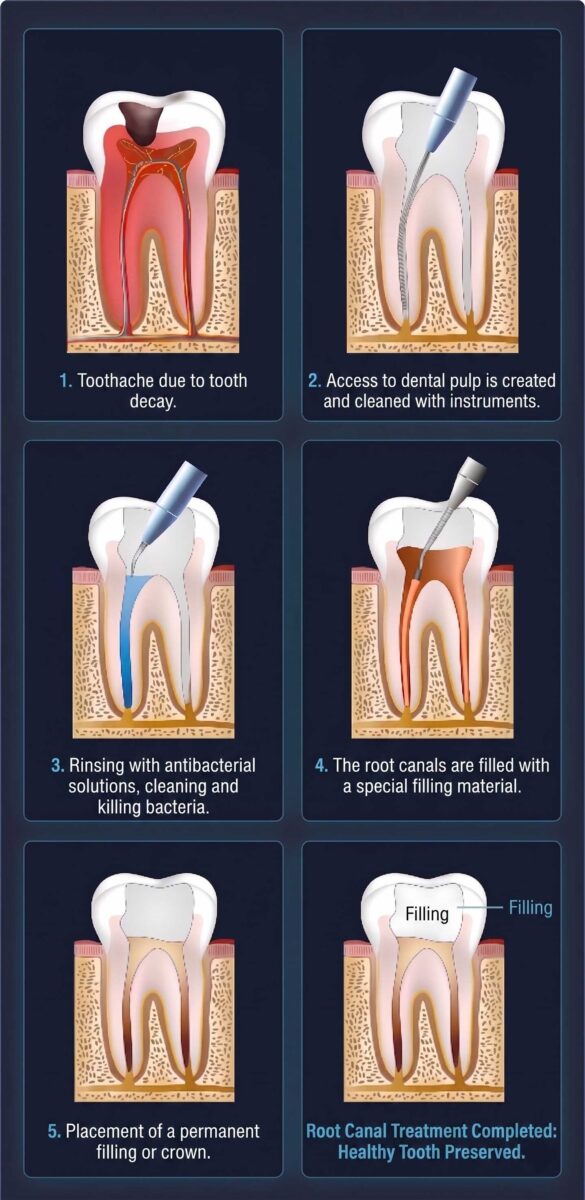
At our Nişantaşı clinic, root canal treatment is typically completed in one or two sessions, following these steps:
Radiographic Analysis: The structure of the root canals and the depth of the infection are examined using digital X-rays.
Anesthesia: The treatment area is completely numbed so that the patient feels no pain during the procedure.
Cleaning: Decayed tissue is removed, and the infected nerves are extracted by accessing the pulp chamber.
Root Canal Shaping: The canals are enlarged using micro-motor systems and rinsed with disinfectant solutions.
Filling: The cleaned canals are sealed leak-proof with a biocompatible filling material (gutta-percha).
Restoration: The upper portion of the tooth is restored with a composite filling, a zirconia crown, or a porcelain onlay (inlay), depending on the extent of tissue loss.
Why Root Canal Treatment Instead of Extraction?
The extraction of a tooth disrupts the balance of the bite and causes adjacent teeth to shift. An implant may be necessary to replace the extracted tooth. Root canal treatment, on the other hand:
- Preserves your natural tooth.
- Distributes chewing force naturally.
- Is a more economical and faster solution.
Frequently Asked Questions About Root Canal Treatment
Does root canal treatment cause pain?
No. Thanks to modern anesthesia techniques, root canal treatment is now just as comfortable as a standard filling procedure. The goal of the treatment is to eliminate existing pain.
How many sessions does the treatment take?
Depending on the severity of the infection, root canal treatment is usually completed in a single session lasting 45 to 60 minutes. In some cases, a second session may be necessary.
How long does a tooth with a root canal stay in the mouth?
With successful root canal treatment and proper restoration, teeth that have undergone root canal treatment can last for many years—or even a lifetime.
Is there pain after a root canal?
It is normal to experience mild sensitivity for a few days after treatment. This can usually be managed with pain relievers.
Why does a dead (root-canaled) tooth start hurting again?
A tooth that has undergone root canal treatment may start to hurt again due to incomplete cleaning of the root canal, a leak, or an infection in the surrounding tissues. In such cases, the root canal treatment may need to be redone.
Does a tooth undergo root canal treatment turn black?
With modern materials, the risk of discoloration is low. If necessary, the tooth color can be lightened again through in-office whitening procedures.
Is a crown necessary after root canal treatment?
To prevent fractures in teeth that have undergone root canal treatment and have significant tooth structure loss, a crown or onlay restoration may be recommended.
Can root canal treatment be performed on an infected tooth?
Yes. Root canal treatment clears the source of the infection, allowing the inflammation to heal. In some cases, antibiotic treatment may be necessary.
How much will root canal treatment cost in 2026?
Prices vary depending on the number of root canals, the severity of the infection, and the procedures to be performed.
Can root canal treatment be performed during pregnancy?
Yes. It can be safely performed, especially during the second trimester. In emergency situations, it can also be performed during other stages of pregnancy, provided the necessary precautions are taken.